
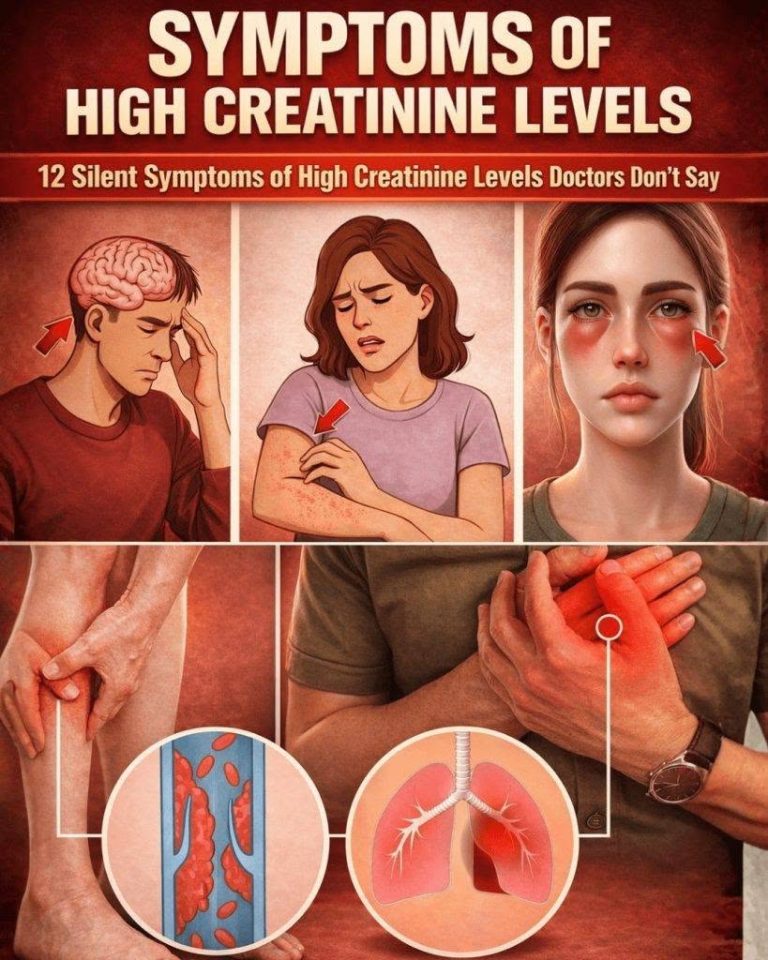
The human body is an incredible, interconnected system that constantly communicates its internal status through subtle physical cues. Among the most vital functions are filtration and waste removal, handled primarily by the kidneys. When these internal systems face stress or impaired function, chemical markers like creatinine begin to build up in the bloodstream, triggering various physical symptoms throughout the body.
When viral graphics circulate highlighting “12 Silent Symptoms of High Creatinine Levels Doctors Don’t Say,” they capture immense attention because kidney health is so fundamental to overall well-being. But what is creatinine, what causes elevated levels, and what physical signs should you look out for?
In this comprehensive guide, we will explore the medical reality of creatinine, the underlying causes of high levels, key physical signs, and how holistic wellness and regular screening support long-term renal health.
What Is Creatinine and Why Does It Matter?
Creatinine is a natural waste product generated by normal, everyday muscle breakdown. When your muscles contract and function, they break down a compound called creatine, producing creatinine as a byproduct.
Under normal physiological conditions, your kidneys filter creatinine out of your blood plasma, excreting it efficiently through urine. Because muscle mass remains relatively stable from day to day, a healthy pair of kidneys maintains a steady, predictable concentration of creatinine in the bloodstream. However, when kidney filtration efficiency declines due to stress, dehydration, or medical conditions, creatinine clearance drops, leading to rising blood serum levels.
Recognizing the Signs: What High Creatinine Levels Look Like
While a definitive diagnosis of high creatinine requires a standard blood test (such as a serum creatinine test or a calculated eGFR), the body often provides subtle, systemic hints when filtration pathways are strained. Based on viral wellness indicators and medical observations, elevated filtration markers can correlate with several key physical changes:
                  [ SYSTEMIC SIGNS OF RENAL STRAIN ]
                               │
        ┌──────────────────────┴───────────────────────┐
        ▼                                               ▼
[ Neurological & Dermatological ]               [ Circulatory & Fluid Signs ]
  • Persistent fatigue or brain fog               • Edema and swelling in legs
  • Unexplained skin itching / rashes  • Changes in blood pressure & chest tightness
  • Periorbital puffiness / eye bags   • Impaired microcirculation
1. Neurological Fatigue and Cognitive Sluggishness
When metabolic waste products accumulate in the blood due to sluggish kidney filtration, it can affect overall neurological function. Individuals often report feeling persistent fatigue, mental exhaustion, or difficulty concentrating (often referred to as brain fog).
2. Dermatological Changes and Itching
Impaired waste elimination can lead to imbalances in blood chemistry and mineral deposits, frequently resulting in persistent skin dryness, irritation, or unexplained rashes and itching.
3. Periorbital Edema (Puffiness Around the Eyes)
Fluid regulation is a primary kidney task. When renal efficiency drops, fluid retention often manifests visibly in areas with loose skin, such as swelling or puffiness around the eyes and face, especially upon waking.
4. Lower Extremity Swelling and Circulation Changes
Fluid accumulation (edema) frequently affects the lower legs, ankles, and feet. This is often accompanied by sluggish microcirculation, heavy limbs, or muscular cramping as electrolyte balances shift.
Step-by-Step Guide: Monitoring and Supporting Renal Health
Maintaining healthy kidney function and managing creatinine levels requires a proactive, structured approach to daily wellness and medical oversight.
┌─────────────────────────────────────────────────────────┐
│               RENAL WELLNESS STRATEGY                   │
└────────────────────────────┬────────────────────────────┘
                             │
                             ▼
┌─────────────────────────────────────────────────────────┐
│ STEP 1: ROUTINE MEDICAL SCREENINGS                      │
│ • Schedule annual blood panels (Serum Creatinine & eGFR)│
│ • Monitor blood pressure regularly                      │
└────────────────────────────┬────────────────────────────┘
                             │
                             ▼
┌─────────────────────────────────────────────────────────┐
│ STEP 2: HYDRATION & NUTRITION                           │
│ • Drink pure water consistently throughout the day      │
│ • Moderate excess sodium, protein, and processed foods  │
└────────────────────────────┬────────────────────────────┘
                             │
                             ▼
┌─────────────────────────────────────────────────────────┐
│ STEP 3: LIFESTYLE & MEDICATION MANAGEMENT               │
│ • Review over-the-counter NSAID usage with a physician  │
│ • Maintain consistent physical activity and rest        │
└────────────────────────────┬────────────────────────────┘
1. Routine Medical Screenings
The only accurate way to know your creatinine levels is through laboratory testing. Request a basic metabolic panel (BMP) or comprehensive metabolic panel (CMP) during your annual physical checkup to track your serum creatinine and estimated glomerular filtration rate (eGFR).
2. Proper Hydration and Balanced Nutrition
Staying well-hydrated with pure water supports optimal blood flow through the kidneys, helping them flush metabolic waste efficiently. Additionally, moderating excessive sodium and heavy protein consumption can reduce unnecessary filtration strain on renal tissues.
3. Managing Medications Wisely
Frequent or long-term use of certain over-the-counter pain relievers, such as nonsteroidal anti-inflammatory drugs (NSAIDs like ibuprofen), can temporarily or chronically impact kidney function. Always consult a healthcare professional before taking medications regularly.
Fascinating Facts About Kidney Filtration
-
Incredible Blood Processing: Your kidneys process and filter about 200 quarts of fluid every single day, reabsorbing most of it while separating waste.
-
Creatinine Variability: Normal creatinine ranges vary depending on a person’s age, biological sex, muscle mass, and body size, meaning what is normal for an athlete might differ from an older adult.
-
The Silent Nature of Kidneys: The kidneys have a massive functional reserve, meaning they can lose a significant portion of their filtering capacity before major symptoms become obvious—which is why regular lab testing is so vital[cite: 14].
Practical Checklist for Kidney Health
-
Stay Hydrated Daily: Keep a water bottle handy to maintain steady fluid intake[cite: 14].
-
Track Blood Pressure: High blood pressure is a leading cause of kidney strain; check your numbers regularly.
-
Limit Processed Foods: Reduce intake of heavily salted and ultra-processed items.
-
Consult Professionals: Never ignore persistent physical symptoms; always seek professional medical guidance for accurate diagnosis.
Conclusion
Understanding high creatinine levels and recognizing the silent physical signs of renal strain empowers you to take charge of your health[cite: 14]. While viral lists highlight intriguing bodily symptoms, nothing replaces professional medical evaluations, routine blood panels, and healthy lifestyle habits. By prioritizing hydration, balanced nutrition, and regular checkups, you protect your kidneys and support lifelong vitality.
Frequently Asked Questions (FAQ)
What causes high creatinine levels in the blood?
High creatinine can be caused by various factors, including temporary dehydration, intense physical exertion, high dietary protein intake, certain medications, or underlying kidney conditions that impair filtration efficiency.
Can high creatinine levels be lowered naturally?
If elevated creatinine is due to mild dehydration or temporary dietary factors, increasing water intake, reducing excessive red meat consumption, and adopting a heart-healthy diet can help normalize levels. However, if caused by chronic kidney disease, medical treatment is essential.
Are high creatinine levels always a sign of kidney disease?
Not always. Temporary spikes can occur due to dehydration, heavy muscle workouts, or taking certain supplements (like creatine). A doctor must evaluate repeat lab tests and eGFR calculations to determine the exact cause.
What symptoms should prompt an immediate doctor’s visit?
You should seek medical attention promptly if you experience severe fatigue, sudden swelling in your face or legs[cite: 14], changes in urination frequency, severe high blood pressure, or chest discomfort.
