
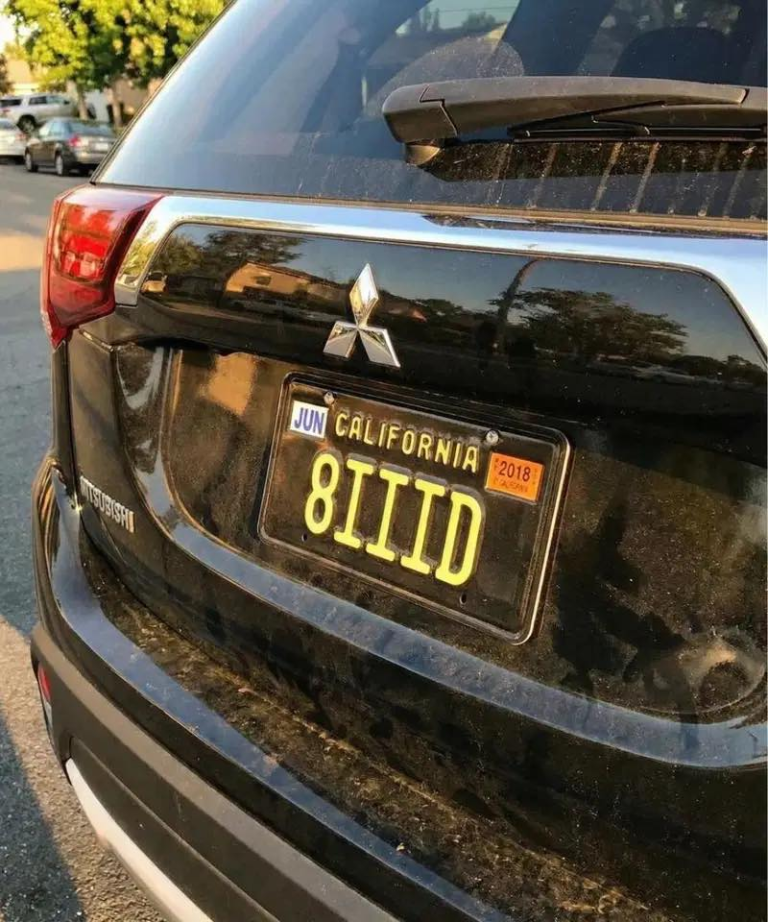
Vanity license plates have been a popular way for motorists to express their creativity, humor, and individuality for decades. From clever puns and pop culture references to subtle inside jokes, drivers love finding unique ways to personalize their vehicles. However, every so often, a truly legendary vanity plate captures the internet’s attention by taking cleverness to an entirely new level.
When a viral photograph of a black SUV bearing a California legacy yellow-on-black license plate reading “8IIID” circulates online, it immediately sparks laughter, confusion, and widespread debate. At first glance, it looks like a random string of numbers and letters. But when viewed through the lens of automated traffic enforcement, optical character recognition (OCR), and visual trickery, the true genius of the plate becomes apparent.
In this comprehensive guide, we examine the mechanics of vanity plates, how automated license plate readers (ALPR) function, the laws governing custom plates, and why creative drivers continue to test the boundaries of traffic technology.
The Optical Illusion: What Makes “8IIID” So Clever?
To understand why this specific California license plate went viral, you have to look closely at how letters and numbers can be visually manipulated to mimic other characters.
                  [ THE LICENSE PLATE ILLUSION ]
                                │
        ┌───────────────────────┴───────────────────────┐
        ▼                                               ▼
[ Literal Characters ]                          [ Visual Interpretation ]
  • The number 8 followed by three uppercase "I"s   • Visually mimics the word "BIIID" or
    and the letter D.                              resembles "BLLD" / "BUMP" style text.
        │                                               │
        ▼                                               ▼
[ Human Perception ]                            [ Automated System Confusion ]
  • Looks like clever typographic spacing         • Can confuse low-resolution OCR scanners
1. Typography and Spacing Tricks
At a glance, the characters 8IIID use numbers and uppercase vertical lines (“I”s) that visually merge together. Because standard sans-serif license plate fonts feature uniform vertical strokes, placing three “I”s right next to each other creates a solid block that can trick the human eye into misreading the text or interpreting it as a witty linguistic puzzle.
2. Evading Automated Traffic Systems?
One of the primary reasons these types of clever plates capture public imagination is the running internet joke that motorists are trying to confuse Automated License Plate Recognition (ALPR) cameras. Toll booths, red-light cameras, and police cruisers rely on high-speed optical scanners to read plates instantly. While modern algorithms are sophisticated enough to parse most vanity plates, unusual character combinations frequently become viral symbols of digital rebellion and humor.
The Rules and Regulations of Vanity Plates
While expressing humor on a vehicle is fun, state motor vehicle departments (DMVs) enforce strict guidelines regarding what is permitted on custom license plates.
┌─────────────────────────────────────────────────────────┐
│              DMV VANITY PLATE GUIDELINES                │
└────────────────────────────┬────────────────────────────┘
                             │
                             ▼
┌─────────────────────────────────────────────────────────┐
│ STEP 1: CHARACTER LIMITS & FORMATTING                   │
│ • Most states allow between 2 to 7 or 8 characters      │
│ • Must use official state-approved font styles          │
└────────────────────────────┬────────────────────────────┘
                             │
                             ▼
┌─────────────────────────────────────────────────────────┐
│ STEP 2: CONTENT RESTRICTIONS                            │
│ • Prohibition of profanity, obscenity, or slurs         │
│ • Rejection of combinations that incite violence        │
└────────────────────────────┬────────────────────────────┘
                             │
                             ▼
┌─────────────────────────────────────────────────────────┐
│ STEP 3: READABILITY STANDARDS                           │
│ • Must remain legible to law enforcement officers       │
│ • Avoid confusingly misleading character sequencing     │
└────────────────────────────┬────────────────────────────┘
1. Prohibited Combinations
State DMVs review thousands of vanity plate applications annually. Any combination of letters and numbers that incorporates profanity, sexual references, hate speech, or illegal acts is promptly rejected by screening committees.
2. Readability for Law Enforcement
Beyond offensive language, plates must remain reasonably legible for public safety. Police officers and emergency responders rely on clear license plates to identify vehicles during traffic stops, accidents, or amber alerts. Plates designed intentionally to obscure readability can face citations or revocation.
Step-by-Step Guide: How to Design Your Own Vanity Plate
If you are inspired to order a custom personalized plate for your own vehicle, following the proper steps ensures a smooth approval process.
1. Check State Availability Online
Most state DMV websites feature an interactive vanity plate checker tool. You can type in your desired combination of letters and numbers to see if it is currently available in your state.
2. Keep It Clean and Clever
Opt for clever puns, hobbies, professional titles, or pop-culture references that will make fellow drivers smile without violating DMV decency guidelines or risking rejection.
3. Pay Custom Fees and Register
Personalized plates require initial setup fees as well as annual renewal fees. Once approved, the state manufactures your custom plate and ships it directly to your local DMV office or home.
Fascinating Facts About License Plate Technology
-
The History of Vanity Plates: Personalised plates first originated in the United States in 1903 in secondary formats, but modern colorful state-sponsored vanity programs exploded in popularity during the 1970s and 1980s.
-
ALPR Evolution: Modern Automated License Plate Recognition systems use infrared cameras and advanced machine learning algorithms capable of reading dirty, angled, or stylized plates with remarkable accuracy.
-
Collector Culture: Vintage black-and-yellow California plates—like the one shown in the viral photo—have become so iconic that the state reintroduced them as a legacy program due to overwhelming public demand.
Practical Checklist for Vehicle Owners
-
Verify Registration: Ensure your custom plates are properly registered, cleanly mounted, and clearly illuminated by your rear license plate lights at night.
-
Avoid Obscuring Covers: Never use tinted plastic covers or frames that block any portion of your state name or validation stickers, as these are illegal in many jurisdictions.
-
Inspect Fasteners: Check your license plate bolts regularly to ensure the plate is securely fastened and free from rattling.
-
Drive Responsibly: Remember that memorable vanity plates make your car stand out, meaning safe and courteous driving is more important than ever!
Conclusion
Viral vanity plates like the California “8IIID” capture our collective attention by blending humor, clever typography, and internet culture. While automated cameras and strict DMV regulations continue to evolve, the human desire to personalize our vehicles and share a laugh on the highway remains as strong as ever. Whether you view them as brilliant optical illusions or lighthearted pranks, clever license plates add a touch of personality to our daily commutes.
Frequently Asked Questions (FAQ)
What does the plate “8IIID” actually mean?
The plate features the number 8 followed by three uppercase “I”s and the letter D. Visually, the repeating vertical lines create an optical illusion that resembles a clever typographic puzzle or troll message designed to confuse casual observers and automated cameras.
Are optical illusion license plates illegal?
While witty or confusing plates can sometimes bypass initial screening, state DMVs and law enforcement agencies retain the right to recall or revoke any license plate deemed intentionally misleading, unreadable, or violative of public safety standards.
How much do custom vanity plates cost?
Costs vary significantly by state and country. In California and many other regions, personalized plates require an initial application fee ranging from $50 to over $100, plus an additional annual renewal fee added to your regular vehicle registration.
Can automated cameras read stylized vanity plates?
Yes. While certain fonts or tight character spacing can occasionally challenge older cameras, modern Automated License Plate Recognition (ALPR) systems use high-resolution sensors and AI software to accurately read custom plates under most driving conditions.
