
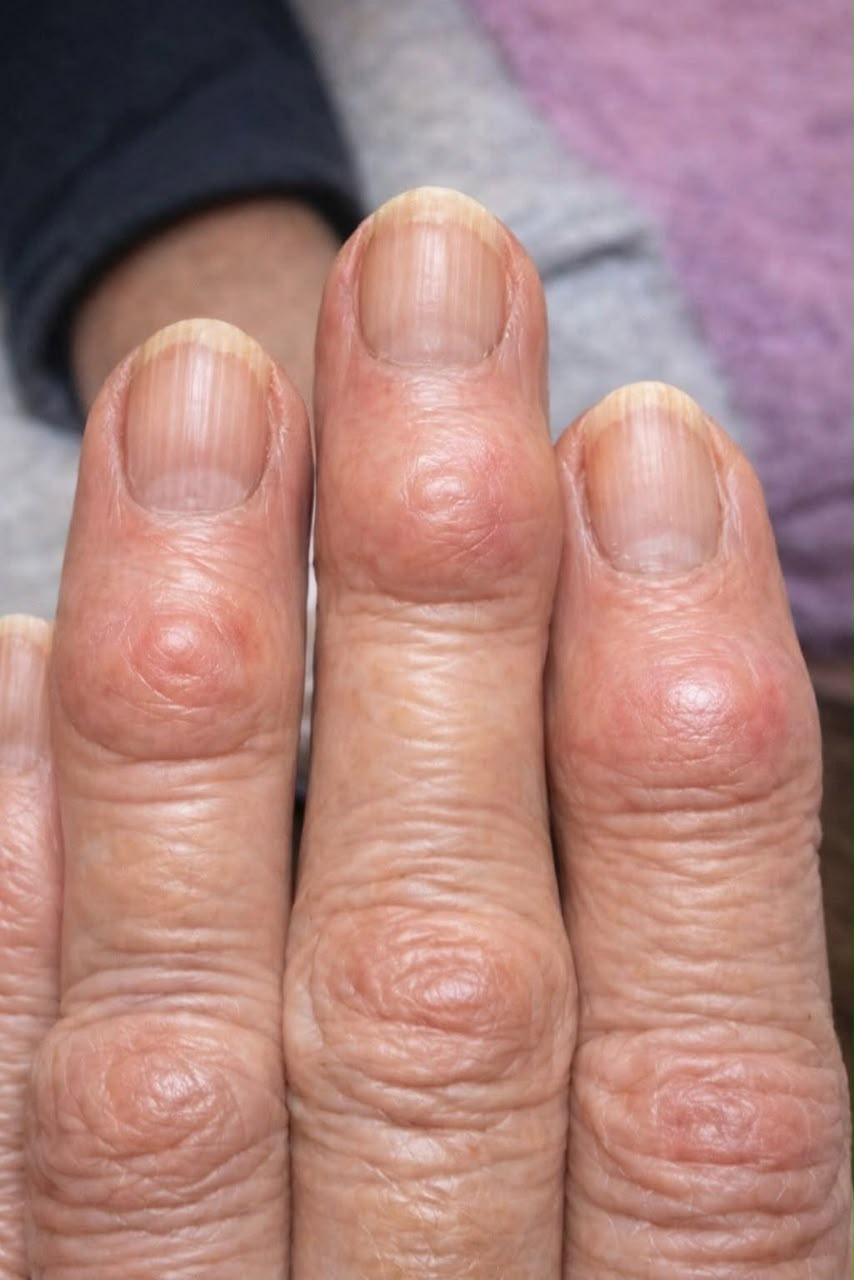
The human hand is an intricate masterpiece of anatomical engineering. Composed of complex networks of bones, tendons, ligaments, and joints, our hands allow us to write, cook, grasp objects, and interact with the physical world every single day. However, as time passes, hands and finger joints often undergo noticeable structural changes.
When close-up images circulate online highlighting enlarged finger joints, bumpy knuckles, or textural shifts in the skin, they frequently prompt questions about joint health, natural aging, and joint comfort. In this comprehensive guide, we examine the anatomy of finger joints, common factors affecting joint appearance over time, and practical ways to maintain hand comfort.
The Anatomy of Finger Joints and Aging
To understand why hands change shape or appearance over the years, it is helpful to explore the structures that make up our fingers.
                  [ FINGER JOINT STRUCTURE & AGING ]
                                │
        ┌───────────────────────┴───────────────────────┐
        ▼                                               ▼
[ Cartilage & Bone Changes ]                    [ Everyday Wear & Tear ]
  • Gradual thinning of joint cartilage           • Decades of gripping, typing, and manual tasks
1. Cartilage Wear and Joint Spacing
Our finger joints—such as the proximal interphalangeal (PIP) and distal interphalangeal (DIP) joints—are cushioned by smooth cartilage that allows bones to glide effortlessly past one another. Over decades of use, normal mechanical wear and tear can lead to subtle thinning of this protective cartilage.
2. Natural Structural Adaptations
As joints experience long-term use, the surrounding bone structure can undergo minor remodeling, occasionally resulting in small bony enlargements or firm nodes around the knuckles. These changes are a common part of the natural aging process for many individuals.
Step-by-Step Guide: Supporting Daily Hand Comfort and Mobility
If you want to keep your hands flexible, comfortable, and well-supported as you age, incorporating a gentle hand care routine into your daily life can be very beneficial.
┌─────────────────────────────────────────────────────────┐
│              HAND COMFORT & MOBILITY ROUTINE            │
└────────────────────────────┬────────────────────────────┘
                             │
                             ▼
┌─────────────────────────────────────────────────────────┐
│ STEP 1: GENTLE STRETCHING EXERCISES                     │
│ • Perform slow finger flexes and gentle wrist rolls     │
└────────────────────────────┬────────────────────────────┘
                             │
                             ▼
┌─────────────────────────────────────────────────────────┐
│ STEP 2: MOISTURIZE AND PROTECT                          │
│ • Keep skin hydrated and protect hands from strain      │
└────────────────────────────┬────────────────────────────┘
1. Gentle Hand Stretches
Performing slow, low-impact finger stretches and range-of-motion exercises daily helps maintain flexibility in the tendons and surrounding muscles without placing excess stress on the joints.
2. Ergonomic Support
When engaging in repetitive hand tasks—such as typing, crafting, or gardening—take frequent breaks to rest your hands and use ergonomic tools designed to reduce physical strain.
Fascinating Facts About Human Hands
-
Complex Engineering: Each human hand contains 27 individual bones, providing an extraordinary range of dexterity and strength.
-
Sensory Receptive: Fingertips are packed with thousands of microscopic sensory receptors, making them one of the most sensitive areas of the human body.
-
Lifelong Use: On average, our hands perform millions of distinct movements and tasks over the course of a lifetime.
Practical Checklist for Hand Wellness
-
Stay Active: Keep your fingers moving with gentle daily activities and light stretching.
-
Protect Your Skin: Use quality moisturizers to keep the skin on your hands supple and hydrated.
-
Pace Yourself: Take regular breaks during repetitive manual tasks to prevent hand fatigue.
-
Consult Specialists: Visit a rheumatologist or orthopedic specialist if you experience persistent joint pain, swelling, or restricted mobility.
Conclusion
Noticing changes in the appearance or flexibility of your finger joints is a natural part of the human aging process. By supporting your hands with gentle exercises, proper ergonomics, and regular check-ups with healthcare professionals, you can maintain comfort and dexterity for years to come.
Frequently Asked Questions (FAQ)
What causes changes in the appearance of finger joints over time?
Changes in finger joints are typically the result of natural aging, cumulative mechanical wear and tear on joint cartilage, and minor bone remodeling around the knuckles.
How can I maintain flexibility in my hands as I age?
Performing gentle daily hand stretches, taking regular breaks during repetitive tasks, and staying physically active can help support long-term hand flexibility and comfort.
When should I consult a doctor about hand joint changes?
You should consult a healthcare professional—such as a primary care doctor or a rheumatologist—if you experience persistent pain, sudden swelling, warmth, or significant stiffness in your finger joints.
Are hand joint changes common?
Yes. Minor structural shifts and enlarged knuckles are extremely common as people age, reflecting a lifetime of manual use and natural anatomical development.
