
The kitchen is truly the heart of the home. From cooking hearty family dinners to baking sweet treats, our stovetops get an immense amount of daily use. Over time, however, gas burners accumulate stubborn grease, baked-on food residue, and discoloration that can make even a clean kitchen look messy.
When viral cleaning videos and photos circulate showing how to transform blackened, greasy gas burner parts into gleaming, like-new metal using simple household solutions, they instantly capture home cooks’ attention. In this comprehensive guide, we explore the best methods for deep cleaning stove burners, maintaining kitchen hygiene, and keeping your appliances sparkling.
The Challenge of Stovetop Maintenance
Why do gas burners get so intensely stained and greasy over time?
                  [ STOVE BURNER GRIME BUILDUP ]
                                │
        ┌───────────────────────┴───────────────────────┐
        ▼                                               ▼
[ High Heat Exposure ]                          [ Spills and Splatters ]
  • Continuous high temperatures bake oils      • Boilovers and grease splatters carbonize
    and food particles directly onto metal.       directly onto burner caps and bases.
1. High Heat Carbonization
Every time you turn on a gas burner, extreme heat bakes any residual grease, oil droplets, and food particles deeper into the metal pores. Over weeks and months, this creates a tough, carbonized layer that standard dish soap alone cannot remove.
2. The Power of Simple Household Cleaners
Rather than using harsh, expensive chemical oven cleaners, many popular cleaning hacks utilize gentle, effective household items like baking soda, hot water, and mild abrasives (such as a soft toothbrush) to lift grime without scratching the metal components.
Step-by-Step Guide: Deep Cleaning Your Gas Burners
If your stove burners are looking dull, greasy, or stained, follow this simple step-by-step routine to restore their brilliant shine.
┌─────────────────────────────────────────────────────────┐
│             GAS BURNER DEEP CLEANING ROUTINE            │
└────────────────────────────┬────────────────────────────┘
                             │
                             ▼
┌─────────────────────────────────────────────────────────┐
│ STEP 1: SOAK IN HOT WATER                               │
│ • Submerge burner parts in a pot of hot water to loosen │
│   baked-on grease and food particles                    │
└────────────────────────────┬────────────────────────────┘
                             │
                             ▼
┌─────────────────────────────────────────────────────────┐
│ STEP 2: SCRUB WITH BAKING SODA PASTE                    │
│ • Use a soft toothbrush and baking soda to gently clean │
│   crevices and ports without scratching                 │
└────────────────────────────┬────────────────────────────┘
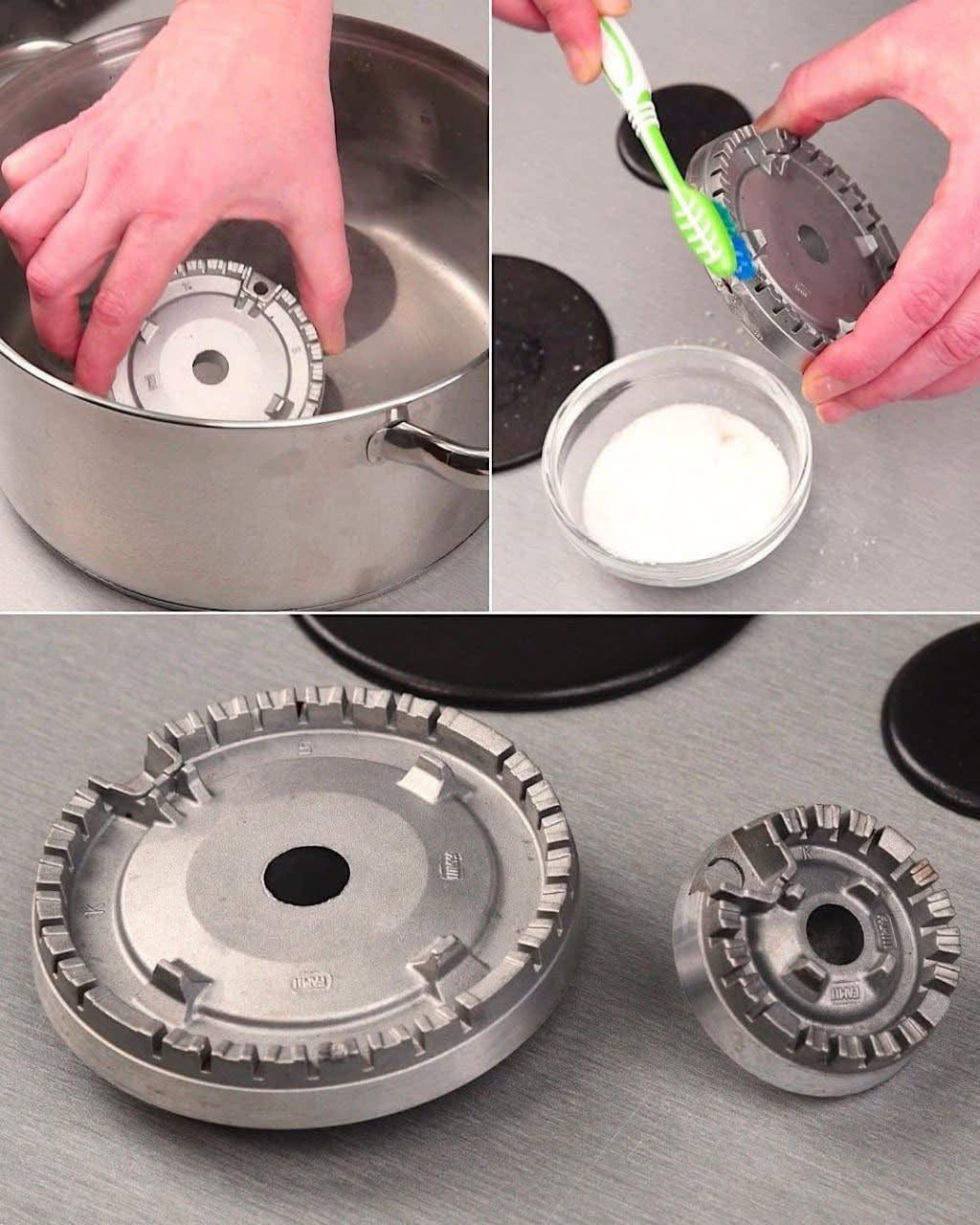
1. The Hot Water Soak
Carefully remove the cool burner grates and caps, then submerge them in a pot of hot water. Allowing the parts to soak softens hardened grease and loosens carbon buildup before scrubbing.
2. Gentle Scrubbing
Mix baking soda with a little water to form a gentle cleaning paste. Use a soft-bristled toothbrush to scrub around the burner ports and contours, lifting away stubborn residue while protecting the metal finish.
Fascinating Facts About Kitchen Cleanliness
-
The Science of Baking Soda: Sodium bicarbonate (baking soda) acts as a mild abrasive that cleans effectively while neutralizing acidic grease and odors.
-
Burner Efficiency: Keeping gas burner ports clean ensures an even, safe, and efficient blue flame every time you cook.
-
Preventative Care: Wiping down your stovetop after every meal prevents grease from baking on permanently during subsequent uses.
Practical Checklist for a Sparkling Kitchen
-
Let Parts Cool: Always ensure stove burners are completely cool before attempting to clean or soak them.
-
Dry Thoroughly: Make sure all burner parts are completely dry before reassembling and lighting your stove.
-
Clean Regularly: Incorporate a quick monthly deep clean into your kitchen maintenance routine to prevent heavy buildup.
-
Use Soft Tools: Avoid steel wool or harsh metal scrapers that can permanently scratch and damage stove finishes.
Conclusion
Transforming dirty, grease-stained gas burners back to a brilliant shine is one of the most satisfying kitchen cleaning projects. By utilizing simple household solutions like hot water and baking soda, you can keep your stovetop looking pristine and working efficiently with minimal effort. Try this brilliant cleaning hack today!
Frequently Asked Questions (FAQ)
How do I remove stubborn baked-on grease from gas burners?
Soaking the burner components in hot water helps soften the grime, after which you can scrub them gently using a baking soda paste and a soft-bristled toothbrush.
Can I use harsh metal scrapers on my stove burners?
No. Harsh metal scrapers or steel wool can scratch and ruin the protective finish of your burner parts; soft brushes and non-abrasive cleaning pastes are always recommended.
Why is it important to keep gas burner ports clean?
Clogged burner ports can cause uneven flames, inefficient gas combustion, and delayed ignition. Keeping them clean ensures safe and even cooking temperatures.
Should burner parts be completely dry before putting them back?
Yes. Always ensure that burner caps and bases are completely dry before reassembling your stovetop and turning on the gas.
