
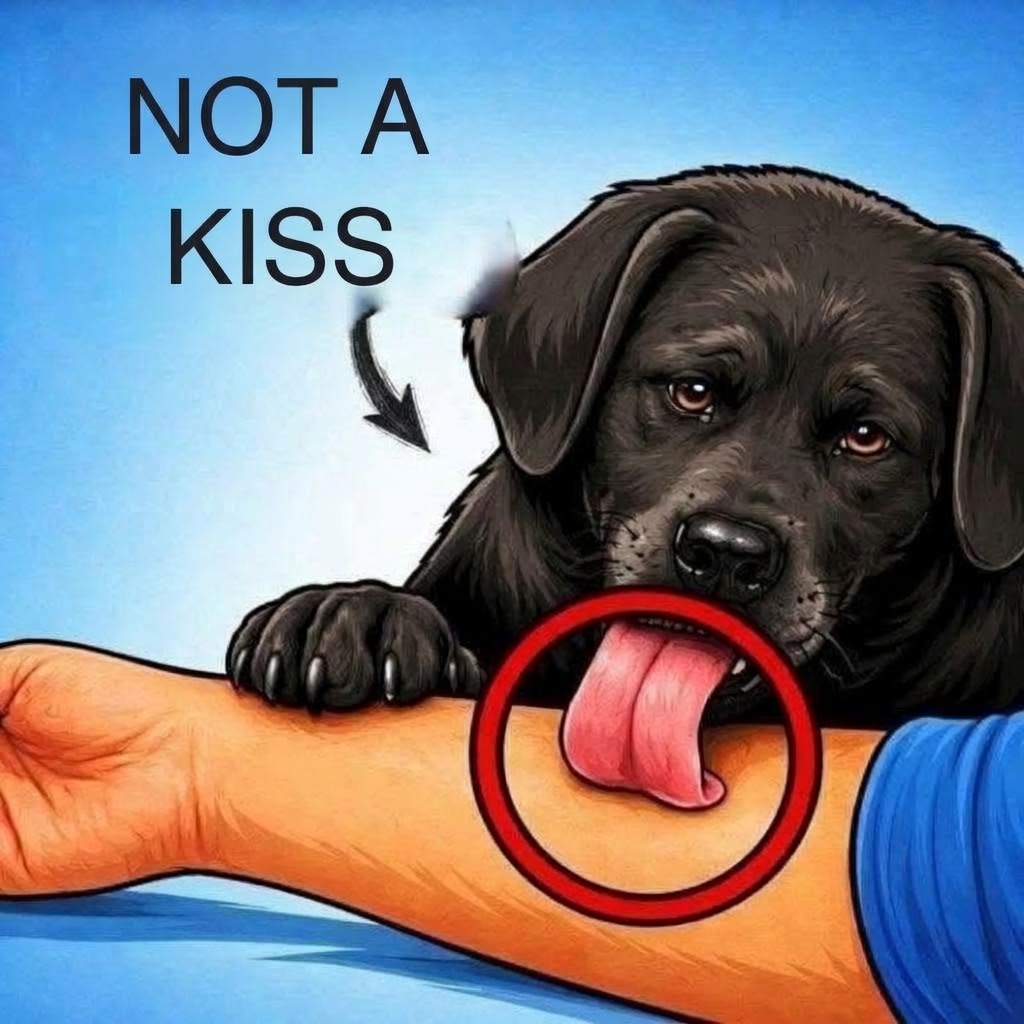
Dogs have been our loyal companions for thousands of years, sharing our homes, routines, and emotional lives. From greeting us at the door with wagging tails to offering comforting snuggles on the couch, dogs communicate with us in fascinating ways. Among all canine behaviors, licking is one of the most common—and often misunderstood.
When viral social media graphics circulate online featuring an illustration of a dog licking an arm with the caption “NOT A KISS”, they instantly capture pet owners’ curiosity and spark lively discussions. In this comprehensive guide, we explore the science of canine communication, why dogs lick human skin, and how to understand your furry friend’s body language.
The Science of Canine Communication and Licking
To understand why dogs frequently lick human hands, arms, and faces, it helps to examine how dogs experience the world and communicate their emotional states.
                  [ CANINE COMMUNICATION & BEHAVIOR ]
                                │
        ┌───────────────────────┴───────────────────────┐
        ▼                                               ▼
[ Instinctual Bonding ]                         [ Sensory Exploration ]
  • Mother dogs lick puppies to groom, comfort,   • Dogs use their sense of taste and smell
    and stimulate social connection early on.       to gather information about their environment.
1. Evolutionary Roots of Licking
Licking is a natural, instinctual behavior rooted in puppyhood. Mother dogs lick their puppies to groom them, keep them warm, and foster strong social bonds. When adult dogs lick humans, it is often a comforting continuation of this affectionate bonding behavior.
2. Gathering Information and Signaling
Dogs also use their tongues and keen sense of taste to explore their environment. A dog might lick human skin to detect salty sweat, seek attention, express submission, or communicate that they are feeling anxious or overwhelmed.
Step-by-Step Guide: Decoding and Responding to Dog Behavior
If you want to better understand your dog’s communication cues and respond appropriately to excessive licking, following a positive, balanced approach is key.
┌─────────────────────────────────────────────────────────┐
│               CANINE BEHAVIOR GUIDANCE                  │
└────────────────────────────┬────────────────────────────┘
                             │
                             ▼
┌─────────────────────────────────────────────────────────┐
│ STEP 1: OBSERVE BODY LANGUAGE                           │
│ • Look for accompanying signs like relaxed posture,     │
│   wagging tails, or stress signals                      │
└────────────────────────────┬────────────────────────────┘
                             │
                             ▼
┌─────────────────────────────────────────────────────────┐
│ STEP 2: REDIRECT EXCESSIVE LICKING                      │
│ • Gently redirect attention with a toy or positive      │
│   command if licking becomes compulsive                 │
└────────────────────────────┬────────────────────────────┘
1. Assessing Context and Body Language
Pay attention to the full picture when your dog starts licking. A relaxed body and soft eyes usually indicate affection or a desire for attention, while cowering or rigid posture may signal stress.
2. Gentle Guidance
If your dog’s licking becomes compulsive or bothersome, avoid harsh punishments. Instead, calmly redirect their focus toward a chew toy or reward them for quiet, calm behavior.
Fascinating Facts About Dog Senses
-
The Canine Palate: Dogs have significantly fewer taste buds than humans—around 1,700 compared to our 9,000—meaning they rely heavily on their extraordinary sense of smell combined with taste when exploring.
-
Calming Signals: In canine body language, licking the air or a person can sometimes serve as a “pacifying signal” used to reduce stress in tense situations.
-
Viral Pet Trends: Behavior graphics and quirky animal insights consistently generate high online engagement because pet lovers love learning more about how their dogs think.
Practical Checklist for Pet Care and Training
-
Monitor Health: Ensure your dog’s skin and dental health are well-maintained by visiting your veterinarian regularly.
-
Provide Mental Enrichment: Keep your dog mentally stimulated with puzzle toys, interactive play, and training sessions.
-
Encourage Positive Reinforcement: Reward calm and polite behaviors to build a strong, trusting bond with your pet.
-
Consult Professionals: Speak with a certified animal behaviorist or veterinarian if you notice sudden changes or compulsive licking habits.
Conclusion
Understanding why our dogs communicate through licking helps deepen the special bond we share with our four-legged family members. By observing their body language, providing positive guidance, and appreciating their instinctual behaviors, you can ensure a happy and harmonious life together!
Frequently Asked Questions (FAQ)
Why do dogs lick human skin?
Dogs lick humans for various reasons, including showing affection, seeking attention, exploring salty sweat with their sense of taste, or communicating stress and submission.
Is dog licking always a sign of affection?
While it is frequently an expression of affection and bonding inherited from puppyhood, licking can also be a calming signal used when a dog feels anxious or overwhelmed.
How can I gently stop my dog from excessive licking?
You can discourage excessive licking by calmly turning away, ignoring the behavior, or redirecting your dog’s attention to an interactive toy or training command.
When should I consult a veterinarian about dog licking?
If your dog engages in compulsive, obsessive licking of themselves or objects, it may indicate medical discomfort, allergies, or anxiety, and you should consult a veterinarian.
