
Human communication extends far beyond spoken words. Body language, facial expressions, and hand gestures have played a powerful role in human interaction, storytelling, and cultural expression for thousands of years.
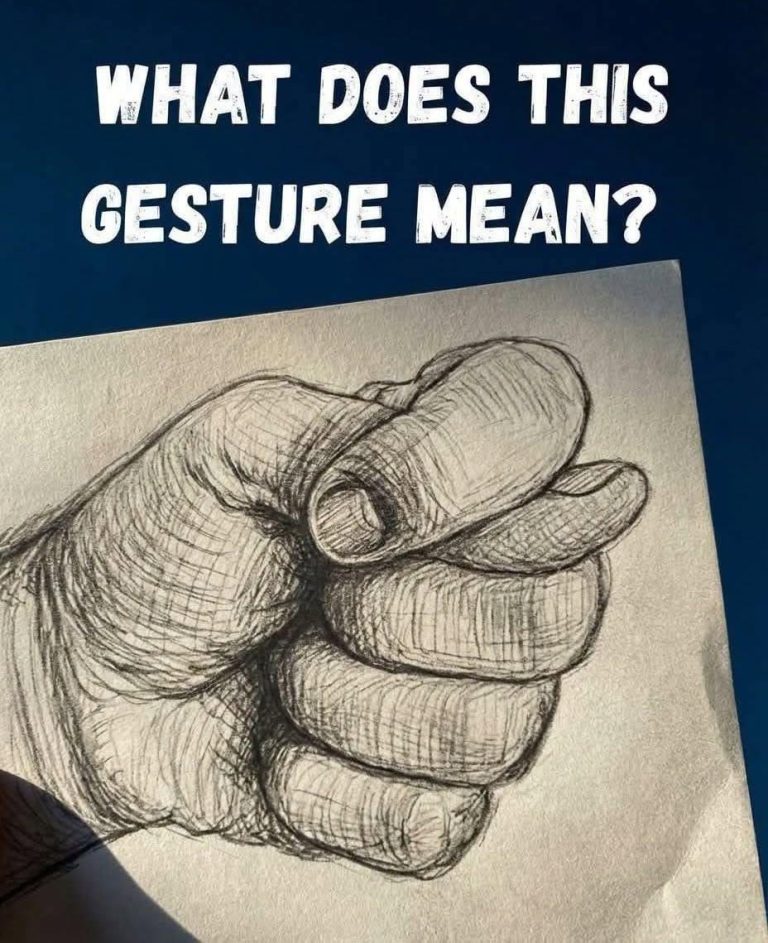
When a viral image asks a curious question like “What does this gesture mean?” featuring a clenched fist with the thumb thrusting between the index and middle fingers, it sparks widespread interest and debate across social media platforms. Known historically as the “fig sign” or mano fica, this ancient gesture carries a surprisingly rich and diverse set of meanings depending on the culture, era, and context in which it is used.
In this comprehensive guide, we explore the ancient history of hand gestures, the cultural interpretations of the fig sign, the psychology of non-verbal communication, and practical tips for understanding global body language.
The History and Symbolism of the Fig Sign
The hand gesture shown in the illustration—where the thumb is pushed forward between the index and middle fingers—is an ancient symbol with roots stretching back to classical antiquity.
1. Ancient Origins and Protective Magic
In ancient Roman and Mediterranean cultures, the fig sign (mano fica) was widely used as a protective amulet or talisman against evil spirits, misfortune, and the “evil eye.” The term fica refers symbolically, and the gesture was believed to ward off negative energy through sympathetic magic.
2. Cultural Shifts in Meaning Across the Globe
While historically used as a protective or dismissive gesture in Southern Europe, Latin America, and parts of Slavic culture, the meaning of the gesture varies drastically across regions:
-
Insulting or Vulgar Symbol: In various modern European and South American cultures, the gesture has historically served as a crude insult (comparable to showing the middle finger).
-
Good Luck Charm: In other regional traditions, miniature pendants shaped into this hand gesture are still worn as charms to attract good luck and ward off jealousy.
+--------------------------+--------------------------------------------------------------+
| Cultural Context         | Traditional Interpretation of the Gesture                    |
+--------------------------+--------------------------------------------------------------+
| Ancient Rome             | Protective amulet against evil spirits and bad luck          |
| Southern Europe & Brazil | Traditional insult or defensive warding off of malice        |
| Modern Folklore          | Curiosity-inducing symbol in viral imagery and social media  |
| Artistic Representation  | Classic subject in historical sketches, drawings, and art    |
+--------------------------+--------------------------------------------------------------+
The Psychology of Non-Verbal Communication
Gestures and body language account for a massive percentage of everyday human communication, conveying emotions, cultural identity, and social intent instantly.
Why Gestures Matter
-
Instant Emotional Transmission: Non-verbal signs can express humor, defiance, protection, or warning faster than spoken speech.
-
Cultural Nuances: Hand signals demonstrate how deeply human communication is tied to historical traditions, folklore, and regional norms.
Financial, Health, and Lifestyle Considerations for Daily Stress
While exploring cultural trivia and viral social media quizzes is an entertaining pastime, maintaining a balanced lifestyle requires focusing on grounded daily habits.
1. Stress Reduction and Digital Wellness
Spending time engaging with interesting puzzles, historical trivia, and creative artwork provides a fun mental break from work and daily responsibilities. Balancing screen time with offline relaxation supports overall mental well-being.
2. Financial Planning and Long-Term Stability
Just as understanding subtle cultural nuances prevents misunderstandings, financial clarity prevents costly mistakes. Maintaining a steady household budget, building emergency savings, and managing personal investments ensure long-term peace of mind.
Practical Tips for Understanding Body Language
-
Be Mindful of Cultural Context: Always remember that hand gestures can mean vastly different things depending on the country and culture you are visiting.
-
Observe Facial Cues: Combine hand gestures with facial expressions and vocal tone to accurately interpret someone’s intent.
-
Enjoy Continuous Learning: Use curious viral images as a starting point to dive deeper into history, anthropology, and global traditions.
Fascinating Facts About Hand Gestures
-
Universal vs. Culture-Specific: While basic expressions like smiling or frowning are universal, most complex hand gestures are entirely learned and culture-specific.
-
Ancient Roman Slang: Roman writers frequently referenced hand gestures in literature, proving that non-verbal taunts and charms have existed for millennia.
-
Artistic Studies: Renaissance artists frequently studied human anatomy and hand gestures meticulously to bring realism and expressive emotion to their paintings and sketches.
Frequently Asked Questions (FAQ)
What is this specific hand gesture called?
This gesture is traditionally known as the fig sign, or mano fica in Italian, formed by tucking the thumb between the index and middle fingers.
Is this gesture considered offensive everywhere?
No. While it can be used as a crude insult in certain cultures, it has also historically served as a protective charm against bad luck in other regions.
Why do viral posts feature historical gestures?
Viral puzzles spark curiosity and engagement by inviting users to test their knowledge of history, folklore, and global cultural symbols.
How can I learn more about cultural gestures?
Reading books on anthropology, exploring global etiquette guides, and researching historical symbols provide wonderful insights into non-verbal communication.
Conclusion
Encountering mysterious symbols and historical gestures online—such as the classic fig sign—offers a wonderful opportunity to explore the rich tapestry of human history and global folklore. What seems like a simple drawing often carries centuries of cultural meaning, superstition, and tradition.
By combining lighthearted curiosity with practical life planning, balanced daily habits, and lifelong learning, you can enjoy fascinating insights into the world around you while maintaining total peace of mind!
