
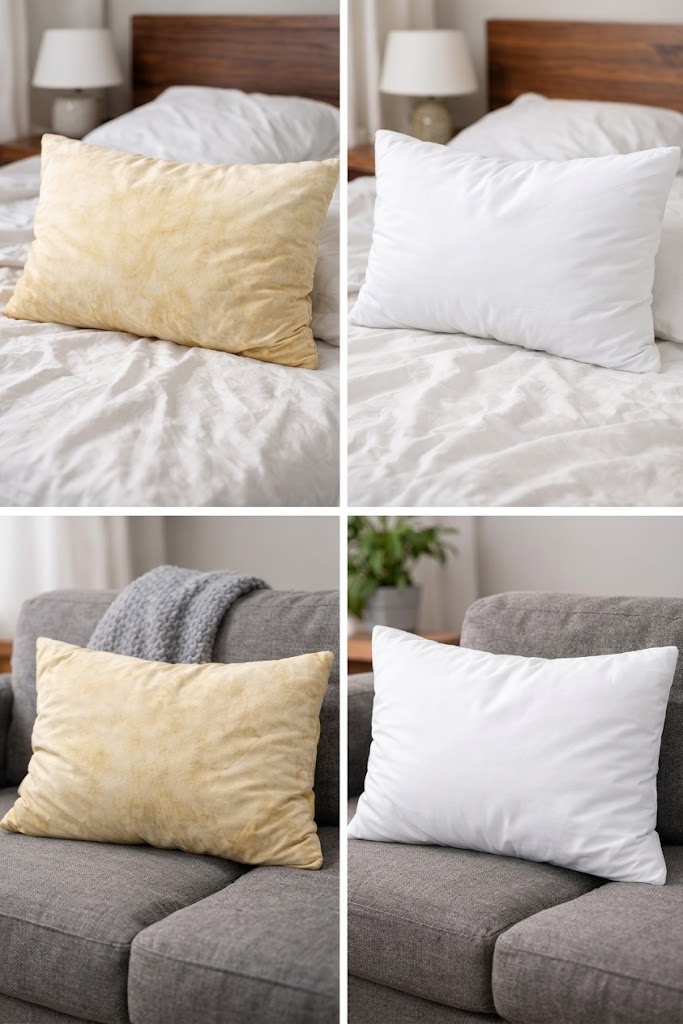
Over time, even the highest-quality bed and sofa pillows lose their pristine white brilliance. Unsightly yellow discoloration, stubborn water spots, and accumulated body oils can leave bedding looking tired, unhygienic, and aged. Many homeowners assume that once a pillow turns yellow, its useful lifespan has ended and it must be thrown away. However, with the right deep-cleaning techniques, natural stripping solutions, and preventative care methods, you can completely restore discolored pillows to bright, plush, store-bought perfection.
Understanding what causes pillow yellowing—and applying targeted, household-safe whitening protocols—allows you to extend the longevity of your bedroom linens, save money, and maintain an ultra-clean home environment.
Why Do Pillows Turn Yellow Over Time?
Before applying whitening remedies, it helps to understand why pillows develop yellow stains in the first place. Discoloration is rarely a sign of permanent damage; rather, it is the result of organic residues accumulating on pillow fabric fibers over months of daily use.
+--------------------------+-----------------------------------------------------------+
| Cause of Yellowing       | How It Affects Pillow Fabrics                             |
+--------------------------+-----------------------------------------------------------+
| Natural Body Sweat       | Moisture penetrates pillowcases, leaving protein deposits |
| Natural Facial Oils      | Sebum oxidizes on cotton and synthetic fibers over time   |
| Drool During Sleep       | Enzymatic moisture dries into noticeable yellow rings     |
| Wet Hair Before Bed      | Moisture traps dust, dander, and deep fabric discoloration |
| Cosmetic Residues        | Creams, lotions, and night serums leave oily residues    |
+--------------------------+-----------------------------------------------------------+
The Role of Oxidation and Protein Stains
When sweat, saliva, and sebum soak through pillowcases into the pillow ticking (the outer fabric layer), they contain proteins and fatty acids that oxidize when exposed to air. As oxidation occurs, these clear or faint residues chemically react and turn distinct shades of yellow or light brown. Washing pillows with standard detergent alone often fails because everyday laundry formulas do not break down deep, oxidized lipid bonds.
The Step-by-Step Deep Whitening Soak Method
To achieve a dramatic before-and-after transformation like the one shown above, standard machine washing is rarely enough. A deep laundry stripping soak dissolves embedded oils before the washing machine cycle even starts.
+-----------------------+-----------------------------------------------------------+
| Ingredients Required  | Quantity / Ratio                                          |
+-----------------------+-----------------------------------------------------------+
| Very Hot Water        | Enough to submerge pillows completely in tub or basin     |
| Powdered Laundry Soap | 1 Cup (high-performance formulation)                      |
| Dishwashing Powder    | 1 Cup (breaks down tough lipid and oil deposits)          |
| Washing Soda / Borax  | 1/2 Cup (softens water and lifts embedded yellowing)     |
| Oxygen-Based Bleach   | 1 Cup (color-safe optical brightener and stain lifter)    |
+-----------------------+-----------------------------------------------------------+
1. Preparation and Soaking Protocol
-
Fill a Large Basin or Bathtub: Fill your tub or a large laundry tub with extremely hot water. Heat plays a vital role in melting down set-in lipids and activating mineral salts.
-
Dissolve the Cleaning Mix: Add 1 cup of powdered laundry detergent, 1 cup of powdered dishwasher detergent, 1/2 cup of washing soda (or borax), and 1 cup of oxygen bleach. Stir thoroughly until all powders are completely dissolved.
-
Submerge the Pillows: Submerge two pillows into the solution. Press down firmly using a wooden spoon or clean gloved hands to ensure the solution penetrates deep into the interior filling.
-
Soak for 2 to 4 Hours: Allow the pillows to soak for several hours, agitating and flipping them every 30 minutes. You will notice the water turning dark as years of build-up leach out of the fabric.
2. The Machine Wash Cycle
-
Balance the Drum: Always wash pillows in pairs to keep your washing machine drum balanced during high-speed spin cycles.
-
Select Hot Water & Extra Rinse: Set your washing machine to the hottest water setting suitable for the pillow material, utilizing a heavy-duty cycle with an extra rinse option to remove all detergent residue.
-
Skip Liquid Fabric Softeners: Avoid liquid fabric softeners, as they coat fabric fibers with a waxy layer that traps future sweat and causes accelerated yellowing later on.
Drying Techniques for Fluffy, Mold-Free Pillows
Proper drying is just as important as the washing process itself. Trapped moisture inside pillow filling can lead to lingering damp odors or inner mold growth.
+--------------------+-------------------------------------------+-----------------------------------+
| Drying Method      | Recommended Settings / Technique          | Key Advantage                     |
+--------------------+-------------------------------------------+-----------------------------------+
| Tumble Dryer       | Low to Medium heat with Wool Dryer Balls  | Restores maximum fluff & loft     |
| Outdoor Sun Drying | Direct sunlight on a clean clothesline    | Natural UV bleaching & freshening |
+--------------------+-------------------------------------------+-----------------------------------+
-
Use Dryer Balls or Tennis Balls: Place 3 to 4 wool dryer balls (or clean tennis balls wrapped in white socks) into the dryer drum. As they bounce around, they beat out lumps, redistribute fill, and restore original loft.
-
Verify Complete Dryness: Before placing pillows back on your bed, squeeze them deeply near the center. If you feel any cool dampness or density, run another low-heat dryer cycle.
Smart Home Investments, Health Insurance, and Wellness Planning
Maintaining a pristine, hygienic sleeping environment is fundamental to personal health, respiratory wellness, and long-term sleep quality. Pillows loaded with oxidized sweat, dander, and dust mites can trigger nightly allergy symptoms, skin breakouts, and disrupted sleep schedules.
Investing in high-quality home care products, hypo-allergenic mattress covers, and premium bedding often forms part of a broader health and wellness strategy. For households prioritizing wellness, evaluating health insurance policies that offer comprehensive preventive coverage, wellness stipends, or HSA/FSA eligibility for allergy-mitigation home products can provide significant savings.
+-----------------------------------+---------------------------------------------------------------+
| Strategic Planning Area           | Connection to Home Care & Quality of Life                     |
+-----------------------------------+---------------------------------------------------------------+
| Health & Medical Insurance        | HSA/FSA benefits for anti-allergen & orthopedic sleep goods  |
| Personal Finance & Budgeting      | Extending product lifespans saves significant yearly costs     |
| Homeowners Insurance Coverage     | Protects home assets, furniture, & valuable interior goods    |
| Estate & Legal Services           | Long-term planning for home asset preservation & comfort      |
+-----------------------------------+---------------------------------------------------------------+
Managing household finances effectively means extending the lifespan of everyday goods rather than prematurely replacing them. Simple restoration hacks keep money in your savings or investment accounts, supporting long-term financial security, mortgage planning, and retirement goals. Furthermore, when organizing major home restorations or dealing with home asset claims, maintaining well-kept interiors preserves total property value and simplifies home insurance valuations.
Practical Tips to Keep Pillows White Longer
To keep your restored pillows looking crisp and clean long after deep stripping, implement these simple daily habits:
-
Use Zippered Waterproof Pillow Protectors: Always place a breathable, waterproof zippered protector between the pillow and the decorative pillowcase to create an impenetrable barrier against sweat and skin oils.
-
Wash Pillowcases Every 7 Days: Frequently laundering your pillowcases prevents oils from saturating through to the pillow ticking below.
-
Never Go to Bed with Wet Hair: Damp hair transfers moisture straight into pillow cores, encouraging yellowing and odor accumulation.
-
Air Pillows in Sun Regularly: UV light from natural sunlight acts as a free, organic antibacterial agent and natural fabric brightener.
Fascinating Facts About Pillows and Sleep Hygiene
-
Weight Increase Over Time: Studies suggest that an unwashed pillow can double its weight over several years due to accumulated dead skin cells, sweat, dust mites, and debris.
-
Ancient Pillow Materials: Early pillows in ancient Mesopotamia were crafted from carved stone, designed not for comfort, but to keep insects from crawling into sleeping people’s ears and hair.
-
The Power of Sunlight: Natural ultraviolet (UV) radiation breaks down organic chemical bonds in yellow stains, making outdoor sun-airing one of history’s oldest whitening tricks.
Conclusion
Yellowing pillows do not belong in the trash. By utilizing a targeted hot-water soak with oxygen brighteners and washing soda, you can break down years of stubborn, oxidized body oils and return your bedding to pristine, snow-white freshness. Pairing these deep-cleansing techniques with protective zippered covers, proper drying methods, and proactive home maintenance protects your health, elevates bedroom comfort, and saves you money for years to come.
Frequently Asked Questions (FAQ)
1. Can memory foam or latex pillows be soaked in this whitening mix?
No. Memory foam and solid latex pillows should never be submerged in water or placed in a washing machine, as liquid breaks down their cell structure. For memory foam, spot clean stains with mild soap and a damp cloth, then air dry completely.
2. Is chlorine bleach safe for whitening yellowed pillows?
Avoid using chlorine bleach on sweat-stained white fabrics. Chlorine bleach reacts chemically with protein stains like sweat and saliva, often causing yellowing to become deeper and more permanent. Use oxygen-based bleach instead.
3. How often should bed pillows be washed?
Pillows should receive a full wash or deep soak 2 to 4 times per year. Decorative couch pillows can be spot-cleaned or washed twice a year, while protective outer pillow covers should be washed monthly.
