
Introduction
As warm weather arrives, homeowners and gardening enthusiasts look forward to spending peaceful evenings on the porch, hosting outdoor gatherings, or tending to vibrant backyard gardens. However, few things disrupt an outdoor paradise faster than swarms of hungry mosquitoes. Mosquito bites are not only itchy and uncomfortable, but they can also pose serious health risks by transmitting vector-borne diseases. While many people resort to chemical sprays, expensive outdoor misting systems, or electronic bug zappers, these synthetic approaches can harm beneficial pollinators and disrupt local ecosystems. Fortunately, nature offers a far more effective and beautiful solution: the dragonfly.
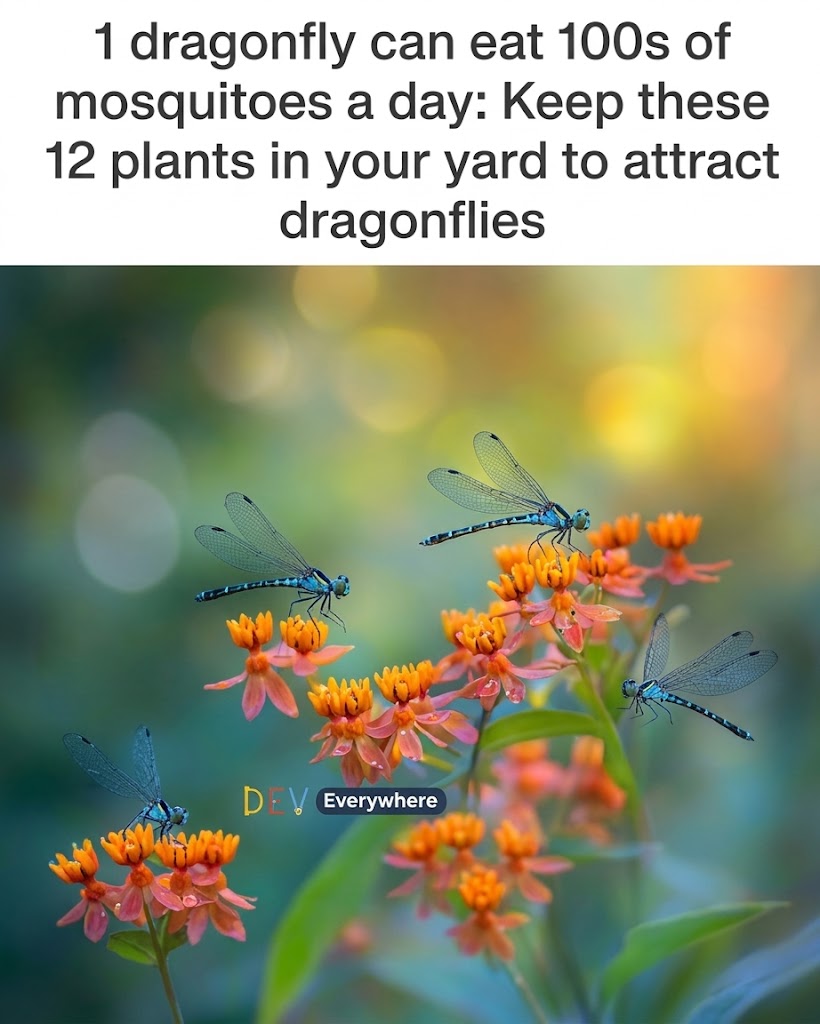
Dragonflies are extraordinary natural predators. A single adult dragonfly can consume hundreds of mosquitoes, gnats, and biting flies every single day, earning them the nickname “mosquito hawks” among naturalists. To turn your yard into a natural refuge free of pest insects, the key lies in creating an inviting habitat that attracts these beneficial airborne hunters. By introducing specific plant species into your landscape, you provide dragonflies with essential perching sites, hunting grounds, shelter, and breeding habitats. In this comprehensive guide, we will explore 12 powerful plants that attract dragonflies to your garden, while offering practical advice to maximize your backyard ecosystem and enjoy a mosquito-free oasis.
Understanding Dragonfly Biology and Hunting Habits
To effectively attract dragonflies to your outdoor space, it helps to understand their lifestyle, hunting mechanisms, and ecological requirements. Dragonflies belong to the order Odonata, an ancient group of insects that has inhabited Earth for over 300 million years. Their survival success is largely due to their unmatched aerial agility and predatory efficiency.
Incredible Flying Capabilities and Vision
Dragonflies possess four wings that operate independently, allowing them to fly backward, upside down, hover in mid-air for extended periods, and accelerate up to speeds of 30 miles per hour. Furthermore, their large compound eyes contain up to 30,000 individual lenses, granting them nearly 360-degree vision. This exceptional visual acuity allows dragonflies to calculate the trajectory of moving prey and intercept insects in mid-air with a success rate exceeding 95 percent—a rate significantly higher than apex predators like lions or hawks.
Life Cycle and Water Requirements
The dragonfly life cycle consists of three main stages: egg, nymph (or naiad), and adult. Dragonflies spend the majority of their lives—ranging from several months to several years—underwater as aquatic nymphs. During this aquatic stage, dragonfly nymphs are fierce underwater predators, consuming mosquito larvae, tadpoles, and small fish. When they are ready to transform into adults, they crawl out of the water onto nearby aquatic foliage or tall stem plants to undergo their final metamorphosis. Because of this dual-stage life cycle, incorporating both water features and supportive vegetation into your property will yield the highest long-term success.
Top 12 Plants to Attract Dragonflies to Your Yard
Designing a dragonfly-friendly landscape requires a blend of aquatic plants, marginal water plants, and tall terrestrial flora that offer shelter, perching spots, and hunting zones. Below are the 12 best plant species to cultivate in your garden.
1. Black-Eyed Susan (Rudbeckia hirta)
Black-Eyed Susans are classic American wildflowers known for their bright yellow petals and dark central cones. These hardy perennials thrive in full sun and attract a wide range of pollinating insects, such as bees and butterflies. Because dragonflies actively hunt smaller insects attracted to bright blooms, Black-Eyed Susans create a rich feeding ground while providing sturdy stems for dragonflies to perch on while scanning for nearby mosquitoes.
2. Swamp Milkweed (Asclepias incarnata)
Swamp Milkweed is an outstanding perennial choice for damp garden areas, pond borders, or rain gardens. Producing clusters of fragrant pink and purple flowers, this plant attracts butterflies and small pollinators. The tall, sturdy stalks serve as perfect perching spots for adult dragonflies, while its moisture-loving nature makes it ideal for surrounding water features where dragonflies breed.
3. Joe-Pye Weed (Eutrochium purpureum)
Reaching impressive heights of up to seven feet, Joe-Pye Weed is a giant among native perennials. It features large, vanilla-scented pinkish-purple flower heads that bloom from late summer through early autumn. Due to its sheer height and structural rigidity, Joe-Pye Weed gives dragonflies a high vantage point to scout for flying mosquito prey across your entire yard.
4. Meadow Sage (Salvia nemorosa)
Meadow Sage offers beautiful spires of rich violet, purple, or blue flowers that bloom throughout the summer months. This plant loves full sun and attracts midges, small flies, and tiny pollinators, which in turn draw hungry dragonflies. Its dense branching habit provides excellent shelter for dragonflies seeking protection from high winds or rain.
5. Water Lily (Nymphaea species)
Water Lilies are quintessential aquatic plants for any pond or backyard water feature. Their broad, floating leaves provide essential cover for aquatic dragonfly nymphs, protecting them from predatory fish and birds. Additionally, female dragonflies frequently use the broad floating pads of water lilies as landing platforms to lay their eggs safely on or just beneath the surface of the water.
6. Cattail (Typha latifolia)
Cattails are iconic wetland plants that play a crucial role in the dragonfly life cycle. The tall, upright reeds rise out of shallow water, providing the ultimate climbing structure for aquatic nymphs emerging from the water to transform into adult dragonflies. Their dense growth pattern also acts as a natural windbreak, creating calm hunting zones for adult dragonflies.
7. Pickerelweed (Pontederia cordata)
Pickerelweed is a striking marginal aquatic plant that features shiny, heart-shaped leaves and tall spikes of violet-blue flowers. Thriving in shallow water along pond margins, Pickerelweed offers submerged shelter for dragonfly larvae as well as strong exposed stems for emerging adults. The blooms also attract small insects, providing a steady food source for dragonflies.
8. Arrowhead (Sagittaria latifolia)
Commonly known as Duck Potato, Arrowhead is a hardy perennial aquatic plant named for its distinctively shaped leaves. Growing in shallow water or muddy shorelines, Arrowhead creates an ideal transition zone between land and water. Dragonflies frequently rely on its sturdy stems for landing, perching, and laying eggs along the water line.
9. Wild Celery (Vallisneria americana)
Wild Celery, or Eelgrass, is a completely submerged aquatic plant that grows beneath the surface of ponds and quiet water features. It creates dense underwater ribbon-like forests that provide vital oxygenation to the water column. More importantly, these submerged grasses offer essential hiding spots for young dragonfly nymphs to hunt mosquito larvae safely.
10. Coneflower (Echinacea purpurea)
Purple Coneflower is a favorite in native plant gardens due to its drought tolerance, striking color, and long bloom period. Its large, rigid central seed cones make prime perching towers for dragonflies. As small insects gather around the coneflowers to feed on nectar, dragonflies make swift, targeted swoops to capture mosquitoes in the surrounding air space.
11. Borage (Borago officinalis)
Borage is an annual herb recognized for its star-shaped blue flowers and edible foliage. It produces abundant nectar that attracts a diverse array of small flying insects throughout the growing season. This high concentration of insect activity acts as a magnet for dragonflies searching for a quick and reliable food supply.
12. Water Horsetail (Equisetum fluviatile)
Water Horsetail is an ancient, reed-like perennial that thrives in shallow water and muddy borders. Its hollow, jointed stems extend vertically out of the water, providing the perfect vertical ladder for dragonfly nymphs making their transition to adults. Planting Water Horsetail along pond edges significantly increases the survival rate of emerging dragonflies.
Creating a Complete Dragonfly Haven in Your Backyard
While planting these 12 botanical options provides a strong foundation, combining plant selection with smart landscape design features will dramatically increase dragonfly populations on your property.
Incorporate a Water Feature
Because dragonflies spend the first phase of their lives underwater, adding a water feature is the single most effective action you can take. You do not need a massive farm pond; a small backyard garden pond, container water garden, or small aquatic tub with a depth of at least 18 to 24 inches is sufficient. Ensure your water feature includes quiet, still water areas where females can lay eggs without heavy currents washing them away.
Ensure Plenty of Sunlight
Dragonflies are cold-blooded creatures that rely on the sun’s warmth to warm up their flight muscles each morning. Position your dragonfly garden and water feature in a location that receives full sun for at least six hours a day. Adding flat, light-colored basking stones around the perimeter of your garden gives dragonflies a warm place to rest and recharge their energy between hunting sessions.
Eliminate Synthetic Pesticides and Chemical Sprays
Using synthetic chemical insecticides in your garden defeats the purpose of natural pest control. Broad-spectrum sprays target beneficial insects alongside pests, killing adult dragonflies and wiping out their aquatic larvae. Avoid chemical fertilizers, herbicides, and systemic insecticides. Allow nature to establish a self-sustaining ecological balance where dragonflies, birds, and beneficial insects keep mosquito populations under control naturally.
Environmental and Financial Benefits of Natural Pest Control
Choosing natural pest management over synthetic chemical solutions offers long-term benefits for your home, wallet, and overall quality of life.
Protecting Property and Household Investments
Investing in native land restoration and eco-friendly landscaping significantly enhances curb appeal and property value. Beautifully designed pond features and vibrant native flower beds increase residential property desirability while reducing long-term maintenance costs associated with periodic professional chemical spraying contracts.
Health, Safety, and Legal Peace of Mind
Relying on natural predators minimizes exposure to chemical toxicity for your family, pets, and local wildlife. In many regions, strict environmental regulations and local municipal ordinances govern chemical runoff into stormwater systems. By adopting organic, botanical solutions, homeowners prevent non-point source pollution, ensuring compliance with environmental standards and supporting community health.
Fascinating Facts About Dragonflies
-
Ancient Giants: Prehistoric ancestors of modern dragonflies, known as Meganeura, lived over 300 million years ago and boasted wingspans exceeding two feet—roughly the size of a modern crow.
-
Master Hunters: A adult dragonfly can catch and devour up to 30 to 100 mosquitoes per day, maintaining a successful hunting capture rate near 95 percent.
-
Thermoregulation: Dragonflies use a technique called “obelisking,” where they raise their abdomens toward the sun to prevent overheating on scorching summer days.
-
Global Presence: Dragonflies live on every continent except Antarctica, with over 3,000 distinct species identified worldwide.
Conclusion
Controlling mosquito populations does not require synthetic chemical sprays or noisy electric bug zappers. By harnessing the natural hunting abilities of dragonflies, you can restore ecological harmony to your outdoor space while enjoying a mosquito-free yard. Cultivating a strategic mix of aquatic plants like Water Lilies, Cattails, and Arrowhead alongside tall terrestrial bloomers like Joe-Pye Weed, Black-Eyed Susans, and Coneflowers creates an ideal habitat for these amazing aerial predators. Start transforming your garden today, and let nature’s most efficient aviators handle your mosquito problems naturally.
FAQ Section
How quickly will dragonflies arrive after I put in these plants?
If you already have adult dragonflies in your local region, they can discover new perching and hunting plants within a few days. Establishing a breeding population via a water feature typically takes one full season as nymphs develop underwater.
Do dragonflies bite or sting human beings?
No, dragonflies do not possess stingers and do not attack humans. While they have powerful mandibles used to catch and crush insects, they only bite humans in extremely rare instances if handled roughly or held tightly in hand.
Will dragonflies attract unwanted wild animals to my yard?
No, dragonflies feed almost exclusively on small flying insects like mosquitoes, flies, midges, and gnats. They do not attract larger mammalian pests or unwanted wildlife to your property.
Can I attract dragonflies if I live in an urban area without a big lawn?
Yes! You can easily set up a small patio container water garden paired with potted tall perennials like Salvia and Black-Eyed Susans on a balcony or urban deck to attract passing dragonflies.
