
Many people immediately panic, but panic can increase heart rate and circulation, potentially helping venom spread more quickly through the body. This is why one of the first recommendations from emergency professionals is to remain as calm as possible.
Not every snake bite injects venom.
Some venomous snakes deliver what experts call a “dry bite,” meaning little or no venom enters the body. At the same time, some non-venomous bites may still cause pain, bleeding, swelling, or infection.
The safest approach is to treat every snake bite as a potentially serious medical event until healthcare professionals can properly evaluate the situation.

Chapter 2: Understanding Bite Marks
Many people believe they can instantly identify
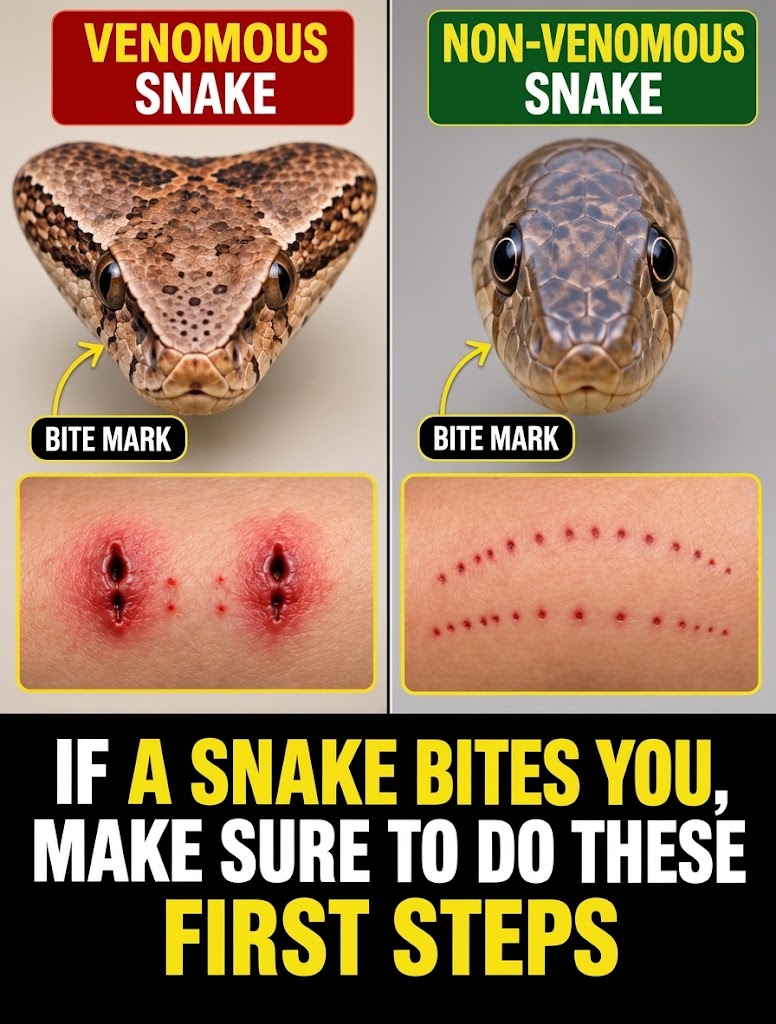
a venomous snake by looking at the bite pattern. While certain venomous species often leave two prominent fang punctures, bite marks alone cannot provide a reliable diagnosis.
Venomous bites may sometimes show two deeper puncture wounds, while non-venomous snakes often leave multiple small tooth marks. However, these patterns can vary widely depending on the species, angle of the bite, and movement during the attack.
Because appearances can be misleading, experts advise against relying solely on wound shape to determine danger.
Other symptoms may offer more clues. Severe swelling, intense pain,
nausea, dizziness, breathing difficulties, or unusual bleeding can indicate a serious reaction requiring immediate medical attention.
If it can be done safely, remembering the snake’s color, size, or pattern may help medical personnel later. However, nobody should attempt to capture or kill the snake, as many additional injuries occur during such attempts.
Chapter 3: The First Actions to Take
The first few minutes after a snake bite are critical. The priority should be moving away from the snake to prevent additional bites.
Next, call emergency services or seek medical assistance
immediately. Keep the bitten area as still as possible. Movement can increase circulation and potentially spread venom more rapidly.

Remove rings, watches, bracelets, or tight clothing near the affected area because swelling may develop quickly.
Keep the bite at a comfortable position and avoid unnecessary physical activity. If possible, note the time of the bite and monitor symptoms while waiting for medical help.
Many modern medical guidelines emphasize rapid transport to professional care rather than complicated field treatments.
Chapter 4: Common Mistakes People Still Make
Movies and television have popularized
several snake-bite myths that can actually make a situation worse.
One common mistake is attempting to suck venom from the wound. Medical experts generally discourage this practice because it removes little venom and may introduce bacteria.
Another mistake is cutting the wound with a knife. This can increase tissue damage and bleeding without providing meaningful benefits.
Using ice directly on the bite is also not recommended in many situations because it may worsen local tissue injury.
People should also avoid consuming alcohol, which can complicate medical evaluation and affect the

The goal is not to perform dramatic interventions. The goal is to reach professional medical treatment as quickly and safely as possible.
Chapter 5: Prevention Is the Best Protection
Although snake bites receive significant attention, most encounters can be avoided through simple precautions.
When hiking, wear sturdy footwear and stay on established trails. Use a flashlight when walking outside at night. Avoid placing hands into holes, rock crevices, thick vegetation, or areas where visibility is limited.

If you see a snake, maintain a safe distance
and allow it to move away on its own. Most snakes prefer avoiding humans and only bite when they feel threatened.
Learning basic first aid, understanding local wildlife, and respecting natural habitats can dramatically reduce the risk of dangerous encounters.
A snake bite is a situation that demands calm thinking and prompt action. While identifying the species may help medical professionals later, the most important first step is always the same: seek medical attention quickly and avoid treatments that could make the injury worse.
