
Suddenly Felt Something Stuck in Your Throat? It Could Be a Tonsil Stone
A small, firm lump that appears after coughing or clearing your throat can be surprising. One possible explanation is a tonsil stone—a buildup of material inside the natural folds of the tonsils. Here’s what causes these deposits, how to recognize common symptoms, and when to seek medical care.
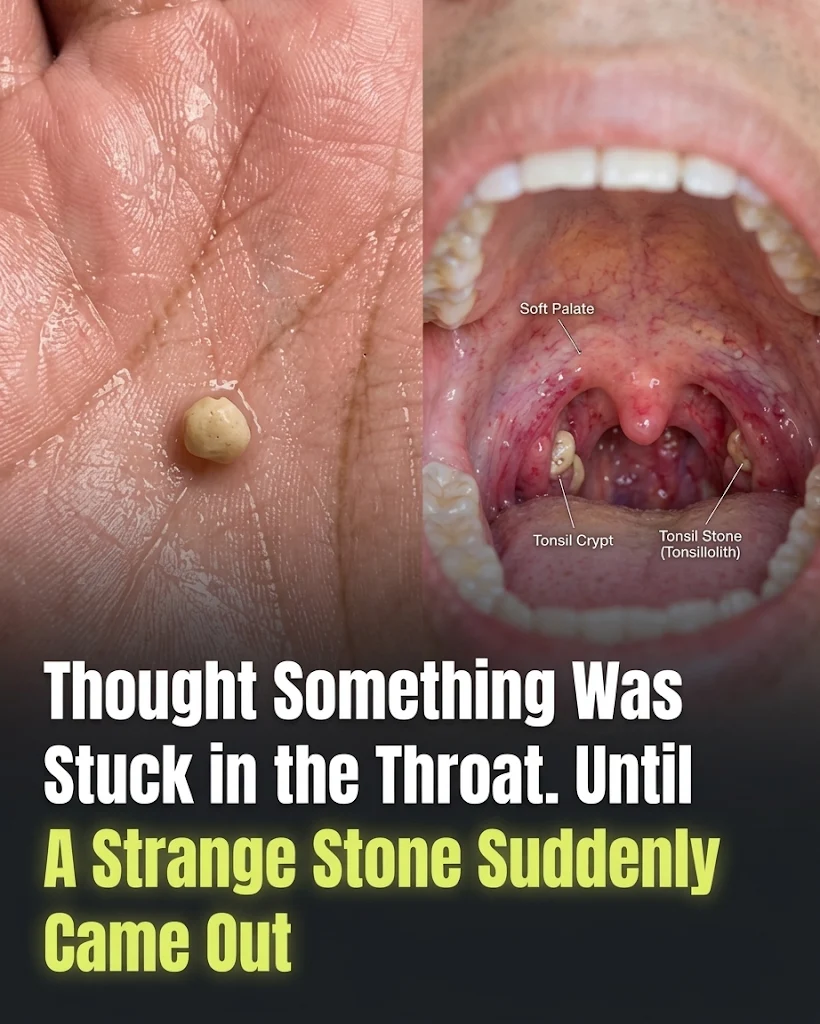
Imagine swallowing normally, drinking a glass of water, and then suddenly feeling as though something is stuck at the back of your throat. You swallow again, clear your throat, or try drinking more water, but the uncomfortable sensation does not disappear. Hours or even days later, a small, pale lump comes out when you cough or gargle.
For some people, this experience is caused by a tonsil stone, also known as a tonsillolith. These small deposits form inside the natural crevices of the tonsils. They are usually not dangerous,
but they can cause irritation, an unpleasant taste, bad breath, or the sensation that something is lodged in the throat.
The appearance of a lump does not automatically mean it is a tonsil stone. Other conditions can cause similar symptoms, and a photograph alone cannot establish a diagnosis. Understanding how tonsil stones form—and how their symptoms differ from more serious throat problems—can help you decide what to do next.

What Is a Tonsil Stone?
Tonsil stones are small, hardened deposits that develop in the crevices and pockets of the tonsils. They may look like tiny white, cream-colored, or yellowish grains. Some are barely visible, while others grow large enough to become noticeable when a person looks at the back of the mouth.
The tonsils are two masses of immune tissue located on either side of the back of the throat. They help the immune system recognize and respond to germs
entering through the mouth and nose.
The surface of the tonsils is not perfectly smooth. It contains small grooves and openings called tonsillar crypts. These structures are normal, but their pockets can collect material.
Food particles, mucus, shed cells, bacteria, and other debris may become trapped in the crypts. Over time, this material can compact and harden, forming a small stone. Mineral deposits, including calcium salts, can contribute to the hardening process.
Tonsil stones vary in size and consistency. Some are soft and crumbly; others are firmer. A person may have one visible deposit, several tiny deposits, or stones that repeatedly form in the same areas.
Many tonsil stones are harmless and do not require treatment. Some people discover them accidentally while brushing their teeth or examining their throat. Others notice symptoms that encourage them to look more closely.
The important distinction is that a tonsil stone is a deposit
within a tonsil crypt—not a piece of food permanently lodged in the airway. If you cannot breathe normally or cannot swallow saliva, do not assume the problem is a tonsil stone; seek emergency medical assistance.
Why Do Tonsil Stones Form?

Tonsil stones form when debris remains trapped in the tonsils long enough to accumulate and harden. However, not everyone has the same likelihood of developing them.
1. Naturally deep tonsil crypts
Some people have deeper or more numerous tonsillar crypts than others. These pockets provide more places for food particles, mucus, and shed cells to collect.
Deep crypts do not necessarily indicate a health problem. They are a normal anatomical variation, but they can make tonsil stones more likely to form.
2. Repeated inflammation of the tonsils
People who have experienced frequent tonsil inflammation may develop changes in the surface of the tonsils. In some cases, these changes make debris
more likely to become trapped.
A history of recurrent tonsillitis does not guarantee that tonsil stones will develop, and tonsil stones themselves do not necessarily mean that a person has an active infection.
3. Bacteria and accumulated debris
The mouth naturally contains many kinds of bacteria. When bacteria interact with trapped debris, they can contribute to the formation of deposits and produce unpleasant-smelling compounds.
This is one reason tonsil stones are often associated with bad breath. The odor may persist even when someone brushes regularly because the material is sitting inside the tonsil crypts rather than on the teeth or tongue.
4. Dry mouth
Saliva helps keep the mouth moist and washes away some food particles and debris. When saliva production is reduced, material may accumulate more easily.
Dry mouth can occur because of dehydration, mouth breathing, certain medications, or other conditions. Drinking adequate fluids may help maintain normal oral
moisture, although it will not remove every tonsil stone or prevent all future deposits.
5. Oral hygiene and individual differences
Regular brushing, cleaning between the teeth, and gently cleaning the tongue can reduce the amount of debris and bacteria in the mouth. These habits may help with bad breath and general oral health.
However, tonsil stones can develop even in people with good oral hygiene. They are not proof that someone is dirty or neglecting their teeth. The structure of the tonsils and individual factors also matter.
What Does a Tonsil Stone Feel Like?
The symptoms depend on the size and location of the deposit. A very small stone may produce no symptoms at all, while a larger one can become irritating.
Common symptoms include:
- A sensation of something stuck in the throat. You may feel the need to swallow repeatedly or clear your throat.
- Bad breath. Bacteria and trapped
- debris can produce unpleasant odors.
- An unpleasant taste. Some people notice a bitter or foul taste in their mouth.
- Mild throat irritation. A stone may rub against nearby tissue or make the throat feel uncomfortable.
- A visible white or yellowish spot. A deposit may be seen in a tonsil crypt when the mouth is open.
- Occasional coughing or throat clearing. Irritation can make some people feel the need to clear their throat repeatedly.
- Mild discomfort when swallowing. Larger stones may make swallowing feel uncomfortable.
Not everyone experiences all these symptoms. Some people only notice bad breath, while others discover a stone after coughing or gargling.
A tonsil stone can sometimes come loose naturally and appear as a tiny, firm or crumbly lump. This can be surprising, especially if the person did not know that a deposit was present.
Still, the sensation of a lump in the throat is not specific
to tonsil stones. Reflux, postnasal drip, throat inflammation, and a condition known as globus sensation can create similar feelings. A persistent sensation should not automatically be attributed to a stone, particularly when no stone is visible.
Why Can Tonsil Stones Cause Bad Breath?
Bad breath, also called halitosis, is one of the symptoms most commonly associated with tonsil stones. The reason is that the material trapped inside tonsil crypts can provide a place for bacteria to accumulate.
Some bacteria break down proteins and other organic material, producing volatile sulfur compounds that have a strong, unpleasant smell. These compounds can contribute to persistent bad breath even when the teeth appear clean.
However, tonsil stones are only one possible cause of halitosis. Gum disease, tooth decay, a coated tongue, dry mouth, smoking, and certain medical conditions can also cause unpleasant breath.
If bad breath continues despite consistent oral hygiene, a dental assessment
is a useful first step. A dentist can check for common dental causes and help determine whether further medical evaluation is appropriate.
If a tonsil stone is confirmed, removing the deposit may improve the odor, but recurrence is possible if material continues to collect in the crypts.
Are Tonsil Stones Dangerous?
Most tonsil stones are harmless. Small stones may remain unnoticed, come out on their own, or cause only minor irritation. They generally do not require antibiotics or surgery.
Nevertheless, a large stone or one that repeatedly causes discomfort may need assessment by a healthcare professional. Persistent symptoms should also be evaluated to ensure that another condition is not responsible.
It is particularly important not to confuse a tonsil stone with tonsillitis or a peritonsillar abscess. Tonsillitis can cause inflamed tonsils, throat pain, fever, and difficulty swallowing. A peritonsillar abscess is a collection of pus near a tonsil and can
cause severe pain, often on one side, swelling, a muffled voice, difficulty opening the mouth, or trouble swallowing.
These conditions require medical assessment and may need treatment beyond simple removal of a deposit.
A tonsil stone itself is not usually an emergency. Difficulty breathing, inability to swallow saliva, rapidly increasing throat swelling, or severe throat pain with significant difficulty swallowing requires urgent medical attention.
How to Remove a Tonsil Stone Safely
If a tonsil stone is small and causes little or no discomfort, it may come out naturally. There is usually no need to force it out.
Gargle with warm salt water
Gargling with warm salt water may soothe mild throat irritation and help loosen small deposits. Mix a small amount of salt into a glass of warm water, gargle gently, and spit it out.
This method is not guaranteed to remove a stone, especially one that sits deep inside
a crypt. Avoid swallowing the salt water, and do not use water that is hot enough to burn the mouth or throat.
Maintain a consistent oral hygiene routine
Brush your teeth twice daily with fluoride toothpaste, clean between your teeth, and gently clean your tongue. These habits reduce the amount of debris and bacteria in the mouth and can help address some causes of bad breath.
If your mouth feels dry, drinking water regularly may help. People who experience persistent dry mouth should discuss possible causes with a dentist or healthcare professional, particularly if they take medicines that may reduce saliva production.
Allow small stones to come out naturally
A small, loose stone may dislodge during ordinary swallowing, coughing, or gargling. If it does, gently rinse your mouth afterward.
Do not repeatedly cough forcefully or strain your throat in an attempt to remove a deposit. This can cause irritation without
resolving the problem.
Avoid sharp objects and forceful removal
It can be tempting to use a fingernail, toothpick, pin, or other object to remove a visible stone. This is not recommended. Tonsil tissue is delicate and can bleed easily. Scraping or digging into a crypt can cause injury, introduce bacteria, or push material deeper.
Water irrigators also require caution. High-pressure water directed at the tonsils may injure the tissue. If stones recur or are difficult to remove, ask a healthcare professional about safe options rather than experimenting with tools at home.
When professional removal may help
A clinician may be able to remove a troublesome stone safely during an examination. If you experience repeated episodes, persistent bad breath, pain, or uncertainty about whether the deposit is a stone, a doctor or ear, nose, and throat specialist can assess the area.
In selected cases, recurrent severe symptoms may prompt a discussion
about additional treatment options. The right approach depends on symptom severity, frequency, anatomy, and the person’s overall health.
Can You Prevent Tonsil Stones From Returning?
There is no guaranteed way to prevent every tonsil stone, particularly in people whose tonsils have deep crypts. However, several everyday habits may reduce the buildup of debris and improve oral comfort.
Keep your mouth clean. Brush regularly, clean between your teeth, and gently clean the tongue. Good oral hygiene will not eliminate all tonsil stones, but it helps reduce the bacteria and debris that contribute to unpleasant breath.
Stay hydrated. Adequate fluid intake helps maintain saliva production and oral moisture. The amount of fluid a person needs varies, especially for people with medical conditions that require fluid restrictions.
Avoid tobacco. Smoking and other tobacco use can contribute to dry mouth, irritation, and bad breath. Avoiding tobacco supports oral health more broadly.
Address persistent nasal
or throat symptoms. Postnasal drip, allergies, and chronic nasal congestion may contribute to throat discomfort or the sensation of mucus collecting at the back of the throat. A healthcare professional can help identify and manage these problems.
Attend regular dental checkups. If bad breath is the main concern, a dentist can look for gum disease, tooth decay, dry mouth, or other common causes before assuming that tonsil stones are responsible.
If stones continue to recur despite these measures, seek medical advice. Repeatedly attempting to remove them yourself may cause more irritation than the stones themselves.
When Should You See a Doctor?
A small, painless deposit that looks like a typical tonsil stone may not require urgent treatment. However, certain symptoms should prompt an assessment.
Arrange a medical appointment if you experience:
- Persistent or recurring throat discomfort.
- Tonsil stones that repeatedly return or become large.
- Bad breath that does not improve
- with oral hygiene.
- Persistent difficulty or pain when swallowing.
- A tonsil that looks noticeably larger than the other.
- A lump, ulcer, or unusual patch that does not go away.
- Recurrent episodes of tonsillitis or unexplained throat symptoms.
Seek urgent medical care if you develop difficulty breathing, cannot swallow saliva, have rapidly worsening swelling, or experience severe throat pain accompanied by difficulty opening your mouth or a muffled voice. These symptoms may indicate a condition that requires prompt treatment.
A healthcare professional can examine the tonsils and determine whether a visible deposit is consistent with a tonsil stone or whether further testing is necessary. The appearance of a white spot alone cannot distinguish a stone from pus, inflammation, or another type of lesion.
Tonsil Stones vs. Other Throat Problems
Several conditions can produce symptoms similar to those of tonsil stones. Understanding the differences may help you know when to seek further
assessment, although symptoms alone cannot provide a definitive diagnosis.
Condition Common features Tonsil stones Small white or yellowish deposits, bad breath, mild irritation, or a sensation of something stuck in the throat Tonsillitis Inflamed tonsils, throat pain, fever, and sometimes white patches or pus Strep throat Sore throat that may begin suddenly, fever, and painful swallowing; testing may be needed Postnasal drip A sensation of mucus running down the throat, frequent throat clearing, or cough Acid reflux Throat irritation, sour taste, hoarseness, or symptoms that may worsen after meals or when lying down Peritonsillar abscess Severe throat pain, often on one side, swelling, muffled voice, and difficulty opening the mouth or swallowing These conditions can overlap, and more than one problem may be present at the same time. For example, someone can have tonsil stones and also experience reflux or an unrelated throat infection.
Do not use the table to
self-diagnose. If symptoms are severe, persistent, or worsening, professional assessment is the safest option.
Final Thoughts: A Strange Lump Is Not Always a Serious Problem
Suddenly coughing up a small, pale lump after feeling as though something was stuck in your throat can be surprising. In some cases, the explanation is a tonsil stone: a deposit of trapped debris, bacteria, and other material that has accumulated and hardened inside the natural pockets of the tonsils.
Tonsil stones are usually harmless, although they can cause bad breath, an unpleasant taste, mild irritation, and the sensation of something lodged in the throat. Small stones may come out naturally, and gentle gargling and consistent oral hygiene can help some people manage the problem.
The most important thing is to avoid forceful removal and not assume every white spot or throat lump is a tonsil stone. Persistent pain, difficulty swallowing, fever, unusual swelling, or
recurring symptoms deserve medical attention. Breathing difficulties or an inability to swallow saliva require urgent care.
If you experience repeated episodes, a healthcare professional can confirm the likely cause and discuss appropriate treatment. Understanding what tonsil stones are—and recognizing when symptoms may indicate something else—can help you respond calmly and safely.

