
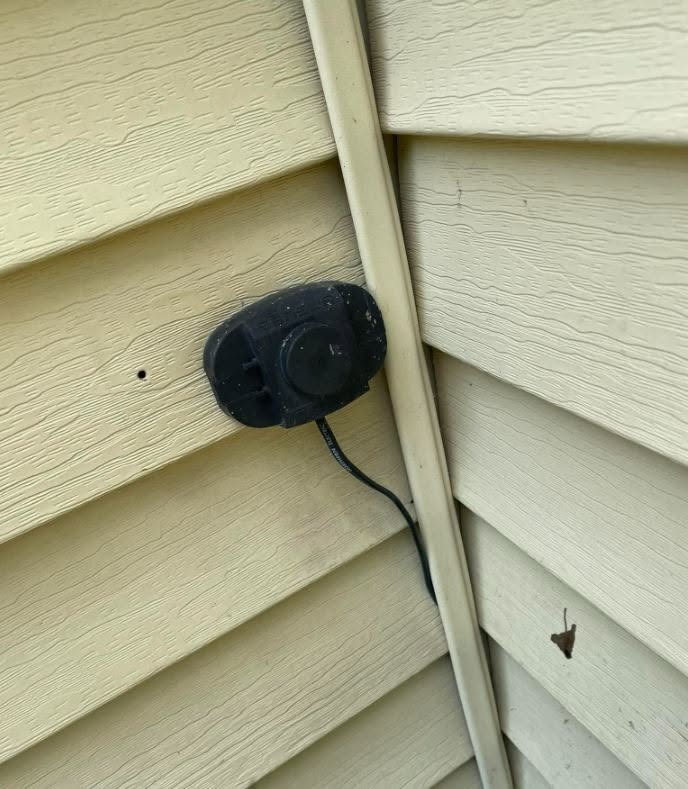
When buying a new home, inspecting exterior vinyl siding, or doing routine yard maintenance, homeowners frequently spot a small, oval black plastic device mounted on an outside wall. Featuring a central round sensor cap and a thin wire running along the trim into the basement, this exterior fitting often leaves people wondering if it is an old security camera, a satellite sensor, or a forgotten home automation device.
However, utility technicians and home inspectors recognize this exterior fixture as a remote water meter reading touch pad (often manufactured by brands like Neptune, Sensus, or Badger).
Installed extensively from the 1980s through the early 2000s, these exterior touch pads allowed municipal meter readers to collect water usage data quickly without entering private homes or climbing over landscaping.
In this comprehensive home maintenance, utility infrastructure, and home inspection guide, we will analyze how remote utility touch pads work, examine the evolution of modern automated meter reading (AMR), outline proper exterior maintenance, and review the broader financial, insurance, and legal protections essential for home property management.
1. How Remote Utility Touch Pads Work
Before wireless radio frequency technology became standard, municipal water departments faced a daily operational hurdle: utility water meters were installed indoors (usually in basements, crawl spaces, or utility closets) to protect the sensitive brass measuring chambers from freezing during winter months.
To avoid requiring meter readers to knock on doors or request interior house access, utility companies developed a simple remote contact system:
1. Dual-Wire Pulse System
-
Indoor Water Meter: Inside the home, a pulse generator or encoder register is attached to the primary water meter.
-
Low-Voltage Signal Wire: A thin, low-voltage wire runs from the indoor meter through the rim joist or exterior wall to the outer siding.
-
Exterior Touch Pad: The black oval unit mounted on the siding contains a central inductive coil or contact pad.
2. How the Utility Reader Collected Data
When a meter reader walked up to the house, they placed a handheld electronic wand or inductive probe directly against the central black cap. The wand sent a momentary electrical pulse to read the digit encoder inside, instantly downloading the exact gallon usage into the handheld computerized reader.
2. Modern Upgrades: AMR and Smart Water Meters
While millions of homes still have legacy black touch pads mounted on their exterior siding, municipal utility providers have largely upgraded to modern Automated Meter Reading (AMR) and Advanced Metering Infrastructure (AMI):
-
Drive-By AMR Systems: Modern utility meters use small, battery-powered radio frequency transmitters (ERTs). Utility trucks equipped with receiver antennas simply drive down the street, capturing wireless meter readings automatically from hundreds of houses per hour.
-
Cellular Smart Meters (AMI): Advanced smart water meters transmit hourly water consumption data directly to city utility servers via cellular or fixed network towers, allowing homeowners to monitor leak alerts in real time through smartphone apps.
-
Can You Remove an Old Touch Pad? If your municipality has upgraded to wireless radio meters, the exterior black touch pad is likely obsolete. However, homeowners should always contact their local municipal water authority before cutting wires or removing exterior utility boxes to ensure the unit is no longer active.
3. Protecting Exterior Siding and Preventing Water Leaks
Any exterior fixture mounted through vinyl siding creates a potential point for moisture intrusion if not properly sealed:
-
Check Exterior Caulking: Ensure the top and side edges of the utility box are sealed with high-quality, exterior-grade silicone or polyurethane caulk. Leave a small weep gap at the very bottom edge so any trapped condensation can drain out naturally.
-
Seal Wire Penetrations: Verify that the hole where the wire penetrates through the vinyl siding into the rim joist is tightly caulk-sealed to prevent pest entry (such as ants or mice) and moisture damage.
-
Avoid Cutting Wires: Never cut or pull low-voltage utility wires without confirming with your local water department, as damaging active utility connections can lead to municipal fines or estimated billing errors.
Financial, Insurance, and Legal Aspects of Utility Management and Property Assets
Managing residential utilities, preventing concealed water leaks, and maintaining home exterior integrity connects directly to homeowners insurance policies, financial budgeting, and legal estate directives.
Homeowners Insurance and Water Damage Coverage
Understanding property insurance coverage helps homeowners protect their housing investments against severe moisture damage:
-
Concealed Water Leaks vs. Gradual Rot: Standard homeowners insurance policies cover sudden, accidental internal water pipe bursts, but exclude gradual damage caused by unsealed siding penetrations, unmonitored exterior leaks, or lack of routine maintenance.
-
High Utility Bill Protections: Installing modern smart water leak detectors prevents catastrophic subterranean pipe leaks that can cause astronomical monthly water utility bills.
Financial Planning for Home Improvements
Allocating a routine annual budget for home siding inspections, window recaulking, and preventative plumbing checks protects the structural envelope of your home while preserving market resale value.
Legal Directives and Estate Planning Readiness
Pairing real estate management with essential legal directives guarantees total peace of mind for families during life transitions:
-
Property Access Agreements: Authorizes a trusted neighbor, relative, or property manager to inspect home utilities, respond to plumbing emergencies, and manage property during extended travel.
-
Financial Power of Attorney: Authorizes a designated representative to manage household banking, utility bills, contractor repairs, and insurance claims during health recoveries.
-
Living Wills and Revocable Living Trusts: Guarantees that family real estate assets, home titles, and personal property transfer smoothly to loved ones without probate court friction.
Practical Quick-Reference Guide for Utility Touch Pad Care
| Action | Recommended Practice | Purpose / Benefit |
| Inspect Exterior Seal |
Check silicone bead around top & sides annually |
Prevents rainwater from seeping behind vinyl siding |
| Check Wire Penetration |
Seal entry hole with exterior foam or caulk |
Blocks insects, mice, and cold drafts from entering |
| Upgrade Verification |
Call local water authority before removing |
Avoids accidental tampering fines or meter disruptions |
| Monitor Water Bills |
Track monthly usage spikes for hidden leaks |
Saves money & prevents structural foundation rot |
Fascinating Historical Facts About Utility Meters
-
The First Water Meters: The first mechanical water meter was invented by Carl Wilhelm Siemens in 1851, utilizing a rotating magnetic impeller to measure fluid volume!
-
The Manual Reading Era: Before remote touch pads were invented in the late 20th century, utility workers had to physically enter basements or dig up muddy outdoor meter pits to read dials by hand!
-
The Scale of AMR: Modern automated smart meters can detect continuous water flow as small as 1/10th of a gallon per minute, automatically flagging silent toilet leaks before homeowners even notice them!
Conclusion
That small black box mounted on your exterior vinyl siding is an iconic piece of utility history—a remote water meter touch pad that allowed meter readers to collect usage data safely from outside your home. Whether still in active use or superseded by modern wireless radio meters, keeping exterior siding penetrations properly caulked protects your home from moisture and pests.
By combining practical home maintenance, routine utility monitoring, adequate homeowners insurance coverage, and essential legal estate directives, you can protect your physical property, home value, and financial security.
Frequently Asked Questions (FAQ)
What is the black oval box on the outside of my house?
It is a remote utility water meter touch pad used by municipal meter readers to collect water usage data electronically from outside the home.
Can I remove the remote water meter box if I don’t want it?
You should always contact your municipal water authority first. If your city still uses contact wands for billing, removing it can result in estimated water bills or municipal tampering fines.
How does the utility reader get data from the touch pad?
The meter reader places an electronic probe or wand against the central pad, sending a low-voltage pulse along the wire to read the mechanical encoder on the indoor water meter.
Does a remote touch pad use household electricity?
No. Touch pad systems operate on low-voltage signal pulses powered entirely by the handheld reader wand or a long-life internal lithium battery on the meter encoder.
Does homeowners insurance cover damage from unsealed siding holes?
Standard homeowners insurance generally excludes gradual water rot or insect infestation caused by unsealed exterior siding penetrations, making routine caulking maintenance essential.
