
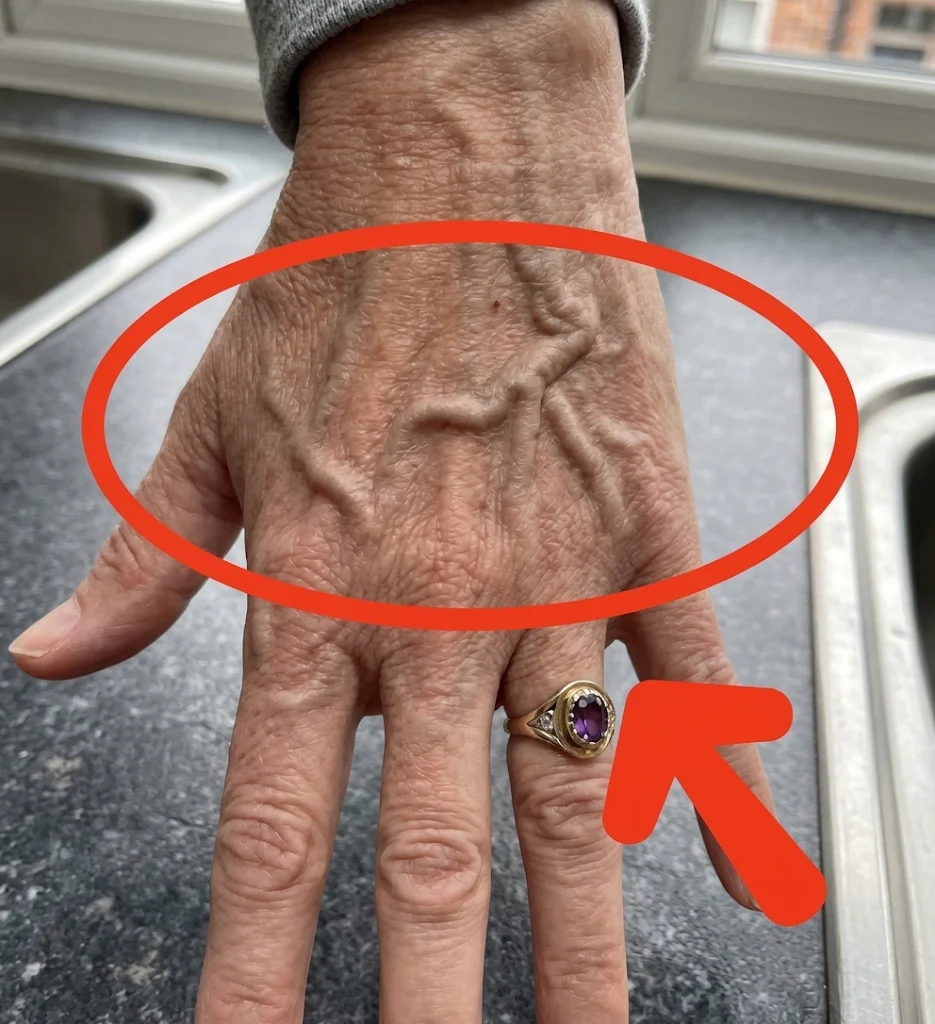
Why Are the Veins in Your Hands Suddenly More Visible? What They May Mean for Your Health
Visible veins on the hands can look more prominent with age, exercise, warm weather, or changes in body composition. In many cases, this is a normal variation rather than a sign of illness. However, a sudden change accompanied by pain, swelling, redness, warmth, or unusual discoloration deserves medical attention.

Have you ever looked down at your hands and noticed that the veins seem larger, darker, or more pronounced than they used to be? Perhaps they appear as raised blue lines across the backs of your hands, or maybe they become especially noticeable after exercising, spending time in warm weather, or taking a hot shower.
For many people, the change prompts an immediate question: Could these visible veins be a warning sign of an underlying health problem?
It is an understandable concern. Our hands
are among the most visible parts of our bodies, and even subtle changes in their appearance can attract attention. Unlike changes hidden beneath clothing, prominent hand veins are difficult to overlook.
Social media has made this concern even more widespread. Posts sometimes suggest that bulging hand veins indicate blocked arteries, heart disease, dangerous blood clots, or poor circulation. Although certain vascular conditions can affect the appearance of veins, these alarming claims often overlook an important medical fact: visible hand veins are extremely common, and in most cases, they are harmless.
Their appearance can be influenced by aging, genetics, skin thickness, body fat, physical activity, temperature, and ordinary changes in blood flow. Some people naturally have prominent veins throughout their lives, while others notice them becoming more visible as they get older.
Still, not every change should be dismissed. A vein that suddenly becomes painful, swollen, unusually firm, or surrounded by
discolored skin may require medical evaluation.
The important distinction is not simply whether your veins are visible, but whether their appearance has changed and whether other symptoms are present.
Understanding why hand veins become prominent can help you recognize normal variations in your body while remaining alert to symptoms that deserve attention.
1. Understanding the Veins Beneath Your Skin

Veins are blood vessels that carry blood back toward the heart. In the hands, a network of superficial veins lies relatively close to the skin, while deeper veins carry blood through tissues and muscles.
Because superficial veins are nearer the surface, they can often be seen through the skin, especially when the skin is thin or the veins become temporarily fuller. Their color may appear blue, green, or purple, depending on lighting, skin characteristics, and the way light interacts with tissue.
The veins on the backs of the hands are particularly
noticeable in some people because this area has relatively little soft tissue covering the vessels. As a result, normal variations in vein size can be more visible than they are in other parts of the body.
What do veins actually do?
Every part of the body needs a continuous supply of blood. Arteries carry blood away from the heart, while veins return blood toward it. In the hands, this circulation supports muscles, skin, nerves, and other tissues.
Veins contain blood that is returning from the body’s tissues. Many veins also have valves that help prevent blood from flowing backward, particularly in the limbs. The surrounding muscles and movements of the body can assist the return of blood toward the heart.
When the amount of blood within superficial veins temporarily increases, those vessels may become more noticeable. This can happen during physical activity, in warm conditions, or when the position of
the hands changes.
Visible veins do not automatically indicate that circulation is failing. In fact, their appearance can change even when the underlying circulation is functioning normally.
Why are the veins on the backs of the hands so visible?
The skin on the hands changes over time. The amount of fat beneath the skin, the thickness and elasticity of the skin, and the structure of the underlying tissues all influence how clearly veins can be seen.
Some people have naturally prominent superficial veins because of their anatomy and inherited characteristics. Others have veins that are less visible because more soft tissue covers them.
Neither appearance, by itself, establishes whether a person is healthy or unhealthy.
The color of a vein is not a reliable way to determine the oxygen level of the blood inside it, and a blue-looking vein does not mean that the blood is dangerously low in oxygen.
The color results partly from how light passes through and reflects from skin and tissue.
Are prominent veins the same as varicose veins?
Not necessarily. Varicose veins are enlarged, often twisted veins that most commonly occur in the legs. They can develop when vein valves do not function effectively, allowing blood to pool and increasing pressure within the vessel.
Visible veins on the hands are often simply superficial veins that are naturally easy to see. They may become more prominent without having the same underlying problem associated with varicose veins in the legs.
However, unusual swelling, persistent discomfort, skin changes, or a sudden difference between one hand and the other should not be ignored. A healthcare professional can assess the pattern of symptoms and determine whether further investigation is necessary.
2. Aging Can Make Hand Veins More Prominent

One of the most common reasons hand veins become more noticeable is
the natural aging process. Over time, the skin and tissues beneath it change, making structures that were previously less visible easier to see.
These changes generally happen gradually, although a person may suddenly notice them after comparing an old photograph with their current appearance.
Skin gradually becomes thinner
As people age, the skin can become thinner and lose some of its elasticity. The layer of tissue beneath the skin may also change, affecting how clearly superficial veins can be seen.
When the covering over a vein becomes thinner, the vessel may appear more pronounced even if its actual size has not changed significantly.
This is one reason that prominent hand veins are common among older adults. The change may occur alongside other ordinary signs of aging, such as wrinkles, age spots, or changes in skin texture.
The appearance of veins alone, however, cannot determine how well the body is aging
The layer of fat beneath the skin can decrease
The amount and distribution of fat beneath the skin vary from person to person. Age, genetics, weight changes, and other factors can influence this tissue.
When the layer of fat over the backs of the hands becomes thinner, superficial veins may stand out more clearly. The hands can appear more angular, and tendons and other underlying structures may also become easier to see.
This change does not necessarily mean that the veins themselves have become diseased. It may simply reflect the way the tissues around them have changed.
Changes usually happen gradually
Aging-related changes tend to develop over months or years rather than appearing dramatically overnight. A person may not notice them until the veins become especially visible under bright light or after exercise.
If your hand veins have gradually become more noticeable
over time and you have no pain, swelling, redness, warmth, or other concerning symptoms, the change is often a normal part of aging.
However, age should not be used to explain every new symptom. Sudden swelling, a newly painful vein, or a significant change affecting only one hand deserves assessment regardless of how old you are.
What can you do about age-related changes?
You cannot completely prevent the normal changes that occur in skin and connective tissue, but you can take practical steps to care for your hands.
Protecting the skin from excessive sun exposure, using a suitable moisturizer, avoiding smoking, and maintaining general health can support skin health. These measures will not necessarily make visible veins disappear.
If the appearance of your hands concerns you for cosmetic reasons, a dermatologist or another qualified clinician can explain which options may be appropriate. The right approach depends on your skin, medical
history, and expectations.
Treatments intended to change the appearance of veins should not be undertaken until a clinician has determined that the vessels do not require medical evaluation.
3. Genetics May Explain Why Some People Have More Visible Veins
Not everyone develops prominent hand veins to the same degree. Two people of the same age and body weight may have very different-looking hands, even when both are healthy.
One important reason is genetics.
Natural differences in vein structure
People inherit many characteristics that influence their appearance, including aspects of skin structure, body composition, and the distribution of tissues beneath the skin.
The location, size, and visibility of superficial veins can differ naturally between individuals. Some people have veins that sit close to the surface, while others have a thicker layer of tissue covering them.
These differences can become more noticeable when people compare their hands with those of relatives, friends,
or colleagues.
A person whose parents have prominent veins may notice a similar pattern in their own hands. This does not prove that the appearance is inherited in every case, but family resemblance can be one clue that prominent veins are a normal anatomical characteristic.
Why one person’s hands may look different from another’s
The appearance of hand veins is influenced by several factors working together. These include the thickness of the skin, the amount of tissue beneath it, the natural arrangement of blood vessels, and the effects of temperature and activity.
Even the same person’s hands can look different at different times of the day.
For example, veins may stand out more after carrying heavy bags, exercising, or spending time in a warm environment. After resting in a cooler room, they may become less noticeable.
These changes do not necessarily indicate a disease. They often reflect normal adjustments in
blood flow and the appearance of superficial vessels.
Can genetics predict whether visible veins are dangerous?
No. A family tendency toward prominent veins does not automatically indicate a vascular disorder, and the absence of a family history does not rule one out.
Medical assessment depends on the overall picture: when the veins became noticeable, whether the change is sudden or gradual, whether one hand is affected more than the other, and whether symptoms such as pain or swelling are present.
If your veins have always been prominent and their appearance has remained relatively stable, that history may help a clinician understand what is normal for you.
If they suddenly change or become painful, do not assume that genetics explains the difference.
4. Exercise Can Temporarily Make Veins Stand Out

Physical activity is another common reason that veins become more visible. People may notice prominent veins after weightlifting, carrying heavy objects,
running, cycling, or performing other strenuous activities.
This effect is often temporary and reflects normal changes in blood flow and the way muscles work during exercise.
What happens during exercise?
Working muscles need an increased supply of oxygen and nutrients. Blood flow changes to meet these demands, and the vessels in active areas can become more noticeable.
During resistance training, muscles repeatedly contract. These contractions influence pressure within nearby tissues and help move blood through the circulatory system.
As a result, superficial veins may appear fuller, particularly in the hands and forearms.
This temporary appearance is often called a muscle pump when it occurs in association with resistance exercise. The effect is usually more noticeable during or shortly after a workout and tends to diminish as the body recovers.
Why weightlifting can make hand veins especially visible
Weightlifting requires repeated gripping and contracting of the forearm muscles. The hands and
forearms are therefore actively involved in many exercises, from lifting dumbbells to holding resistance bands.
Increased blood flow, muscle activity, and temporary changes in fluid distribution can make the veins more prominent.
People who train regularly may notice this effect more often because their muscle mass, body composition, and exercise routines influence how clearly superficial veins appear.
Visible veins after a workout are not, by themselves, proof of excellent fitness. Equally, people whose veins remain less visible are not necessarily less fit.
Vein appearance varies widely between individuals, and it is not a reliable way to measure athletic ability or cardiovascular health.
Should veins disappear immediately after exercise?
Not always. The time it takes for veins to become less prominent depends on the intensity of the activity, the surrounding temperature, hydration status, body composition, and individual physiology.
If the veins gradually return to their usual appearance after rest and you
feel well, the change is often harmless.
However, severe pain, unusual swelling, marked weakness, numbness, or a hand that becomes pale, blue, or unusually cold should not be attributed automatically to exercise. These symptoms may require urgent medical evaluation.
If one arm or hand becomes suddenly swollen or painful after strenuous activity, seek medical advice rather than assuming that the veins are simply showing a normal exercise response.
Does having visible veins mean you are dehydrated?
Not necessarily. Dehydration can affect fluid balance, but prominent hand veins are not a reliable standalone sign of dehydration.
A person may have visible veins because of genetics, age, temperature, or exercise while being adequately hydrated. Conversely, someone can be dehydrated without having particularly prominent veins.
If you have been sweating heavily, exercising in hot weather, or experiencing vomiting or diarrhea, pay attention to symptoms such as thirst, dizziness, reduced urination, and unusual weakness.
These symptoms provide more useful information than vein appearance alone.
Drink fluids appropriate to your circumstances, and seek medical advice if you have signs of significant dehydration or cannot keep fluids down.
5. Warm Weather and Hot Showers Can Change Vein Appearance
Temperature can influence the appearance of superficial veins. Many people notice that their hands look more vascular after spending time outdoors on a hot day, entering a warm room, or taking a hot shower.
This is usually related to the body’s normal response to heat.
How the body responds to warmth
When the body warms up, blood vessels near the skin can widen to help release heat. This process is part of normal temperature regulation.
As superficial vessels become more prominent, veins may look larger or more visible through the skin. The effect can be especially noticeable in the hands and forearms because these areas are often exposed.
The degree of change varies between people. Some notice a substantial difference, while others see very little change.
Why hot showers can make veins look darker
Warm water can increase blood flow near the skin and temporarily alter the appearance of superficial blood vessels. Lighting and the color of the surrounding skin may also affect how clearly veins can be seen after a shower.
The veins may become less prominent as the body cools and circulation returns to its usual resting pattern.
This temporary change is generally not a sign that heat has damaged the veins.
When heat-related changes deserve attention
If your veins become more visible during warm weather but return to their usual appearance afterward, and you have no other symptoms, the change is often normal.
However, heat can also contribute to swelling in some people, particularly during prolonged standing or sitting. If you notice persistent swelling, significant
discomfort, or repeated symptoms that interfere with daily activities, a healthcare professional can help determine the cause.
Do not deliberately expose yourself to extreme heat to test your circulation. If heat makes you feel faint, weak, or unwell, move to a cooler location and seek help if symptoms are severe or do not improve.
6. Low Body Fat and Weight Changes Can Affect Visible Veins
The amount of tissue beneath the skin influences how clearly veins can be seen. This is one reason prominent hand veins are common among people with relatively little subcutaneous fat.
Changes in body weight can also alter the appearance of the hands.
Why less tissue can make veins more visible
Subcutaneous fat is the layer of fat located just beneath the skin. It provides cushioning and contributes to the contours of the body.
When this layer is relatively thin, superficial veins may be easier to
see. The effect can occur naturally in people with different body types and is not necessarily associated with illness.
Some people have prominent veins even when their weight remains stable, while others notice a change after losing weight.
What happens after weight loss?
When someone loses body fat, the amount of tissue covering superficial veins may decrease. As a result, veins that were previously less noticeable can become more visible.
This can happen after intentional weight loss, but the appearance of the hands alone cannot establish whether the weight change is healthy.
Gradual weight loss that occurs as part of a planned lifestyle change differs from unexplained weight loss that happens without trying.
If your hands have become noticeably thinner alongside unexplained weight loss, persistent fatigue, reduced appetite, or other new symptoms, consult a healthcare professional.
Can gaining weight make veins disappear?
Changes in body fat may influence vein visibility,
but weight gain is not an appropriate or reliable way to address prominent veins.
Visible veins are not inherently unhealthy, and attempting to change body weight solely to alter their appearance can create unnecessary risks.
If you are concerned about a change in your hands, focus on the cause rather than trying to hide the veins through weight manipulation.
A clinician can help distinguish ordinary anatomical variation from changes that warrant further investigation.
7. Hormonal Changes and Other Factors May Influence Vein Visibility
Hormones affect many processes in the body, including fluid balance, tissue characteristics, and aspects of circulation. Changes associated with pregnancy, menopause, and other life stages can influence how veins appear, although the effect differs from person to person.
Pregnancy and changes in circulation
During pregnancy, blood volume increases and the circulatory system adapts to support both the pregnant person and the developing baby. Hormonal changes also affect
blood vessels and connective tissues.
Some people notice changes in the visibility of veins during pregnancy. The hands may look different as the body changes, although prominent hand veins are not a specific sign of pregnancy and cannot be used to diagnose it.
Veins in the legs may become particularly prominent during pregnancy because of changes in blood flow and pressure. Any painful, swollen, or unusually discolored area should be assessed by a healthcare professional, especially during pregnancy or after childbirth, when the risk of certain blood clots is higher.
Menopause and aging-related changes
Menopause is associated with hormonal changes that can influence skin characteristics and body composition. These changes may contribute indirectly to the appearance of the hands, particularly when they occur alongside the natural aging process.
However, visible hand veins are not a diagnostic sign of menopause. Their appearance is influenced by many factors, including genetics, skin thickness,
temperature, and physical activity.
If you notice new symptoms alongside changes in your hands, discuss them with a healthcare professional rather than attributing everything to hormonal changes.
Medication and medical history
Certain medications and medical conditions can influence fluid balance, circulation, or skin characteristics. If the appearance of your hands changes after starting a new medication, mention the change to your healthcare professional.
Do not stop a prescribed medication without medical advice. The timing of the change may be useful information, but it does not prove that the medication caused it.
A clinician can consider your medical history, other symptoms, and any relevant examination findings before deciding whether further assessment is needed.
8. Can Prominent Hand Veins Mean Poor Circulation?
The phrase “poor circulation” is often used online to explain almost any change involving the hands or feet. In reality, circulation problems can have different causes, and visible veins alone
are not enough to establish that blood flow is impaired.
Veins and arteries perform different jobs
Arteries carry blood away from the heart toward the body’s tissues. Veins return blood toward the heart.
Conditions affecting arteries can reduce the delivery of blood to tissues, while problems involving veins may interfere with the return of blood or cause pressure and swelling in particular areas.
These are different processes, and they do not necessarily produce the same symptoms.
Prominent superficial veins may be a normal anatomical feature, especially when they have been visible for years without discomfort. Their appearance alone does not establish that an artery is blocked or that the heart is failing.
Symptoms that may indicate a circulation problem
Depending on the underlying condition, circulation problems can cause symptoms such as persistent pain, unusual swelling, changes in skin color or temperature, numbness, or wounds that heal poorly.
The significance of
a symptom depends on its location, severity, duration, and the circumstances in which it occurs.
For example, a hand that suddenly becomes cold, pale or blue, painful, or weak may require urgent evaluation. These symptoms are more concerning than visible veins alone because they can indicate a problem affecting blood flow or another important structure.
A healthcare professional can assess pulses, skin temperature, sensation, movement, and other findings to determine whether a circulation problem is likely.
What about heart disease?
Heart disease cannot be diagnosed by looking at the veins on the backs of the hands. Some serious cardiovascular conditions can cause swelling or changes in venous pressure, but those conditions usually require assessment of the broader clinical picture.
Symptoms such as chest pain, severe shortness of breath, fainting, or sudden neurological changes require urgent medical attention regardless of how the hand veins look.
Do not use the appearance of
your hands as a substitute for medical evaluation when you have symptoms that could indicate a serious condition.
9. Could a Visible Vein Be a Sign of a Blood Clot?
A blood clot in a vein can be serious, but prominent hand veins alone do not mean that a clot is present. Most visible veins are normal superficial vessels, and many become more noticeable because of age, body composition, exercise, or warmth.
The important issue is whether the change is accompanied by symptoms that suggest a problem.
Symptoms that deserve prompt attention
A clot in a vein of the arm can sometimes cause swelling, pain, tenderness, warmth, discoloration, or a sense of heaviness in the affected limb. The appearance and severity of symptoms vary.
A vein that suddenly becomes painful or hard, especially when accompanied by swelling or skin redness, should be assessed by a healthcare professional.
These symptoms do
not prove that a clot is present, but they should not be dismissed as a cosmetic issue.
When to seek emergency care
Seek emergency medical attention if you develop sudden shortness of breath, chest pain, coughing up blood, fainting, or other symptoms that could indicate a serious complication such as a pulmonary embolism.
Do not wait to see whether the veins return to their normal appearance.
Why self-diagnosis is unreliable
A person cannot reliably confirm or exclude a blood clot by examining a visible vein. A clinician may need to review risk factors, perform a physical examination, and order tests such as an ultrasound when appropriate.
Risk factors can include recent surgery, prolonged immobility, certain medical conditions, previous clots, and other circumstances. The relevance of each factor depends on the individual.
If a new, painful, or swollen vein concerns you, obtain medical advice instead of massaging it, applying unverified treatments,
or trying to determine the cause from photographs alone.
10. When a Prominent Vein Needs Medical Attention

Most visible hand veins do not require treatment. Nevertheless, it is useful to recognize when a change is unusual enough to deserve medical evaluation.
The key is to pay attention to what has changed, how quickly it happened, and whether other symptoms are present.
A sudden change in one hand
If the veins in one hand become noticeably more prominent over a short period, particularly when the other hand looks unchanged, consider seeking medical advice.
There may be a harmless explanation, but a sudden difference accompanied by swelling, discomfort, or discoloration warrants greater attention than a stable pattern affecting both hands.
If the hand suddenly becomes cold, pale, blue, weak, or severely painful, seek urgent medical care. These symptoms may indicate an issue that requires prompt assessment.
Pain, warmth, redness, or a firm
vein
A vein that becomes painful, tender, warm, red, or unusually firm should not be treated as a cosmetic concern alone.
Possible causes include inflammation of a superficial vein, injury, infection, or a blood clot. These conditions cannot be reliably distinguished by appearance alone.
Arrange medical assessment promptly, especially if symptoms are new, worsening, or accompanied by swelling or fever.
Persistent swelling
Swelling that affects one hand or arm, particularly when it appears suddenly or is associated with pain, should be evaluated. Depending on the cause, swelling may involve the skin, soft tissues, or blood vessels.
Do not assume that swelling is simply a consequence of warm weather, exercise, or aging if it is persistent or markedly different from your usual appearance.
Changes after an injury or medical procedure
An injury to the hand or arm can affect the surrounding tissues and blood vessels. If prominent veins develop alongside increasing
pain, swelling, bruising, numbness, or restricted movement after an injury, seek medical advice.
If the change occurs after surgery, placement of a medical device, or another procedure involving the arm, contact the treating healthcare team for guidance.
Symptoms that occur with chest pain or breathing difficulty
Prominent veins alone are not a reliable sign of a heart attack or another emergency. However, chest pain, severe difficulty breathing, fainting, or sudden neurological symptoms require emergency care.
Do not delay seeking help because you are unsure whether the visible veins are related.
11. How Doctors Evaluate Changes in Hand Veins
When someone seeks medical advice about prominent hand veins, the evaluation usually begins with the history of the change and any associated symptoms. The clinician may then examine the hands and arms and decide whether additional tests are necessary.
Not every person with visible veins needs imaging or laboratory testing.
Questions about
timing and symptoms
A clinician may ask when the veins first became noticeable, whether they have changed gradually or suddenly, and whether the appearance varies with temperature or physical activity.
They may also ask about pain, swelling, redness, warmth, numbness, recent injuries, medications, and relevant medical conditions.
Information about whether one hand or both hands are affected can help guide the assessment.
A long-standing pattern that varies with exercise may suggest a different explanation from a sudden, painful change affecting one arm.
Physical examination
Depending on the circumstances, the clinician may examine the skin, visible vessels, temperature, swelling, sensation, movement, and circulation in the hands and arms.
The findings can help determine whether the appearance is consistent with normal superficial veins or whether another condition should be investigated.
A physical examination also allows the clinician to look for signs that may not be obvious from a photograph or brief description.
When imaging may be appropriate
If a clinician suspects a blood clot, an obstruction, or another vascular problem, an ultrasound examination may be recommended. Ultrasound can help evaluate blood flow and certain abnormalities in the vessels.
Other tests may be considered depending on the suspected cause and the person’s medical history.
Testing is guided by the clinical situation. A person whose veins have always been prominent and who has no concerning symptoms may not need the same evaluation as someone with sudden swelling and pain.
Why accurate assessment matters
Online photographs and general descriptions cannot replace a clinical assessment. Lighting, skin tone, camera angle, and the position of the hands can all change how veins appear.
A doctor can consider the appearance alongside the person’s history and other examination findings. This reduces the risk of treating a harmless feature as a disease or overlooking a condition that requires attention.
12.
Can You Make Hand Veins Less Visible?
Some people are concerned about prominent hand veins because they feel the appearance makes their hands look older. Others simply want to understand whether anything can be done to change it.
The appropriate response depends on the cause and whether the veins are associated with a medical problem.
Start by understanding the cause
If your veins are naturally prominent, they may not need treatment at all. If the appearance has changed because of aging or reduced tissue beneath the skin, the vessels may remain visible even when the skin is cared for properly.
If there is a medical condition contributing to the change, addressing that condition takes priority over cosmetic concerns.
Do not assume that a vein needs to be treated simply because it is easy to see.
General skin care
Moisturizing the hands and protecting them from excessive ultraviolet exposure can support
skin health. Wearing suitable sun protection when outdoors may help limit some forms of skin damage over time.
These measures will not remove normal superficial veins, but they can help maintain the condition of the skin around them.
Avoid products that promise to eliminate prominent veins without reliable evidence. Creams and home remedies generally cannot be expected to correct the underlying anatomy of a normal superficial vein.
Cosmetic procedures
Some people consider cosmetic treatments to change the appearance of prominent veins. Options depend on the location and characteristics of the vessels and the person’s medical history.
A qualified clinician can explain potential benefits, risks, recovery time, and realistic expectations. Not every treatment used for leg veins is appropriate for hand veins, and procedures around the hands require particular care because of the important structures in this area.
Before considering any procedure, a clinician should assess whether the veins are normal
and whether any underlying vascular issue needs attention.
Avoid attempting to hide or alter veins through unhealthy habits
Do not deliberately become dehydrated, change your body weight drastically, or use unverified products to make veins less visible.
These approaches can harm your health without providing a reliable cosmetic result.
Visible veins are a common feature of human anatomy. If their appearance is not associated with a medical problem, deciding whether to pursue cosmetic treatment is a personal choice rather than a health requirement.
13. Everyday Habits That Support Healthy Hands and Circulation
Although there is no need to eliminate normal visible veins, general habits that support cardiovascular health can benefit the body as a whole.
Stay physically active
Regular physical activity supports cardiovascular fitness, muscle function, and general well-being. Walking, cycling, swimming, and other activities suited to your abilities can help maintain overall health.
Strength training can also be beneficial
when performed safely and with appropriate technique. It is normal for veins to become temporarily more prominent during or after exercise.
You do not need to avoid exercise simply because your veins are visible. If you experience unusual pain, swelling, or other concerning symptoms during activity, seek medical advice.
Avoid smoking
Smoking damages blood vessels and increases the risk of cardiovascular disease. Avoiding tobacco is one of the more meaningful steps a person can take to protect long-term vascular health.
If you smoke and want to stop, a healthcare professional can help you explore support and treatments that may improve your chances of success.
Eat a balanced diet
A varied diet containing vegetables, fruits, whole grains, legumes, and appropriate sources of protein supports general health. No single food can guarantee healthy circulation, and prominent hand veins are not usually corrected through a particular diet.
If you have a medical condition
