
Riddles, word puzzles, and logic teasers have fascinated human minds for thousands of years. From ancient mythological riddles like the famous conundrum posed by the Sphinx in Greek folklore to the viral word games and linguistic brain teasers that sweep across social media feeds today, humans possess a natural desire to solve complex problems and unravel hidden meanings.
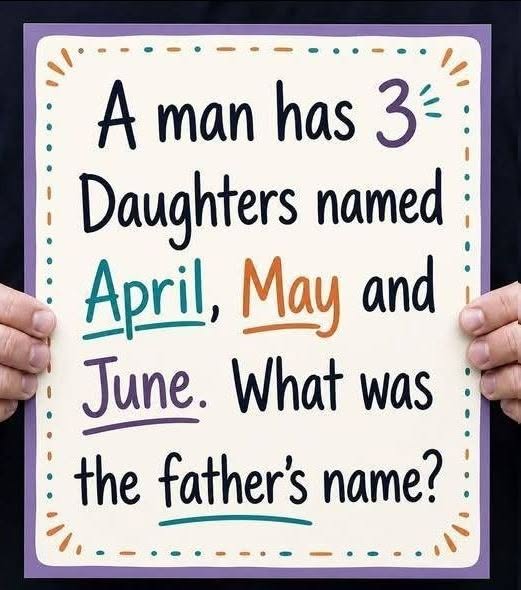
Puzzles like the classic question featured above—asking reader-analysts to determine a father’s identity based on a sequence of daughter names like April, May, and June—exploit the way human brains process linguistic patterns, assume context, and search for logical shortcuts.
Beyond mere entertainment, engaging in daily brain exercises, logic games, and cognitive problem-solving offers profound neurological benefits. Regular mental stimulation supports brain health, enhances memory retention, improves problem-solving abilities in the workplace, and reduces cognitive decline as we age. Furthermore, understanding the science of cognitive agility and critical thinking can inspire lifelong learning while encouraging smart habits that protect your mental and financial well-being.
Deconstructing the Riddle: The Science Behind Word Play and Logic
When presented with a riddle, the human brain automatically begins organizing information according to established mental shortcuts, known in psychology as heuristics. In the case of naming patterns, our brains quickly identify sequential patterns—such as the months of the year: April, May, and June—and attempt to extrapolate that rule to the rest of the sentence.
How the Human Brain Processes Assumptions
When faced with a question like “What was the father’s name?”, most people immediately search the premise for a fourth month (like July or March) or assume crucial information has been omitted. This is a prime example of cognitive bias in action:
-
Pattern Recognition: The brain naturally seeks order in chaos. Seeing consecutive months creates an immediate expectation that the solution lies in calendar nomenclature.
-
Linguistic Parsing: In classic versions of this riddle, phrasing plays a massive role. Sometimes the prompt is written as a statement: “What was the father’s name” (meaning “What” is literally the father’s name). In other variations, it is an open trick designed to test whether the reader notices that the answer was never provided in the text at all!
-
The ‘Aha!’ Moment: When the brain finally breaks through the false assumption and realizes how the trick works, it releases a small surge of dopamine—the chemical responsible for pleasure and reward. This natural dopamine rush is precisely why viral brain teasers generate millions of shares, comments, and debates online.
Cognitive Health: How Brain Training Protects Long-Term Wellness
Just as physical exercise strengthens muscles, cardiovascular endurance, and joint flexibility, targeted mental workouts keep the brain sharp, agile, and resilient against aging.
+---------------------------+---------------------------------------+--------------------------------------+
| Mental Activity Type      | Primary Cognitive Function Target     | Long-Term Neurological Benefit       |
+---------------------------+---------------------------------------+--------------------------------------+
| Riddles & Word Puzzles    | Lateral thinking & linguistic logic   | Sharpens critical problem-solving    |
| Mathematical & Logic Games| Spatial reasoning & analytical processing| Strengthens working memory storage  |
| Learning a New Language   | Executive function & neuroplasticity  | Delays onset of cognitive decline    |
| Daily Strategy Games      | Focus, attention, & decision-making   | Enhances mental clarity under stress |
+---------------------------+---------------------------------------+--------------------------------------+
Building Cognitive Reserve
Neuroscientists often speak of cognitive reserve—the brain’s ability to improvise, find alternate neural pathways, and continue functioning effectively even when facing age-related wear and tear or neurological stress. Engaging regularly in challenging cognitive tasks helps build denser neural networks, effectively creating a buffer against cognitive decline, dementia, and memory loss later in life.
Protecting Your Health and Managing Medical Expenses
Prioritizing long-term brain health and active cognitive care is an essential component of overall wellness. Maintaining mental sharpness allows individuals to retain personal independence throughout their golden years, managing daily affairs, navigating health insurance policies, and handling personal financial planning effortlessly.
Furthermore, preserving cognitive fitness reduces the need for specialized long-term medical care or assisted living services, helping families avoid devastating out-of-pocket medical bills and protecting life savings for future generations.
Practical Daily Habits to Keep Your Brain Sharp and Focused
Integrating brain-boosting activities into your everyday schedule does not require hours of intense study. Simple, consistent daily habits can deliver remarkable improvements in focus, memory, and analytical reasoning over time.
1. Solve One Complex Puzzle Every Morning
Start your day with a quick mental workout. Whether it is a word search, a crossword puzzle, a Sudoku grid, or a challenging logic riddle, spending 10 to 15 minutes engaging your brain sets a focused, productive tone for the rest of the day.
2. Embrace Lifelong Learning
Never stop learning new skills. Taking up a new musical instrument, studying a foreign language, enrolling in an online technology course, or exploring financial investment strategies forces your brain to create entirely new neural connections.
3. Nourish Your Brain with Proper Nutrition and Hydration
Brain function depends heavily on fuel quality. Incorporate brain-healthy foods into your diet—such as blueberries, walnuts, fatty fish rich in omega-3 fatty acids, avocados, and dark leafy greens. Additionally, staying well-hydrated ensures optimal nerve signal transmission throughout your central nervous system.
4. Prioritize Restorative Sleep and Stress Reduction
Sleep is the time when your brain consolidates memories, clears out cellular waste, and resets metabolic functions. Aim for 7 to 9 hours of quality sleep per night. Complement rest with stress-management techniques like meditation or outdoor walking to lower cortisol levels, which can otherwise harm memory centers in the brain.
The Intersection of Logic, Financial Planning, and Daily Life
The same analytical thinking skills used to solve logic riddles play a vital role in making sound real-world decisions. Whether analyzing career opportunities, evaluating investment portfolios, purchasing insurance coverage, or managing home budget expenses, critical thinking helps avoid emotional pitfalls and deceptive traps.
Applying Lateral Thinking to Personal Finance
-
Avoiding Misleading Offers: Just as riddles use sneaky phrasing to divert attention, marketing offers or high-interest loan agreements often bury critical details in fine print. Applying sharp analytical scrutiny helps you spot hidden fees and make informed financial decisions.
-
Evaluating Risk and Value: Whether buying life insurance, refinancing a mortgage, or choosing a health insurance plan, carefully evaluating all variables ensures long-term security without overpaying.
-
Smart Retirement Management: Building a diversified retirement portfolio requires logical foresight and disciplined strategy. Evaluating market trends with a calm, analytical mindset protects your investments against sudden economic fluctuations.
Fascinating Facts About Human Intelligence and Brain Physics
-
Massive Energy Consumption: The adult human brain weighs only about 3 pounds (1.4 kg), yet it consumes nearly 20% of the body’s total daily energy and calorie intake.
-
Trillions of Neural Connections: The human brain contains roughly 86 billion neurons, forming an estimated 100 trillion synaptic connections—more connections than there are stars in the Milky Way galaxy.
-
Speed of Thought: Nerve impulses in the human brain can travel at staggering speeds of up to 268 miles per hour (430 km/h) along myelinated pathways.
-
Neuroplasticity Never Stops: For decades, scientists believed the adult brain could not generate new cells or adapt. Today, we know the brain continuously rewires itself throughout life in response to learning and experience—a phenomenon known as neuroplasticity.
-
The Origin of the Word ‘Riddle’: The word riddle originates from the Old English word rædels, which means “conjecture,” “counsel,” or “to interpret a hidden meaning.”
Frequently Asked Questions (FAQ)
What is the actual answer to the riddle in the image?
In most traditional versions of this popular trick question, the prompt plays on language structure. If written without a question mark as “What was the father’s name,” the word “What” is actually the father’s name! If framed as a direct question where no name is hidden in the text, the literal answer is: The riddle does not state his name!
Do brain games really prevent cognitive decline as we get older?
While brain games alone cannot completely prevent neurodegenerative conditions like Alzheimer’s disease, scientific studies show that regular mental stimulation builds “cognitive reserve.” This helps the brain maintain higher function, recall, and problem-solving capabilities despite physical aging.
How much time should I spend on mental exercises each day?
You do not need hours of practice. Spending just 15 to 30 minutes each day engaged in active mental challenges—such as reading, solving puzzles, playing strategy games, or learning a new skill—provides substantial cognitive benefits.
Can physical exercise improve brain function and memory?
Yes! Aerobic exercise increases blood flow to the brain, stimulates the release of growth factors that support brain cell health, and encourages the growth of new blood vessels in memory-related regions like the hippocampus.
What foods are best for improving memory and concentration?
Nutrient-dense foods rich in antioxidants, healthy fats, and vitamins are best for brain health. Excellent choices include wild salmon, blueberries, dark chocolate, green tea, walnuts, spinach, and extra virgin olive oil.
Conclusion
Brain teasers, logic riddles, and linguistic puzzles do far more than offer a fun mental distraction during a busy day. They challenge our assumptions, strengthen neural pathways, boost memory retention, and remind us of the incredible complexity of the human mind. By embracing daily mental exercises, nourishing your body with healthy food, and applying sharp, critical thinking to your personal finance and healthcare decisions, you set the foundation for a vibrant, intellectually rich, and secure life!
