
Introduction
There are few culinary disappointments quite as frustrating as hauling a heavy watermelon home from the grocery store or farmers’ market, slicing it open on a warm summer afternoon, and discovering it is pale, mealy, and completely lacking in flavor. Selecting the absolute best, ripest, and sweetest melon can often feel like a game of chance. However, professional growers rely on specific visual and physical cues that take all the guesswork out of the selection process.
Mastering everyday grocery shopping and picking fresh, nutritious produce is much like managing your household finance or planning a sound family business strategy—making informed, data-driven decisions saves you money and guarantees satisfaction. This comprehensive guide will walk you through the proven grower’s tricks to help you identify a perfectly sweet, juicy watermelon every single time.
The Anatomy of a Watermelon: What to Look For
When you are standing in the produce aisle examining a mountain of green melons, knowing what specific features to look for makes all the difference. Growers look at several distinct markers on the outer rind to determine ripeness and sugar content.
1. The Bottom Spot (Field Spot)
Every watermelon rests on the ground as it ripens under the sun. The spot where it touched the soil is known as the field spot.
-
Look for a deep, creamy yellow or buttery orange-yellow patch. If this spot is stark white or pale green, it means the watermelon was picked too early and will lack sweetness.
2. Webbing and Sugar Scars
Those rough, brown, web-like patterns or dark scabs on the rind are often mistaken for damage, but they actually indicate perfection.
-
These marks are created when bees repeatedly touch the flower’s sugar pollination sites. More webbing means more pollination, which translates directly to a sweeter fruit.
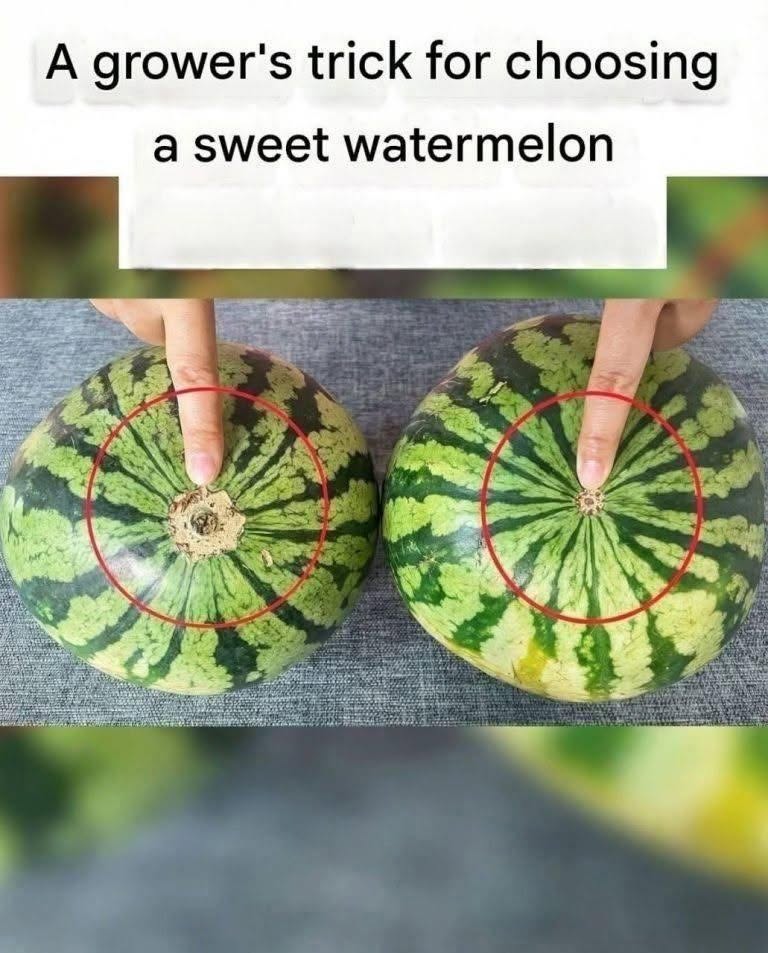
3. The Stem Indicator
-
Green Stem: A green stem indicates that the watermelon was picked prematurely and may taste tart or watery.
-
Brown, Dry Stem: A dry, yellowish-brown stem signifies that the melon ripened fully on the vine and is ready to be eaten.
Step-by-Step Selection Guide
Use this simple routine the next time you are shopping for produce to ensure you always pick a winner.
Step 1: Inspect the Rind Color
A ripe watermelon should have a dull, matte finish rather than a shiny appearance. A shiny rind usually indicates an unripe fruit.
Step 2: Check the Field Spot
Flip the melon over and check the ground patch. Ensure it is a rich, creamy yellow or deep orange rather than white.
Step 3: The Thump Test
Give the watermelon a gentle tap with your knuckles. A ripe, sugar-dense watermelon will produce a deep, hollow, resonant sound, whereas an unripe melon will sound dull and flat.
Practical Tips for Storing and Serving Watermelon
-
Room Temperature Storage: Keep an uncut watermelon at room temperature on your kitchen counter or pantry for optimal flavor development if it needs a day or two to ripen further.
-
Refrigeration After Cutting: Once sliced, store watermelon pieces in an airtight container in the refrigerator to maintain crispness and prevent bacterial growth.
-
Enhancing Flavor: A tiny pinch of sea salt brought out right before serving can dramatically amplify the natural sweetness of the fruit.
Interesting Facts About Watermelons
-
Botanical Classification: Although commonly treated as a fruit and eaten fresh, watermelons are scientifically classified as vegetables belonging to the Cucurbitaceae family, making them close relatives of cucumbers, pumpkins, and squash.
-
High Water Content: Watermelons are composed of approximately 92 percent water, making them an exceptionally hydrating and refreshing snack during hot weather.
-
Nutritional Powerhouse: They are rich in lycopene, a powerful antioxidant known for supporting heart health and cellular wellness.
Conclusion
Choosing the perfect watermelon does not have to be a guessing game. By paying attention to grower indicators like field spots, sugar webbing, and stem dryness, you can consistently bring home the sweetest, most refreshing fruit for your family and friends. Use these expert tips on your next grocery run and enjoy the ultimate taste of summer!
Frequently Asked Questions (FAQ)
Does a yellow field spot guarantee sweetness?
Yes, a deep yellow or orange-yellow field spot indicates that the watermelon sat in the sun long enough to ripen fully on the vine, resulting in higher sugar content.
Should I choose a heavy or light watermelon?
Always pick the heavier watermelon relative to its size. A heavier melon contains more water and juice, which usually correlates with better ripeness.
Can a watermelon ripen further after being picked?
Unlike bananas or peaches, watermelons do not continue to ripen or get significantly sweeter once they have been harvested from the vine.
