
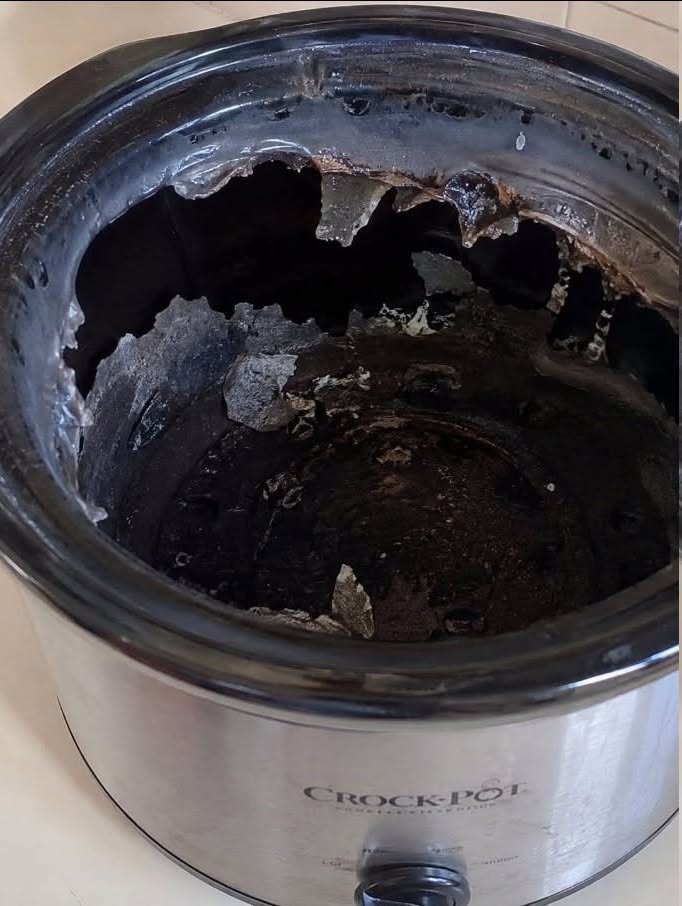
Slow cookers, commonly known by the brand name Crock-Pot, are staple countertop appliances in millions of homes worldwide. Celebrated for their convenience, efficiency, and ability to prepare tender soups, stews, and roasts over long hours, they are often left operating unattended. However, when small kitchen appliances are misused, neglected, or operated without following basic safety guidelines, severe structural damage—or even hazardous kitchen fires—can occur.
Photos of melted slow cooker bases, charred plastic interiors, and shattered ceramic stoneware inserts regularly circulate online, sparking curiosity and alarm. Understanding the mechanics of countertop heating elements, ceramic thermal limits, and safe appliance handling is essential to maintaining a safe, efficient kitchen.
What Causes Slow Cookers to Melt or Fail Catastrophically?
A standard Crock-Pot consists of three primary components: an outer stainless steel or painted metal housing containing electrical heating elements, an inner stoneware or ceramic pot, and a glass lid. When a slow cooker experiences extreme melting or charring inside the outer base, it is almost always the result of critical operational errors or thermal stress.
       SLOW COOKER SAFETY FAILURE PATHWAY
                       │
       ┌───────────────┴───────────────┐
       │                               │
       ▼                               ▼
  CERAMIC MISSING                PLASTIC LINER PLACED
 (Direct Heating Base)          (Directly On Heating Element)
       │                               │
       ▼                               ▼
Extreme Base Heat Build-Up     Rapid Polymer Degradation
       │                               │
       └───────────────┬───────────────┘
                       │
                       ▼
          Melted Plastic & Severe Hazard
1. Operating Without the Ceramic Stoneware Insert
The outer base of a slow cooker contains heating coils wrapped around the interior metal walls. It is engineered strictly to transfer heat indirectly through the heavy ceramic insert, which absorbs, holds, and evenly distributes temperature throughout the food.
If someone accidentally pours liquids, place food, or inserts plastic materials directly into the heating base without the ceramic pot in place, the extreme direct heat quickly scorches, melts, and degrades internal electrical components, plastic trim, and bottom housings.
2. Misuse of Slow Cooker Liners and Plastic Materials
Slow cooker liners made of heat-resistant nylon are popular for easy cleanup. However, these liners are designed to be used only inside the ceramic stoneware pot.
Placing plastic liners, plastic bowls, or non-approved materials directly onto the metal heating base causes the plastic to melt instantly, fusing to the heating elements, emitting toxic fumes, and creating a severe fire hazard.
3. Thermal Shock and Ceramic Stoneware Cracking
Ceramic stoneware inserts are robust, but they are susceptible to thermal shock—a rapid change in temperature that creates severe tension within the material:
-
Cold Liquids in Hot Stoneware: Adding frozen meat or ice-cold liquids directly into a piping hot ceramic insert can cause the stoneware to crack instantly.
-
Preheating Empty Stoneware: Turning a slow cooker on high while empty causes heat to concentrate unevenly, weakening the structural integrity of the ceramic glaze.
When stoneware cracks during cooking, liquids and melted fats leak directly into the underlying heating coils, leading to short circuits, burning residue, and smoking electrical components.
Electrical Safety and Risk Factors with Countertop Appliances
In addition to user error, electrical hazards associated with kitchen appliances can cause sudden failures. Understanding these electrical risks keeps your household safe.
┌─────────────────────────────────────────────────────────────┐
│             ELECTRICAL SAFETY CHECKLIST                     │
├─────────────────────────────────────────────────────────────┤
│ • Inspection: Check power cords for fraying or cracking.    │
│ • Outlet Protection: Plug directly into GFCI-protected wall.│
│ • Clearance: Keep away from curtains, edges, and sinks.     │
│ • Inspection: Never leave appliances unattended overnight.  │
└─────────────────────────────────────────────────────────────┘
-
Frayed Cords and Damaged Plugs: Kitchen counter environments expose cords to heat, moisture, and bending. A frayed or pinched electrical cord can short-circuit, sparking nearby flammable items.
-
Overloaded Electrical Circuits: Running multiple high-wattage countertop devices—such as air fryers, toaster ovens, and slow cookers—on the same electrical circuit can trip circuit breakers or overheat wall receptacles.
-
Absence of GFCI Outlets: Countertop appliances operated near sinks should always plug into Ground Fault Circuit Interrupter (GFCI) outlets. GFCIs instantly cut power if water or electrical faults occur, preventing electrocution.
Financial Considerations: Homeowners Insurance, Appliance Warranties, and Fire Prevention
Catastrophic appliance failures can result in costly home repairs, cabinet restoration, or smoke damage restoration. Proper financial planning and insurance awareness mitigate these unexpected costs.
                     ┌──────────────────────┐
                     │ PROPERTY PROTECTION  │
                     └──────────┬───────────┘
                                │
   ┌───────────────┬────────────┴───────────┬───────────────┐
   │               │                        │               │
   ▼               ▼                        ▼               ▼
Homeowners Coverage  Appliance Warranties   Smoke Detection     Emergency Funds
 (Fire & Water)      (Defect Coverage)      (Working Alarms)   (Unforeseen Repairs)
Navigating Homeowners and Renters Insurance Claims
If a malfunctioning kitchen appliance causes a house fire or smoke damage:
-
Coverage Scope: Standard homeowners and renters insurance policies typically cover accidental fire damage, personal property replacement, and structural repairs.
-
Documentation: Keep digital copies of appliance purchase receipts, serial numbers, and photos of damaged property to streamline insurance claims.
-
Deductibles: Evaluate your policy deductible against repair costs before filing minor claims to maintain stable premium rates.
Manufacturer Warranties and Safety Recalls
Reputable kitchen appliance manufacturers provide limited warranties covering mechanical defects for 1 to 3 years. Additionally, consumer product safety agencies periodically issue safety recalls for appliances with faulty wiring or latches. Registering your new appliances online ensures you receive immediate manufacturer recall notifications.
Interesting Facts About Slow Cookers and Kitchen Technology
-
Invention History: The slow cooker was originally invented in the late 1930s by Irving Naxon, who designed a portable bean cooker inspired by his mother’s traditional Sabbath stew recipe.
-
Energy Efficiency: A standard slow cooker consumes between 70 to 250 watts of electricity—significantly less energy than a traditional electric oven, which can use up to 2,000 to 3,000 watts.
-
Simmer Temperature Standards: Most modern slow cookers reach the same simmer temperature (around 209°F or 98°C) on both Low and High settings; the difference is simply the time required to reach that temperature.
-
The Science of Tenderizing: Slow cooking converts tough collagen connective tissues in meat into rich gelatin over several hours, turning inexpensive cuts into tender meals.
-
The Importance of Steam Seals: Removing the glass lid during slow cooking drops internal temperatures by roughly 10°F to 15°F, adding up to 20 minutes to the total cooking time per lift.
Step-by-Step Guide: Best Practices for Safe Slow Cooking
Adopting safe kitchen operational routines eliminates appliance risks while keeping your food delicious and nutritious.
┌─────────────────────────────────────────────────────────────┐
│                 SAFE SLOW COOKING ROUTINE                   │
├─────────────────────────────────────────────────────────────┤
│ 1. Verify Assembly: Always place stoneware into base first. │
│ 2. Inspect Components: Check for ceramic hairline cracks.   │
│ 3. Proper Placement: Keep on a flat, heat-resistant counter.│
│ 4. Clear Surroundings: Maintain 6 inches of clearance around│
│ 5. Cool Down First: Allow ceramic to cool before washing.   │
└─────────────────────────────────────────────────────────────┘
-
Always Verify Assembly: Double-check that the ceramic insert is properly positioned inside the heating base before plugging in the unit or adding ingredients.
-
Inspect Ceramic for Cracks: Periodically check your stoneware pot for hairline fractures, chips, or glaze damage, replacing cracked inserts immediately.
-
Position on Heat-Safe Surfaces: Place your slow cooker on a smooth, heat-resistant countertop like granite or tile, keeping it clear of flammable placemats, paper towels, and curtains.
-
Maintain Appliance Clearance: Ensure at least 6 inches of open space around all sides of the slow cooker during operation to allow heat dissipation.
-
Practice Safe Cleaning: Never plunge hot ceramic stoneware into cold water. Allow the insert to cool completely to room temperature before washing to prevent thermal shock fractures.
Conclusion
Slow cookers remain one of the most reliable, convenient tools in modern home cooking. However, as with all electrical appliances, proper usage is paramount. By always using the ceramic insert, avoiding direct contact between plastic materials and heating elements, protecting ceramic from thermal shock, and maintaining electrical safety checks, you can enjoy hassle-free meals while keeping your kitchen safe.
Frequently Asked Questions (FAQ)
Can you put food directly into a slow cooker heating base without the insert?
No, never put food, liquids, or liners directly into the metal heating base. Doing so causes direct scorching, damages electrical wiring, melts internal plastic housing components, and creates a major fire hazard.
Why did my slow cooker ceramic insert crack?
Ceramic stoneware typically cracks due to thermal shock—such as placing cold or frozen ingredients into a hot pot, or placing a hot pot directly into cold sink water—or from pre-existing hairline structural fractures.
Are slow cooker plastic liners safe to use?
Slow cooker liners made of heat-safe food-grade nylon are safe when used inside the ceramic stoneware insert. They must never touch the metal heating base directly.
Is it safe to leave a slow cooker on when you leave the house?
Modern slow cookers are designed for long, unattended operation when used according to instructions on a flat, non-flammable surface. However, ensure the appliance is free from electrical defects, cords are intact, and working smoke detectors are installed in your home.
How do I clean burned residue off my slow cooker base?
Unplug the unit completely and allow it to cool. Dampen a microfiber cloth with warm water and mild dish soap, gently wiping the metal interior. Never submerge the electrical heating base in water or pour liquid inside.
