
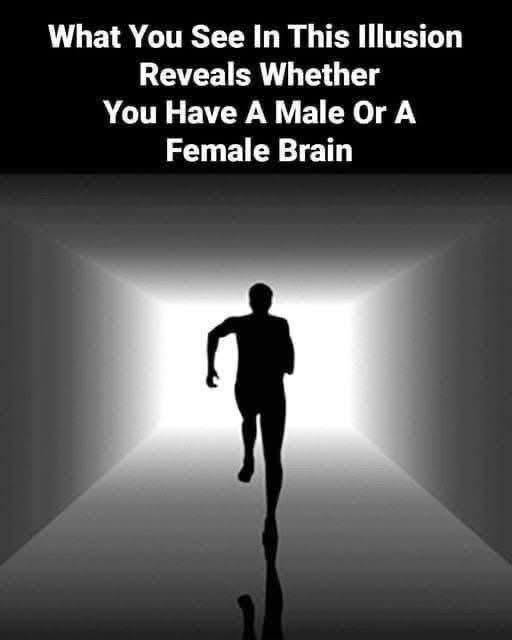
Viral psychological illusions and personality tests frequently capture our attention on social media, especially when they claim to reveal hidden truths about our cognitive style. One popular graphic features a shadowy figure in a tunnel with the intriguing caption: “What you see in this illusion reveals whether you have a male or a female brain.” These engaging visual tests spark massive online discussions and encourage people to share their personal perceptions in the comment sections.
Understanding how visual perception and psychological interpretation work helps us appreciate the fun of viral brain teasers without taking pseudoscientific personality claims too seriously.
In this comprehensive guide, we will explore the history of psychological optical illusions, examine how our brains process ambiguous visual data, share practical tips for analyzing visual tests, and review smart strategies for keeping your mind sharp and balanced.
Decoding Optical Illusions: How Visual Perception Works
When looking at ambiguous black-and-white artwork, our brains instantly begin interpreting shapes, lighting, and negative space to construct a coherent image.
Common Factors Influencing Visual Interpretation
-
Gestalt Principles: The human mind naturally looks for patterns, symmetry, and familiar shapes to make sense of incomplete visual information.
-
Lighting and Contrast: High-contrast images with bright backgrounds and dark silhouettes often allow for multiple distinct interpretations depending on where you focus.
-
Cognitive Bias: People often project their own immediate focus or emotional state onto ambiguous artwork, leading to varied answers among friends.
The Science of Cognitive Processing and Brain Function
While viral internet tests claim to determine gender-based brain differences through a single image, neuroscience shows that human cognitive processing is vastly more complex.
+--------------------------------------------------------------------+
|               UNDERSTANDING VISUAL BRAIN TESTS                     |
+---------------------+-----------------------+----------------------+
| Test Element        | Popular Claim         | Scientific Reality   |
+---------------------+-----------------------+----------------------+
| Optical Illusions   | Determines gender brain| Tests visual focus   |
| Silhouette Images   | Reveals personality   | Shows pattern bias   |
| Brain Teasers       | Measures IQ instantly | Exercises attention  |
+---------------------+-----------------------+----------------------+
1. The Reality of Brain Lateralization
While certain cognitive tasks engage different hemispheres of the brain to varying degrees, human brains do not neatly fit into binary “male” or “female” structural categories based on optical illusions.
2. The Fun of Self-Reflection
Even without scientific backing, interactive visual tests provide an entertaining way to start conversations and compare perspectives with friends.
Practical Tips for Engaging with Online Visual Tests
If you want to enjoy social media personality illusions while keeping a balanced, critical perspective, try these simple tips.
-
Take Results Lightly: Treat viral psychological tests as fun entertainment rather than definitive medical or psychological diagnoses.
-
Compare Perspectives: Ask friends or family members what they see first in the image to see how differently human brains process visual data.
-
Focus on Mental Agility: Support your actual cognitive health through diverse puzzles, reading, and continuous learning rather than internet quizzes.
-
Fact-Check Claims: Maintain healthy skepticism when sensational headlines claim a simple image can reveal complex neurological traits.
Financial Wisdom: Investing in Genuine Well-Being
Spending your time on relaxing hobbies, educational reading, and meaningful social connections is a wonderful, low-cost form of self-care. Prioritizing activities that genuinely boost your mood and mental well-being brings far more value than chasing viral online gimmicks.
Maintaining a balanced lifestyle ensures your leisure time is both enjoyable and fulfilling.
Interesting Facts About Psychological Illusions
-
The Rorschach Connection: Ambiguous inkblots and silhouette illusions trace their conceptual roots back to early 20th-century projective psychological tests.
-
Dual Interpretations: Many classic optical illusions are specifically designed to feature two entirely different images hidden within the exact same lines.
-
Viral Power: Quizzes that promise immediate personal insights are among the most frequently shared types of content across social media platforms.
Protecting Your Mind and Well-Being
Engaging in playful mental challenges and exploring optical illusions is a harmless way to take a relaxing break during your day. Staying curious while maintaining a grounded perspective helps you enjoy internet culture safely.
Conclusion
While the viral illusion claiming to reveal whether you have a “male or a female brain” makes for fascinating social media fodder, it is ultimately an entertaining optical puzzle rather than a scientific evaluation. Enjoy sharing your perspective, challenge your friends in the comments, and keep your mind active and curious!
Frequently Asked Questions (FAQ)
Can an optical illusion really tell if you have a male or female brain?
No, modern neuroscience shows that human brain structures do not fall into rigid binary categories that can be determined by looking at a simple optical illusion.
Why do people see different things in the same illusion?
Differences in visual focus, past experiences, and how our brains process contrast and negative space lead different individuals to notice different elements first.
What is the purpose of psychological optical illusions online?
They are primarily designed to drive social media engagement, comments, and shares by inviting users to compare their personal interpretations.
How can you keep your brain genuinely sharp?
Engaging in regular physical exercise, learning new skills, solving diverse logic puzzles, and maintaining a healthy diet are proven ways to support cognitive health.
Why do personality and brain quizzes go viral so often?
People are naturally curious about self-discovery and love participating in interactive challenges that they can easily share with friends.
