
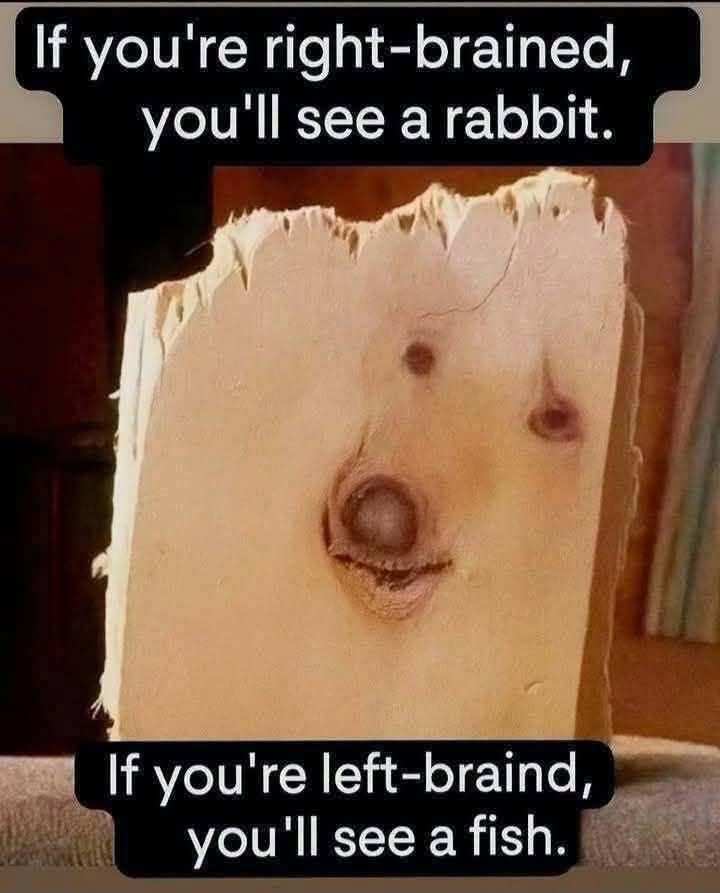
Viral psychological personality tests and optical illusions frequently capture our attention on social media, especially when they claim to test cognitive dominance. One popular graphic features a fascinating piece of textured wood with the engaging caption: “If you’re right-brained, you’ll see a rabbit. If you’re left-braind, you’ll see a fish.” These fun visual challenges spark massive online discussions and encourage users to share what they notice first in the comments.
Understanding how human visual perception and brain lateralization actually work helps us enjoy viral optical illusions while keeping a balanced perspective on neuroscience.
In this comprehensive guide, we will explore the myth of left-brain versus right-brain dominance, examine how our brains process ambiguous visual cues, share practical tips for analyzing visual tests, and review smart strategies for supporting cognitive health.
Decoding Visual Illusions: The Science Behind Brain Dominance Myths
When looking at ambiguous textures or shapes, our minds naturally attempt to recognize familiar objects based on contours, lighting, and visual patterns.
Common Factors Influencing Visual Tests
-
Pattern Recognition: The human brain quickly scans visual data to match unfamiliar shapes with known animals or objects.
-
The Brain Lateralization Myth: While specific brain functions are localized to certain hemispheres, modern neuroscience has debunked the idea that people are strictly “left-brained” or “right-brained.”
-
Subjective Interpretation: Different individuals notice different details first depending on their visual focus and immediate cognitive framing.
The Science of Cognitive Processing and Mental Agility
While internet quizzes love to categorize people into neat boxes, actual human cognitive processing involves dynamic collaboration across both hemispheres of the brain.
+--------------------------------------------------------------------+
|               COMPARING BRAIN MYTHS AND REALITY                    |
+---------------------+-----------------------+----------------------+
| Popular Claim       | Internet Premise      | Scientific Reality   |
+---------------------+-----------------------+----------------------+
| Brain Dominance     | Strict left/right split| Integrated teamwork |
| Optical Tests       | Measures personality  | Tests visual focus   |
| Visual Quizzes      | Determines IQ         | Purely for recreation|
+---------------------+-----------------------+----------------------+
1. The Power of Whole-Brain Collaboration
Complex tasks—from artistic creativity to logical problem-solving—require seamless communication between both sides of the brain rather than solitary hemisphere dominance.
2. The Joy of Interactive Content
Even though viral tests oversimplify neuroscience, they provide a lighthearted and entertaining way to engage with friends online.
Practical Tips for Enjoying Online Personality Tests
If you want to participate in viral social media challenges while keeping a grounded outlook, try these simple tips.
-
Keep It Light: Enjoy optical illusions and personality quizzes as fun social entertainment rather than scientific evaluations.
-
Compare With Friends: Ask family members what they see first in the image to see how differently people interpret the exact same visual cues.
-
Support Real Brain Health: Focus on genuine cognitive wellness through continuous learning, physical exercise, and healthy sleep habits.
-
Maintain Healthy Skepticism: Remember that viral captions are designed primarily to drive engagement and comments rather than provide medical insights.
Financial Wisdom: Investing in Well-Being Without Spending
Taking time out of your day to relax, enjoy playful puzzles, and connect with friends online is a wonderful, zero-cost form of self-care. Prioritizing simple, accessible leisure activities helps reduce stress and brings daily enjoyment without impacting your budget.
Maintaining a balanced lifestyle ensures your downtime is both refreshing and fulfilling.
Interesting Facts About Brain Function
-
Two Hemispheres: The human brain is divided into left and right hemispheres connected by a thick band of nerve fibers called the corpus callosum, which facilitates constant communication between them.
-
Neuroplasticity: The brain possesses an incredible ability to adapt, learn new skills, and form new neural pathways throughout your entire lifetime.
-
Viral Appeal: Optical illusions and psychological tests remain some of the most widely shared and commented-on types of content across global social media networks.
Protecting Your Mind and Well-Being
Engaging in playful visual challenges is a harmless way to take a quick mental break during a busy day. Staying curious while appreciating the science behind how we see the world keeps your perspective fresh and balanced.
Conclusion
While the viral post challenging you to find a rabbit or a fish based on your brain type makes for fascinating social media fun, it is ultimately a clever optical illusion rather than a strict neurological test. Enjoy sharing your perspective, chat with friends in the comments, and keep your mind active and curious!
Frequently Asked Questions (FAQ)
Can an optical illusion tell if you are left-brained or right-brained?
No, the popular concept of strict left-brain or right-brain personality types is a myth; normal human functioning relies on integrated activity across both hemispheres.
Why do people see different animals in the same picture?
Differences in visual attention, pattern recognition, and how individuals interpret ambiguous textures lead people to spot different shapes first.
What is the purpose of brain teasers on social media?
They are designed to spark curiosity, encourage friendly debate, and drive high levels of user engagement and comments.
How can you genuinely support cognitive health?
Regular physical exercise, a nutritious diet, quality sleep, and continuously learning new mental skills are the best ways to keep your brain sharp.
Why do personality quizzes go viral so easily?
People naturally enjoy self-reflection and love participating in interactive challenges that they can easily share and compare with friends.
