
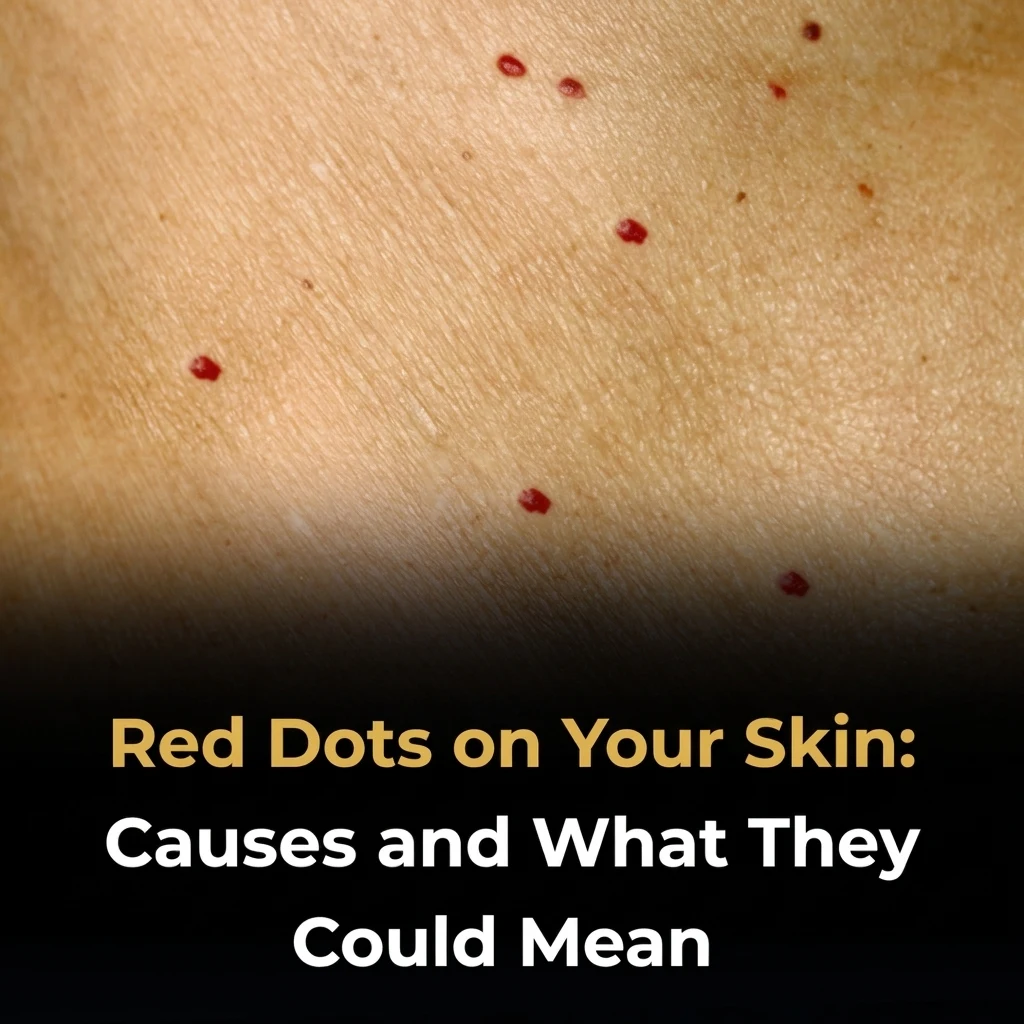
These are the “little red dots” that most people are actually seeing.
What they look like: Small, bright red, smooth or slightly domed. They can be flat or raised. They range from a pinprick to the size of a pencil eraser. They don’t itch, don’t hurt, and don’t blanch (turn white) when you press on them.
What they are: Benign growths of blood vessels (capillaries) in the skin. They’re made of clustered blood vessels, which is why they’re red.
Who gets them: Extremely common. Nearly 75% of adults over 30 have at least one. They increase in number with age.
Are they dangerous? No. Cherry angiomas are completely benign. They do not turn into cancer. They are not a sign of internal disease. They are simply a cosmetic change.
Do you need treatment? No. People sometimes have them removed for cosmetic reasons (laser, electrocautery, or shave excision). But treatment is
never medically necessary.
When to mention it to a doctor: If a cherry angioma changes suddenly (grows rapidly, changes color, bleeds spontaneously). Otherwise, it’s just part of being human.
2. Petechiae (Tiny Red or Purple Pinpricks)
These look different from cherry angiomas. They’re smaller, flatter, and more like a rash than individual dots.
What they look like: Tiny, flat, red or purple pinprick dots that do not blanch (turn white) when you press on them. They often appear in clusters and can look like a rash.
What they are: Petechiae are tiny hemorrhages under the skin caused by broken capillaries. They occur when something causes small blood vessels to leak.
Common causes:
-
Straining (coughing, vomiting, lifting heavy weights, childbirth)
-
Tight clothing or tourniquets
-
Sunburn or trauma (bumping into something)
-
Certain medications (blood thinners, some antibiotics, antidepressants)
-
Low platelet count (thrombocytopenia) – more serious
Are they dangerous? It depends on the cause.
Petechiae from straining or minor trauma are harmless and resolve in a few days. Petechiae that appear without an obvious cause, or that are accompanied by other symptoms (bleeding, bruising, fever), warrant medical attention.
When to see a doctor: If petechiae appear suddenly, cover a large area, occur without an obvious cause (no trauma, no straining), or are accompanied by fever, easy bruising, or bleeding gums.
3. Folliculitis (Inflamed Hair Follicles)
These red dots are usually a little angry-looking and may have a white head.
What they look like: Red bumps centered around hair follicles. They may have a white or yellow pus-filled tip (pustule). They can be itchy or tender.
What they are: Inflammation or infection of hair follicles, usually caused by bacteria (Staphylococcus), but also by fungi, ingrown hairs, or irritation from shaving or tight clothing.
Common locations: Beard area, scalp, legs (after shaving), buttocks, armpits.
Are they
dangerous? No. Most cases are mild and resolve on their own or with simple home care.
What to do: Warm compresses. Gentle cleansing with antibacterial soap. Stop shaving the area until it heals. Wear loose clothing. Over-the-counter antibiotic ointments (Neosporin, Bacitracin) can help.
When to see a doctor: If the bumps are large, painful, spreading rapidly, or accompanied by fever. If you have recurrent folliculitis, you may need prescription antibiotics.
4. Keratosis Pilaris (Chicken Skin)
This is incredibly common and often mistaken for acne.
What they look like: Tiny, rough red or flesh-colored bumps, usually on the upper arms, thighs, buttocks, or cheeks. The skin often feels like sandpaper.
What they are: Keratosis pilaris occurs when keratin (a protein in skin) builds up and blocks hair follicles. It’s genetic and completely harmless.
Who gets it: Very common – affects up to 50-80% of adolescents and many adults. It often improves with
age.
Are they dangerous? No. It’s purely a cosmetic and texture issue.
What to do: Moisturize regularly (look for lotions with urea, lactic acid, or salicylic acid). Gentle exfoliation can help. It often improves in summer (humidity) and worsens in winter (dryness).
When to see a doctor: You don’t need to, unless the appearance bothers you. A dermatologist can prescribe stronger creams.
5. Hives (Urticaria)
These are red, raised, itchy welts that can appear suddenly.
What they look like: Red or skin-colored raised welts (wheals) that can vary in size and shape. They are intensely itchy. Individual welts come and go within hours, but new ones can appear as old ones fade.
What they are: An allergic reaction (to food, medication, insect bites, pollen, latex) or a response to physical triggers (cold, heat, pressure, exercise, sunlight, stress). Sometimes the cause is never identified (idiopathic urticaria).
Are they dangerous? Most hives
are uncomfortable but not dangerous. However, if hives are accompanied by swelling of the lips, tongue, throat, or difficulty breathing, seek emergency care immediately (possible anaphylaxis).
What to do: Over-the-counter antihistamines (Benadryl, Zyrtec, Claritin, Allegra) can help. Avoid known triggers. Cool compresses for itching.
When to see a doctor: If hives persist for more than 6 weeks (chronic urticaria). If you have any difficulty breathing or throat swelling – call for emergency help immediately.
6. Heat Rash (Miliaria)
Heat rash is common in hot, humid weather or when you’re overdressed.
What they look like: Tiny, red, prickly bumps, often in areas where sweat gets trapped – neck, chest, groin, elbow creases, under breasts.
What they are: Blocked sweat ducts cause sweat to leak into the skin, causing inflammation.
Are they dangerous? No. Heat rash is uncomfortable but harmless.
What to do: Cool down. Move to an air-conditioned space. Take a cool shower
or bath. Wear loose, breathable clothing (cotton). Calamine lotion can soothe itching.
When to see a doctor: If the rash doesn’t improve after a few days of cooling down. If it becomes infected (pus, increasing redness, warmth, fever).
7. Hemangiomas (Infantile or Acquired)
You’ve seen these on babies, but adults can get them too.
What they look like: In infants: bright red, raised, rubbery “strawberry” marks that appear shortly after birth and typically shrink over time. In adults: small red or purple bumps (cherry angiomas, covered above) or larger, bluish-red growths.
What they are: Benign growths of blood vessels. Infantile hemangiomas are present at birth or develop shortly after. Acquired hemangiomas (cherry angiomas) appear with age.
Are they dangerous? Most are not dangerous. Rarely, large infantile hemangiomas can cause complications if they interfere with vision, breathing, or feeding.
When to see a doctor: For infantile hemangiomas that grow rapidly, ulcerate,
bleed, or are located near the eye, mouth, or nose. For adults, cherry angiomas don’t need treatment unless they change or bother you cosmetically.
8. Purpura (Bleeding into the Skin)
Purpura looks like petechiae but larger – like a bruise that doesn’t fade.
What they look like: Red, purple, or brownish patches on the skin that do not blanch when pressed. They can be flat or slightly raised. Unlike a bruise, purpura does not turn yellow or green as it heals.
What they are: Bleeding into the skin from small blood vessels. Causes include: aging (senile purpura – common in older adults, especially on forearms), medications (steroids, blood thinners), low platelets (thrombocytopenia), blood vessel inflammation (vasculitis), or scurvy (vitamin C deficiency – rare).
Are they dangerous? It depends on the cause. Senile purpura from aging is harmless. Purpura from low platelets or vasculitis is serious and requires medical evaluation.
When to see a
doctor: If purpura appears suddenly, covers a large area, occurs without known cause, or is accompanied by bleeding gums, easy bruising, fever, or joint pain.
9. Spider Angiomas
These have a distinctive appearance – a central red dot with tiny red lines radiating outward like spider legs.
What they look like: A bright red central dot (arteriole) with tiny red blood vessels radiating outward. They blanch (turn white) when pressed. They are most common on the face, neck, upper chest, and arms.
What they are: Dilated blood vessels (telangiectasias) near the skin’s surface. They can be caused by sun damage, rosacea, genetics, hormonal changes (pregnancy, birth control pills, hormone replacement therapy), or liver disease (cirrhosis – when multiple spider angiomas appear on the upper body).
Are they dangerous? A single spider angioma is usually harmless. Multiple spider angiomas on the upper body (chest, arms, face) can be a sign of liver disease
and should be evaluated.
When to see a doctor: If you have multiple spider angiomas, especially if you have other symptoms of liver disease (fatigue, jaundice, abdominal swelling, easy bruising). Also see a doctor if a spider angioma changes suddenly.
10. Bug Bites
This one is obvious, but worth including.
What they look like: Red, raised, itchy bumps, often in a line or cluster (bed bugs) or scattered (mosquitoes, fleas, spiders). There may be a visible puncture mark in the center.
What they are: Your body’s reaction to insect saliva or venom.
Are they dangerous? Most bug bites are not dangerous. However, some insects (ticks, certain spiders, mosquitoes in disease-endemic areas) can transmit disease. Severe allergic reactions (anaphylaxis) are rare but serious.
What to do: Wash with soap and water. Apply cold compress. Use anti-itch cream (hydrocortisone, calamine) or oral antihistamines. Avoid scratching.
When to see a doctor: If you
develop signs of infection (increasing redness, warmth, pus, fever). If you have a severe allergic reaction (difficulty breathing, throat swelling, hives over large area – call for emergency help). If you have a tick bite and develop a “bullseye” rash (possible Lyme disease).
11. Atopic Dermatitis (Eczema)
Eczema is chronic, itchy, inflamed skin that often appears as red patches or dots.
What they look like: Red, dry, scaly, intensely itchy patches. In darker skin tones, eczema may appear darker or lighter rather than red. It can be dotted or confluent (joined together).
What they are: A chronic inflammatory skin condition caused by a combination of genetics, immune system dysfunction, and environmental triggers.
Who gets it: Very common, especially in people with a family history of asthma, hay fever, or eczema.
Are they dangerous? No, but it can be very uncomfortable and can become infected if scratched open.
What to do: Moisturize
frequently (thick creams, not lotions). Avoid triggers (harsh soaps, fragrances, extreme temperatures, stress). Use topical steroids as prescribed by a doctor.
When to see a doctor: If over-the-counter treatments aren’t working, if eczema is widespread or affecting sleep, or if there are signs of infection (weeping, crusting, fever).
When to See a Doctor (The “Don’t Ignore” List)
Let me make this simple. You do not need to run to the doctor for every single red dot. But you should see a doctor if:
-
Red dots appear suddenly and without obvious cause (no trauma, no straining, no new medication).
-
Red dots are accompanied by other symptoms – fever, fatigue, unexplained bruising, bleeding gums, joint pain, weight loss, night sweats.
-
Red dots do not blanch (turn white) when pressed – This can indicate bleeding under the skin (petechiae, purpura).
-
Red dots are changing – Growing rapidly, changing color, bleeding spontaneously, becoming painful or itchy.
-
You
-
have multiple spider angiomas – Especially if you also have symptoms of liver disease.
-
You have a history of skin cancer – Any new or changing spot should be evaluated.
Frequently Asked Questions
Should I worry about a single red dot on my skin?
Almost certainly not. A single cherry angioma or tiny petechia from minor trauma is completely normal. Monitor it. If it changes, see a doctor.Can red dots be a sign of cancer?
Rarely. Certain blood cancers (leukemia) can cause petechiae (due to low platelets). But petechiae from cancer are almost always accompanied by other symptoms: fatigue, easy bruising, frequent infections, weight loss. A single red dot is not a sign of cancer.Why do I have more red dots as I age?
Normal. Cherry angiomas and senile purpura both increase with age. They are signs of aging skin, not disease.Can stress cause red dots?
Stress can worsenexisting skin conditions (eczema, psoriasis, hives). It can also cause physical responses that lead to petechiae (stress-induced vomiting, heavy lifting, high blood pressure). But stress itself does not directly cause red dots.
What’s the difference between petechiae and a rash?
Petechiae are tiny, flat, red or purple dots that do not blanch (turn white) when pressed. Most rashes will blanch. If you press on a rash and it disappears, it’s likely not petechiae.Should I pop a red dot that looks like a pimple?
No. If it’s a pimple (folliculitis), popping can spread infection and cause scarring. If it’s a cherry angioma, it will bleed excessively (they are made of blood vessels). Leave it alone.Can red dots be contagious?
Depends on the cause. Hives and cherry angiomas are not contagious. Folliculitis from bacteria can be spread through shared razors or towels. Viral rashes (not covered here) can be contagious.A Calm, Reassuring Conclusion
Here’s what I want you to take away from this article.
Your skin is your largest organ. It’s also the most visible. Changes can be alarming – and it’s natural to worry. But most red dots are nothing to fear. They’re cherry angiomas (little clumps of blood vessels). They’re keratosis pilaris (blocked hair follicles). They’re bug bites, heat rash, or a bruise that looks different than usual.
That red dot on your chest? Probably a cherry angioma. That cluster of tiny pinpricks on your arm? Probably petechiae from carrying a heavy backpack.
The key is pattern recognition. One red dot, stable over time, no other symptoms? Watch it. Mention it at your next checkup if you’re concerned. Dozens of red dots, appearing suddenly, accompanied by fatigue or bleeding? See a doctor.
Your body is not a crisis. It’s a remarkable, resilient, constantly changing organism. Most of its
messages are mundane. “You bumped into something.” “You have a tiny blood vessel that clumped together.” “You need to moisturize.”
Listen to your body. But don’t panic every time it speaks.
Now I’d love to hear from you. Have you ever panicked over a red dot? Did it turn out to be a harmless cherry angioma? Have you noticed more as you’ve aged? Drop a comment below – your story might help someone else feel less alone.
And if this guide helped you understand your skin better, please share it with a friend who’s been worried about a spot. A text, a link, a conversation. Good information is the best medicine.
Now go look at that red dot. It’s probably fine. 🔴🩺
-
