
Introduction
Herbs and spices have been cherished for centuries not only for their ability to transform ordinary dishes into culinary masterpieces, but also for their remarkable aromatic and wellness properties. Among the many herbs found in home kitchens, rosemary (Rosmarinus officinalis) stands out as a true powerhouse. While fresh and dried rosemary sprigs are common, turning them into a fine, concentrated rosemary powder opens up a whole new world of practical and culinary applications.
In today’s world, embracing natural, homemade alternatives to store-bought goods is an essential part of sustainable living and smart household management. Just as careful planning in Finance and proper budgeting protect your household assets, creating your own pantry staples ensures quality, freshness, and meaningful savings. In this comprehensive guide, we will explore the benefits of rosemary, step-by-step instructions for making your own rosemary powder, and creative ways to use it around your home.
The Benefits of Rosemary: Nature’s Aromatic Wonder
Rosemary is an evergreen shrub native to the Mediterranean region, celebrated since ancient times for its distinct pine-like aroma and rich nutrient profile.
Rich in Antioxidants and Plant Compounds
Rosemary is packed with powerful antioxidant and anti-inflammatory compounds, such as rosmarinic acid and carnosic acid. These active elements help combat oxidative stress in the body and protect cells from damage.
Cognitive and Sensory Stimulation
The distinct aroma of rosemary has long been associated with mental clarity, improved concentration, and memory support. Simply inhaling its natural essential oils can promote alertness and a sense of revitalization.
Why Make Rosemary Powder?
While whole sprigs and dried leaves are wonderful for stews, soups, and roasts, powdering rosemary offers unique advantages.
Uniform Distribution of Flavor
Rosemary powder blends seamlessly into dry rubs, seasoning blends, and marinades without leaving behind woody, needle-like textures in your food.
Space-Saving Storage
Ground herbs take up significantly less space in your pantry, allowing you to store a concentrated amount of flavor in a compact glass jar.
Step-by-Step Guide: How to Make Rosemary Powder at Home
Creating your own fresh rosemary powder requires only a few simple steps and common kitchen tools.
Ingredients and Tools Needed
:
-
Fresh rosemary sprigs (or high-quality dried rosemary leaves)
-
A fine-mesh sieve
-
A clean coffee grinder, spice grinder, or high-powered blender
-
An airtight glass jar for storage
Instructions
:
-
Harvest and Clean: If using fresh rosemary, wash the sprigs thoroughly and pat them completely dry with a clean kitchen towel.
-
Dry the Herb: Spread the sprigs out on a baking sheet and dry them in a dehydrator or a low-temperature oven (around 170°F / 75°C) until the leaves are completely brittle and crisp.
-
Strip the Leaves: Strip the dried rosemary leaves away from the woody stems, discarding the stems.
-
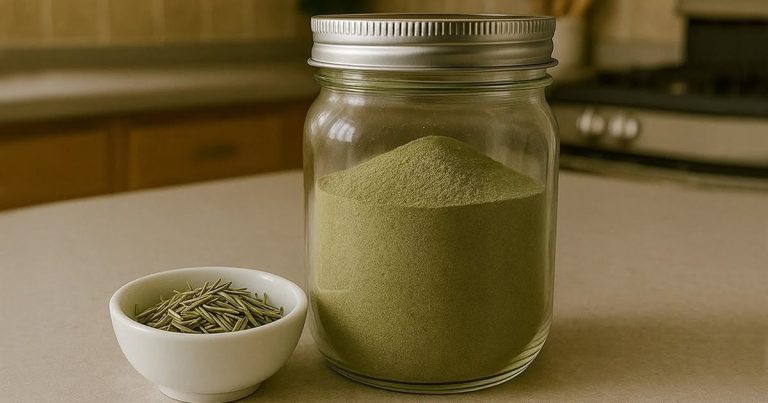
Grind into Powder: Place the dried leaves into your spice grinder or blender. Pulse in short bursts until a fine, uniform green powder is formed.
-
Sift for Smoothness: Pass the powder through a fine-mesh sieve to filter out any remaining coarse bits, then grind those bits a second time if desired.
-
Store Properly: Transfer your freshly made rosemary powder into a clean, airtight glass jar and store it in a cool, dark place.
Creative Uses for Rosemary Powder
-
Savory Seasoning Blends: Mix rosemary powder with sea salt, garlic powder, and black pepper for an exceptional steak or roasted potato rub.
-
Homemade Hair Care: Infuse rosemary powder into carrier oils like jojoba or olive oil to create a nourishing scalp treatment that promotes hair vitality.
-
Natural Room Freshener: Combine rosemary powder with dried citrus peels in small sachets to create a clean, aromatic scent for drawers and closets.
Interesting Facts About Rosemary
-
Symbol of Remembrance: In ancient Greece and Rome, students wore rosemary garlands around their heads during exams to help improve memory and concentration.
-
Long Shelf Life: When stored properly in airtight glass containers away from direct sunlight, dried herbal powders can retain their potency for up to a year.
-
Drought Resistant: Rosemary plants are exceptionally hardy and drought-tolerant, thriving in dry Mediterranean climates with minimal water.
Practical Tips for Best Results
-
Ensure Complete Dryness: Any residual moisture left in the rosemary leaves will cause the powder to clump or mold during storage. Always ensure the leaves are 100% crisp before grinding.
-
Clean Your Grinder: If using a coffee grinder that previously ground coffee beans, clean it thoroughly beforehand to prevent unwanted coffee flavors from transferring to your herbs.
-
Label Your Jars: Always include the date of preparation on your storage jar to keep track of freshness.
Conclusion
Making your own rosemary powder is a rewarding DIY project that brings the vibrant essence of nature straight into your kitchen. From enhancing your favorite culinary recipes to exploring natural home care solutions, this versatile herb proves that simple, traditional methods are often the most valuable.
Frequently Asked Questions (FAQ)
Can I use store-bought dried rosemary to make powder?
Yes! If you don’t have fresh rosemary, you can purchase bulk dried rosemary leaves and grind them directly into a fine powder using a spice grinder.
How long does homemade rosemary powder last?
When stored in an airtight glass container in a cool, dark cupboard, homemade rosemary powder will maintain its peak aroma and flavor for 6 to 12 months.
Can rosemary powder be used in baking?
Absolutely. A small pinch of rosemary powder adds an incredible, subtle earthy depth to savory breads, focaccia, crackers, and cornbread.
