
The Deadly Sleeping Mistake That Could Put Your Heart and Brain at Risk Overnight: What Everyone Should Know About Sleeping Positions
Sleep is supposed to be the body’s opportunity to recover. After a long day of working, exercising, worrying, and dealing with everyday responsibilities, the brain and body need several hours of rest to repair tissues, regulate hormones, strengthen memory, and restore energy. Yet many people overlook an important part of healthy sleep: the way they sleep and the conditions surrounding their rest.
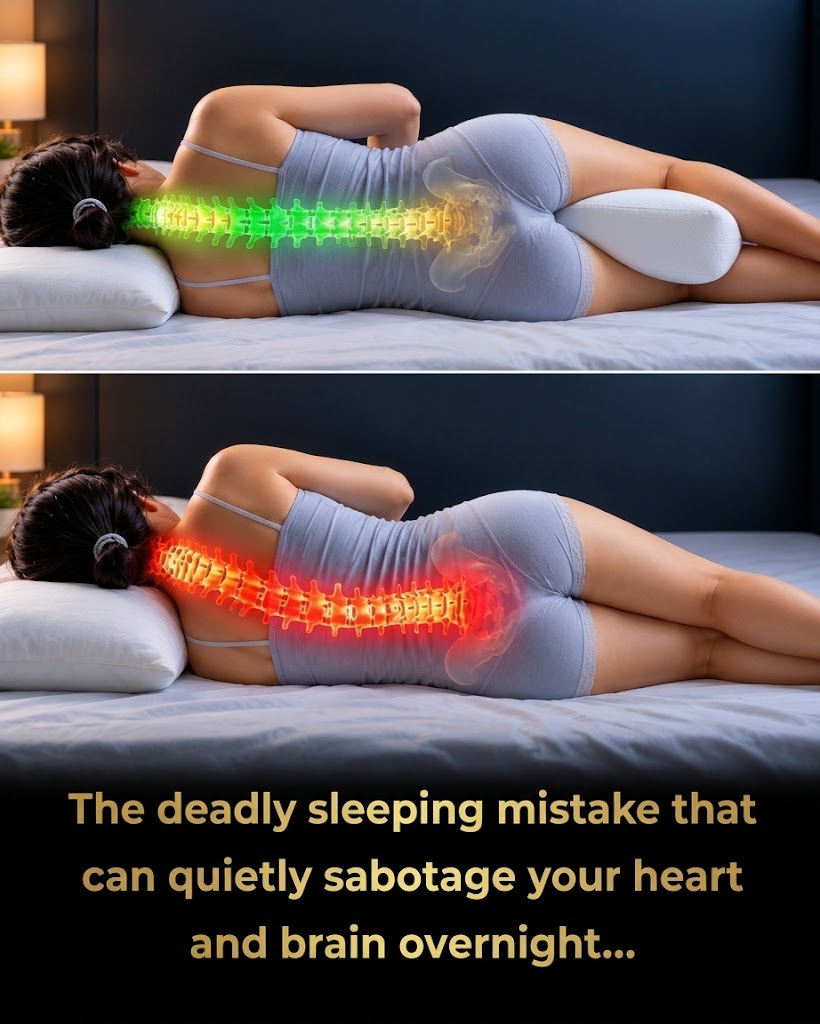
You may have heard warnings claiming that one particular sleeping position can quietly damage your heart or interrupt blood flow to your brain overnight. Such statements can sound frightening, especially when accompanied by images showing a person’s spine glowing red or green depending on how they lie in bed. However, the scientific reality is more complicated. There is no single sleeping position proven to cause a heart
attack or stroke in otherwise healthy people simply because they remain in that position throughout the night.
That does not mean sleep posture is irrelevant. The position of your head, neck, shoulders, hips, and spine can influence comfort, breathing, pain, and the quality of your sleep. In people with certain medical conditions, sleeping position may also affect symptoms. More importantly, some nighttime habits and untreated sleep disorders can place significant strain on the cardiovascular system over time.
The real danger is not necessarily the way you place your legs or whether you sleep on your left or right side. It may be an underlying problem that repeatedly disrupts breathing, raises blood pressure, prevents restorative sleep, or goes unnoticed for years.
Understanding these differences can help you make safer decisions without becoming unnecessarily afraid of going to bed.
1. Why Your Sleeping Position Matters More Than You Think
The human body
is not completely inactive during sleep. Although you may remain unaware of what is happening, your nervous system continues regulating breathing, heart rate, blood pressure, body temperature, and many other essential functions.
During the night, most people naturally change positions several times. They may begin by sleeping on their back, turn onto one side, bend their knees, stretch their arms, and move again without remembering any of it in the morning.
These movements are normal. They help prevent prolonged pressure on certain areas of the body and allow muscles and joints to adjust.
However, a sleeping position that places excessive strain on the neck, lower back, shoulders, or hips can gradually contribute to discomfort.
For example, sleeping on your stomach often requires turning your head to one side for an extended period. This can place the neck in a rotated position and may aggravate existing neck pain. Some people also
experience lower-back discomfort because the stomach-down position can increase the arch of the lumbar spine.
Sleeping on your side can be comfortable, but the shoulder and hip closest to the mattress may experience pressure. If the mattress is too firm or the pillow is unsuitable, the spine may become poorly aligned.
Sleeping on your back can help some people maintain a relatively neutral spinal position, but it may worsen snoring and obstructive sleep apnea in susceptible individuals.
The important distinction is that these effects are not identical for everyone.
A position that feels comfortable and supports one person’s spine may cause discomfort for another. Body shape, existing injuries, pregnancy, mattress firmness, pillow height, and medical conditions all influence what works best.
The goal should not be to force yourself into one supposedly perfect position. Instead, it should be to find a comfortable posture that supports your body while allowing you
to breathe normally and sleep without repeated interruptions.
2. The Sleeping Habit That Deserves More Attention: Ignoring Breathing Problems
If there is one nighttime problem that deserves serious attention, it is repeated interruption of breathing during sleep.
Obstructive sleep apnea is a common but frequently undiagnosed sleep disorder. It occurs when the muscles in the throat relax during sleep and partially or completely block the upper airway.
When this happens, breathing becomes restricted or temporarily stops. Oxygen levels may fall, and the brain briefly activates the body to restore normal breathing.
These interruptions can happen repeatedly throughout the night.
Some people experience dozens of breathing disturbances per hour without realizing it. They may wake up feeling exhausted even after spending seven or eight hours in bed.
Sleep apnea is particularly concerning because repeated episodes of oxygen reduction and disrupted sleep can activate the sympathetic nervous system, which controls the body’s
stress response.
This can contribute to increased blood pressure, inflammation, metabolic problems, and cardiovascular strain.
Common warning signs include:
- Loud, persistent snoring.
- Breathing pauses noticed by a partner.
- Waking suddenly while gasping or choking.
- Morning headaches.
- Dry mouth upon waking.
- Excessive daytime sleepiness.
- Difficulty concentrating.
- Feeling tired despite spending enough time in bed.
Not everyone who snores has sleep apnea. However, loud snoring combined with breathing pauses, choking episodes, or daytime exhaustion deserves medical evaluation.
One important detail is that sleeping position can influence obstructive sleep apnea.
For some people, breathing disturbances become more frequent when lying on their backs. This is called positional obstructive sleep apnea. In that situation, side sleeping may reduce the frequency of breathing interruptions.
However, changing positions is not a substitute for proper diagnosis or treatment when sleep apnea is present.
Depending on its severity, treatment may involve positive airway pressure therapy, oral appliances, positional
therapy, weight management when appropriate, or other medical interventions.
Ignoring repeated breathing interruptions because they happen while you are asleep can allow a potentially serious condition to remain untreated.
3. Can Sleeping on Your Back Really Affect Your Heart and Brain?
Sleeping on your back is often recommended because it can help distribute body weight relatively evenly and maintain a neutral spinal position when the mattress and pillow provide appropriate support.
Nevertheless, this position is not ideal for everyone.
When a person lies flat on their back, gravity can cause the tongue and soft tissues of the throat to move backward. In susceptible individuals, this narrows the airway and increases the likelihood of snoring or obstructive sleep apnea.
The resulting breathing disturbances can affect oxygen levels and trigger repeated changes in heart rate and blood pressure.
For people with untreated sleep apnea, these repeated events may contribute to long-term cardiovascular
complications.
However, it would be inaccurate to claim that sleeping on your back automatically stops oxygen from reaching the brain or causes a heart attack.
Healthy individuals generally maintain normal breathing and circulation while sleeping in this position.
There are also situations in which sleeping on the back may be medically appropriate. For example, certain people with injuries or postoperative conditions may be advised to remain in a particular position.
The correct approach depends on individual circumstances.
If you wake up frequently with choking sensations, experience unusually loud snoring, or feel excessively sleepy during the day, the important question is not simply whether you sleep on your back. It is whether you have an underlying breathing disorder.
4. Is Sleeping on Your Left Side Better for Your Heart?
You may have seen claims that sleeping on the left side protects the heart, improves circulation, or prevents serious cardiovascular events.
There
is some truth behind the idea that side sleeping can influence certain physical symptoms, but the benefits are often exaggerated.
For many people, sleeping on the left or right side is perfectly healthy. Neither side has been established as universally superior for preventing heart attacks or strokes.
However, left-side sleeping may offer specific benefits in certain circumstances.
People who experience gastroesophageal reflux disease, commonly known as GERD, sometimes find that sleeping on their left side reduces nighttime acid reflux.
This is related to the anatomical position of the stomach and the connection between the stomach and esophagus. Research suggests that left-side sleeping can reduce exposure of the esophagus to stomach acid in some individuals.
Pregnant women are also frequently advised to sleep on their sides, particularly later in pregnancy. Side sleeping can help avoid prolonged compression of major blood vessels by the uterus. The exact recommendations may vary depending on
But what about the heart itself?
There is no reliable evidence that every person must sleep on the left side to protect their heart. Some individuals with heart failure or other cardiac conditions may feel more comfortable in particular positions, while others may experience discomfort when lying on one side.
People with known cardiovascular disease should follow the advice of their healthcare professionals rather than relying on generalized online claims.
The most important cardiovascular protections remain managing blood pressure, cholesterol, blood sugar, physical activity, smoking, diet, and diagnosed medical conditions.
A particular sleeping direction cannot replace these measures.
5. Why Sleeping on Your Stomach May Cause Problems
Sleeping on your stomach is not automatically dangerous, but it can create mechanical challenges for the body.
The most obvious issue involves the neck.
Because the nose and mouth cannot comfortably face directly into the
mattress, stomach sleepers generally need to rotate their heads to one side. Remaining in this position for extended periods can aggravate existing neck stiffness or muscular tension.
The lower back may also become uncomfortable, particularly when the pelvis sinks into a soft mattress.
Some people develop morning pain that improves after moving around. Others experience persistent stiffness or discomfort throughout the day.
There are ways to make stomach sleeping more comfortable if changing positions is difficult.
A thinner pillow or no pillow under the head may reduce excessive neck extension. A small pillow beneath the pelvis may help some people reduce lower-back strain.
However, individuals with chronic neck or back problems should seek personalized guidance from a qualified healthcare professional.
It is also important to remember that stomach sleeping does not directly cause a heart attack or stroke.
The concern is primarily musculoskeletal comfort and, in certain circumstances, breathing or
other medical issues.
6. The Hidden Connection Between Poor Sleep and High Blood Pressure
Blood pressure naturally changes throughout the day.
For many healthy individuals, it decreases during sleep. This nighttime reduction is part of the body’s normal cardiovascular rhythm.
However, people who experience chronic sleep deprivation, untreated sleep apnea, or repeated nighttime awakenings may have abnormal blood pressure patterns.
When sleep is consistently interrupted, the body may remain in a heightened state of physiological alertness.
Stress hormones and sympathetic nervous system activity can increase, making it more difficult for blood pressure to follow its normal nighttime pattern.
Over time, inadequate sleep has been associated with a higher risk of hypertension and several other cardiovascular problems.
Research also suggests that regularly sleeping fewer than seven hours may be associated with adverse health outcomes in adults, although individual sleep requirements vary.
The relationship is not always straightforward.
High blood pressure can
contribute to poor sleep, while poor sleep can worsen blood pressure control. Conditions such as obesity, diabetes, chronic pain, anxiety, and sleep apnea can affect both.
This creates a cycle that may become increasingly difficult to break.
A person who repeatedly wakes up tired may assume the problem is simply age, stress, or a busy schedule. In reality, an underlying sleep disorder or medical condition may be contributing.
That is why persistent sleep problems should not automatically be dismissed as normal.
7. The Pillow Mistake That Can Affect Your Neck and Spine
A pillow is often treated as an ordinary household item, but its height, firmness, and shape can influence the position of the neck throughout the night.
A pillow that is too high may push the head forward when sleeping on the back. A pillow that is too low may allow the head to tilt backward.
When sleeping on
the side, the pillow needs to fill the space between the shoulder and head so that the neck remains reasonably aligned with the rest of the spine.
If the pillow is too thin, the head may tilt downward toward the mattress. If it is too thick, the head may tilt upward.
Neither position is ideal for someone who already experiences neck discomfort.
The best pillow is not necessarily the most expensive one. It is the one that provides appropriate support for your sleeping position, body proportions, and comfort preferences.
Memory foam, latex, down alternatives, and traditional fiber pillows all have different characteristics.
Some people benefit from adjustable-fill pillows because they can change the height to suit their needs.
A useful way to evaluate your pillow is to notice how your neck feels in the morning.
Repeated stiffness, headaches, or shoulder discomfort may indicate that your pillow or sleeping posture needs
adjustment.
These symptoms are not proof of a serious disease, but persistent or worsening pain deserves attention.
8. Why a Pillow Between Your Knees Can Help Side Sleepers
The image associated with this topic shows a person sleeping on their side with a pillow positioned between the legs.
This arrangement is commonly recommended for people who experience discomfort in the lower back, hips, or pelvis.
When someone sleeps on their side, the upper leg can fall forward and rotate the pelvis. Depending on the person’s anatomy and mattress, this may create tension around the lower back and hip.
Placing a pillow between the knees can help maintain a more neutral position.
It may reduce excessive twisting and make the hips feel more comfortable.
Some people prefer a long body pillow that supports the upper leg from the knee to the ankle. Others use a smaller pillow placed directly between the
knees.
The pillow should be thick enough to provide comfortable support without forcing the legs too far apart.
Importantly, this technique is a comfort measure, not a proven method of preventing heart attacks, strokes, or sudden oxygen loss.
A pillow between the knees cannot correct obstructive sleep apnea, treat cardiovascular disease, or guarantee healthy blood circulation.
Its primary purpose is to improve musculoskeletal alignment and comfort.
For people with hip or lower-back pain, small adjustments like this may make a meaningful difference to sleep quality.
9. Could Your Mattress Be Making Your Sleep Worse?
People often focus on their sleeping position while overlooking the surface supporting their entire body.
A mattress that is too soft may allow the hips and shoulders to sink excessively. A mattress that is too firm may create uncomfortable pressure around the shoulders, hips, and other contact points.
The ideal firmness depends on body weight, sleeping
position, personal preference, and existing musculoskeletal conditions.
Side sleepers frequently need sufficient cushioning around the shoulders and hips.
Back sleepers may prefer a surface that supports the natural curves of the spine without allowing the pelvis to sink too deeply.
Stomach sleepers often find that excessive softness increases lower-back discomfort.
There is no universally perfect mattress.
A mattress should support the body comfortably and allow the sleeper to change positions without difficulty.
If you consistently wake up with pain that improves after getting out of bed, your mattress may be contributing to the problem.
However, persistent pain should not automatically be blamed on the mattress. Arthritis, nerve compression, inflammatory conditions, and other medical problems can also cause morning discomfort.
Replacing a mattress may improve comfort, but it is not a treatment for an underlying medical condition.
10. The Nighttime Condition That Can Place Serious Stress on the Brain
The brain
depends on a continuous supply of oxygen and nutrients.
During normal sleep, breathing and circulation continue to provide what the brain needs. Sleep itself is not a state in which the brain simply shuts down.
However, obstructive sleep apnea can repeatedly interrupt normal breathing.
When the airway becomes blocked, oxygen levels may fall. The brain responds by briefly activating the body to restore airflow.
These events can fragment sleep and produce repeated physiological stress.
Over time, untreated moderate or severe obstructive sleep apnea has been associated with hypertension, cardiovascular disease, stroke risk, and impaired daytime functioning.
Sleep apnea may also affect memory, concentration, mood, and reaction time.
Some people do not recognize the condition because they never fully remember waking up during the night.
A partner may be the first person to notice repeated pauses in breathing, loud snoring, or sudden gasping.
For people who live alone, persistent morning headaches,
excessive daytime sleepiness, and unexplained fatigue may provide clues.
A sleep specialist can determine whether testing is appropriate. Depending on the situation, testing may involve a home sleep apnea test or an overnight sleep study.
The earlier a clinically significant breathing disorder is identified, the sooner appropriate treatment can begin.
11. Why Sleeping Too Little Can Be More Dangerous Than You Realize
Modern life encourages people to sacrifice sleep.
Work deadlines, social media, entertainment, family responsibilities, and irregular schedules can push bedtime later and later.
Some people believe that sleeping five hours during the week and catching up on weekends is enough.
Unfortunately, chronic sleep restriction can affect several systems throughout the body.
It can influence appetite-regulating hormones, insulin sensitivity, blood pressure, immune function, emotional regulation, and cognitive performance.
Sleep deprivation may also increase the likelihood of mistakes and accidents because attention and reaction time become impaired.
Adults generally need
at least seven hours of sleep per night, although some people require more.
The quality of sleep matters as well.
Spending eight hours in bed does not necessarily mean that a person receives eight hours of restorative sleep. Frequent awakenings, breathing disturbances, pain, and environmental interruptions can reduce sleep quality.
A consistent schedule is one of the simplest ways to improve sleep habits.
Going to bed and waking up at approximately the same times each day helps regulate the body’s internal clock.
It is also helpful to create a quiet, dark, comfortable sleeping environment and avoid excessive caffeine late in the day.
The objective is not to achieve perfection every night. It is to build a routine that supports consistent, sufficient rest.
12. Eating Late at Night Can Also Interfere With Sleep
Another overlooked habit involves eating large meals shortly before going to bed.
For some people, lying down soon
after eating can worsen acid reflux, heartburn, and indigestion.
These symptoms may cause repeated awakenings and make it difficult to obtain uninterrupted sleep.
Large meals can also create discomfort, particularly when they contain high amounts of fat or are especially spicy.
People who experience nighttime reflux may benefit from avoiding large meals within two to three hours of bedtime.
Smaller evening meals, identifying personal trigger foods, and elevating the head of the bed when medically appropriate may also help.
However, this does not mean everyone must stop eating after a particular hour.
The timing and composition of meals should be adapted to individual needs, schedules, and medical circumstances.
People with diabetes, for example, may need specific guidance regarding evening meals, medication, and blood glucose management.
The important point is to avoid habits that repeatedly produce discomfort or disrupt sleep.
13. Alcohol and Sleeping Pills: A Risky Combination
Some people drink
alcohol because they believe it helps them fall asleep faster.
Although alcohol can initially cause drowsiness, it often reduces sleep quality later in the night.
It can disrupt normal sleep architecture, increase nighttime awakenings, and worsen snoring or obstructive sleep apnea.
Alcohol relaxes muscles in the upper airway, potentially making airway obstruction more likely in susceptible individuals.
Sleeping medications also require caution.
Certain prescription sedatives can affect breathing, alertness, balance, and coordination.
Combining alcohol with sleeping pills, opioid pain medications, or other central nervous system depressants can be particularly dangerous because their effects may compound.
People should never combine these substances unless specifically instructed by a qualified healthcare professional.
If someone has difficulty sleeping regularly, the best approach is to identify the cause rather than automatically relying on alcohol or medication.
Cognitive behavioral therapy for insomnia, commonly called CBT-I, is an evidence-based treatment that can help many people with chronic
insomnia.
14. When Should You Be Concerned About Nighttime Symptoms?
Occasional difficulty sleeping is common. Most people experience nights when they wake up too early, struggle to fall asleep, or feel uncomfortable.
The concern increases when symptoms are persistent, severe, or accompanied by signs of an underlying medical condition.
Consider speaking with a healthcare professional if you regularly experience:
- Loud snoring accompanied by breathing pauses.
- Repeated nighttime choking or gasping.
- Persistent morning headaches.
- Excessive daytime sleepiness.
- Difficulty staying asleep several nights per week.
- Unexplained nighttime palpitations.
- Persistent chest discomfort when lying down.
- Breathlessness that becomes worse when lying flat.
- Recurrent pain that interferes with sleep.
These symptoms do not automatically indicate a life-threatening condition.
For example, palpitations may occur because of stress, caffeine, medication, or an abnormal heart rhythm. Breathlessness when lying flat can occur in people with heart or lung conditions and should be assessed.
If chest pain or
pressure is severe, new, or accompanied by shortness of breath, sweating, nausea, faintness, or pain spreading to the arm, back, neck, or jaw, seek emergency medical care immediately.
Likewise, sudden facial drooping, weakness or numbness on one side of the body, difficulty speaking, sudden vision problems, or an abrupt severe headache may indicate a stroke.
Do not wait for symptoms to disappear or assume they are caused by sleeping in the wrong position.
15. Seven Practical Ways to Improve Your Sleeping Position
You do not need expensive equipment or complicated nighttime routines to make your sleep environment more comfortable.
Several straightforward adjustments can help.
1. Keep your neck reasonably aligned.
Choose a pillow that supports your head without forcing your neck excessively forward, backward, or sideways.
2. Experiment with side sleeping if you snore.
Some people experience fewer breathing disturbances when sleeping on their sides. However, persistent snoring or suspected

sleep apnea should be medically evaluated.
3. Place a pillow between your knees if it improves comfort.
This may help side sleepers reduce twisting around the hips and lower back.
4. Avoid forcing an uncomfortable position.
If a particular position causes pain, numbness, or breathing difficulty, change it and consider professional advice if symptoms continue.
5. Make sure your mattress provides adequate support.
The right mattress should allow your shoulders and hips to settle comfortably while supporting your body.
6. Maintain a regular sleep schedule.
Try to go to bed and wake up at consistent times, including on weekends.
7. Pay attention to breathing during sleep.
Persistent snoring, gasping, and witnessed breathing pauses should not be ignored.
Small changes may improve comfort, but persistent symptoms deserve proper assessment.
16. What About People Who Already Have Heart Disease?
People with cardiovascular conditions may need more individualized sleep advice.
For example, some
