
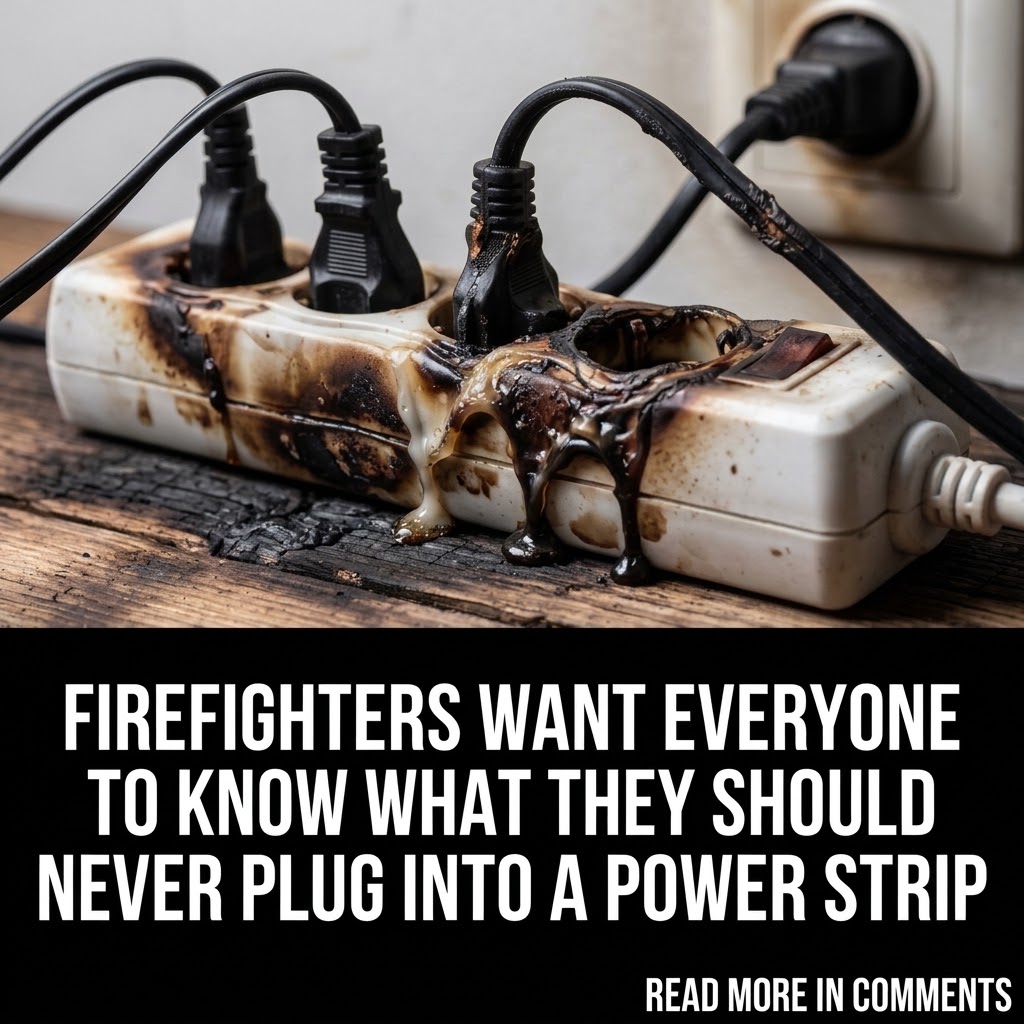
A power strip is one of the most convenient devices in a modern home. It allows several electronic devices to share electricity from a single wall outlet, helping people organize their workspaces, entertainment centers, bedrooms, and kitchens. From phone chargers and desk lamps to computers and televisions, power strips make everyday life easier.
However, convenience can create a false sense of security. Many people assume that if a plug fits into a power strip, the appliance is safe to use with it. Unfortunately, that is not always true.
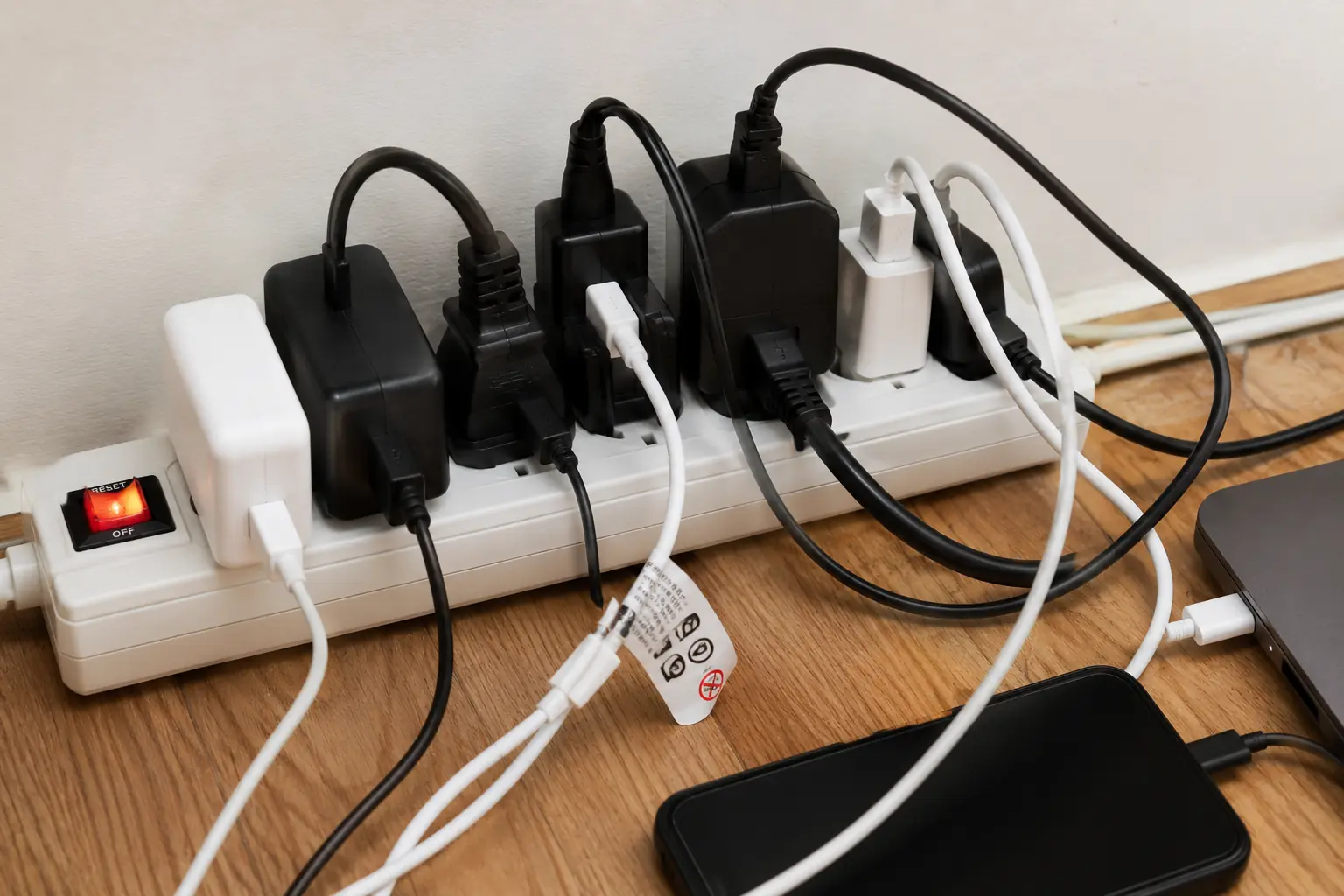
Power strips have electrical limits. When too many devices are connected, or when appliances with high electricity demands are used improperly, the strip can overheat. In some circumstances, overheating may damage insulation, melt plastic components, produce sparks, or start an electrical fire.
The danger is not always obvious. A power strip may look perfectly normal while carrying more electrical current than it
was designed to handle. Some warning signs, such as a warm plug, a burning smell, or a discolored socket, may appear only after the problem has already begun.
Understanding which household appliances should generally be plugged directly into a properly installed wall outlet is an important part of home fire prevention. It can help protect electrical equipment, reduce unnecessary risks, and prevent avoidable accidents.
Here are several common household items that require special attention when it comes to power strips.
Chapter 1: Space Heaters – One of the Biggest Power Strip Risks
Portable space heaters are among the appliances that deserve the greatest caution around power strips.
These devices generate heat by consuming a substantial amount of electrical power. Many household space heaters operate at approximately 1,500 watts when set to their highest setting, although the actual power consumption varies by model.
A typical power strip may not be
designed to safely handle this kind of continuous electrical demand. Even if the strip has several available sockets, that does not mean it can support a high-wattage heating appliance.
When a space heater draws more current than the power strip is designed to carry, the internal conductors and electrical contacts can become excessively hot. Poor connections, worn components, and overloaded circuits can make the situation even more dangerous.
The problem becomes particularly concerning when a space heater operates for several hours. People often turn on these appliances before going to sleep, while working, or when leaving a room. If the electrical connection begins overheating, the user may not notice the warning signs immediately.
For this reason, many space heater manufacturers specifically instruct consumers to plug their products directly into a suitable wall outlet rather than an extension cord or power strip.
Safer approach:
- Plug the heater directly into a properly
- grounded wall outlet, following the manufacturer’s instructions.
- Keep curtains, blankets, clothing, furniture, and other combustible materials away from the heater.
- Never leave a portable heater operating unattended or while sleeping unless the manufacturer’s instructions and applicable safety guidance explicitly permit it.
- Stop using the appliance if the plug, outlet, or surrounding area becomes unusually hot.
- Avoid using a heater with a damaged cord or loose plug.
A space heater may seem like a small household appliance, but its electrical demand can be comparable to that of several smaller devices operating simultaneously. Treating it casually can create unnecessary risks.
Chapter 2: Air Conditioners – High Electrical Demand Requires the Right Connection
Air conditioners are another category of appliances that generally should not be connected to ordinary power strips.
Unlike phone chargers or small electronic accessories, air conditioners can draw considerable electrical current. Their electricity consumption depends on cooling capacity, compressor design, efficiency,
operating conditions, and whether the unit is starting or running.
Window air conditioners and portable air conditioners may place significant demands on household electrical circuits. Some models also require dedicated circuits or particular outlet configurations.
One important detail is that an air conditioner’s compressor can create a temporary increase in electrical demand when it starts. A power strip that appears to work during normal operation may not be suitable for these electrical conditions.
Using an ordinary power strip can introduce additional resistance at the plug and socket connections. If the connections are loose, damaged, or underrated, heat can accumulate and potentially damage the equipment.
Another common mistake is connecting an air conditioner through multiple extension cords or adapters because the original cable does not reach the outlet. This can create an unreliable electrical connection and increase the possibility of overheating.
Safer approach:
- Follow the air conditioner’s installation manual and electrical
- requirements.
- Use the properly rated wall outlet specified by the manufacturer.
- Have an electrician assess the circuit if the outlet becomes warm, the breaker trips repeatedly, or the electrical system appears inadequate.
- Never modify the plug or use an adapter to force an incompatible connection.
- Avoid running an air conditioner through an ordinary power strip.
If an air conditioner repeatedly trips a circuit breaker, do not simply replace the breaker with one having a higher rating. The breaker may be protecting wiring that cannot safely carry additional current. A qualified electrician should identify the actual cause.
Chapter 3: Refrigerators and Freezers – Appliances That Operate Around the Clock
Refrigerators and freezers are often overlooked when people think about electrical fire hazards.
Because these appliances operate quietly and continuously, many homeowners connect them to whatever outlet is most convenient. In some kitchens, that may be a power strip shared with other appliances.
This is not a good arrangement unless the manufacturer specifically approves the electrical connection and the equipment is properly rated.
Refrigerators contain compressors that cycle on and off throughout the day. When the compressor starts, the appliance may briefly draw more current than it uses during normal operation.
A power strip that is already carrying the load of other devices may have little room for additional demand. Over time, poor electrical contacts or excessive loading can cause overheating.
There is another concern: refrigerators and freezers are essential appliances that people expect to operate continuously. An unreliable connection may interrupt power without being noticed immediately. Food can spoil, and a freezer may lose its ability to maintain a safe temperature.
In some homes, a refrigerator is connected to a power strip simply because the wall outlet is inconveniently positioned. However, convenience should not take priority over the appliance’s electrical requirements.
Safer
approach:
- Follow the refrigerator manufacturer’s instructions regarding outlet type and circuit requirements.
- Prefer a properly installed wall outlet rather than an ordinary power strip.
- Avoid sharing the connection with other high-demand appliances.
- Check periodically for damaged cords, loose plugs, or signs of overheating.
- Do not place electrical connections where water from cleaning, leaks, or condensation can reach them.
A refrigerator does not need to produce visible heat or make unusual noises to create an electrical problem. The condition of its power connection matters just as much as the condition of the appliance itself.
Chapter 4: Microwaves – Powerful Appliances That Need Suitable Outlets
Microwave ovens are another common source of confusion.
They may look relatively compact, but their electrical input requirements can be substantial. A microwave advertised as having 1,000 watts of cooking power may consume considerably more electrical power from the outlet because the conversion process is not perfectly
efficient.
Depending on the model, the actual electrical input may be around 1,400 to 1,600 watts or more.
This distinction is important. People sometimes look only at the cooking wattage printed on a microwave and assume that the appliance requires less electricity than it actually does.
Connecting a microwave to a power strip that is already supporting other kitchen devices can exceed the strip’s safe capacity.
Microwaves also tend to be used for relatively short periods, which may make an unsuitable connection seem harmless. However, repeated use can still place significant stress on electrical contacts and wiring.
A microwave should not be connected to a power strip simply because the appliance operates for only a few minutes at a time.
Safer approach:
- Follow the microwave manufacturer’s electrical specifications.
- Use a properly rated wall outlet, preferably one on a suitable dedicated circuit when required by the manufacturer or local
- electrical code.
- Avoid sharing the connection with kettles, toasters, coffee makers, or other high-demand appliances.
- Do not use a damaged power cord or a loose-fitting outlet.
- Have an electrician inspect an outlet that shows signs of discoloration, buzzing, or unusual heat.
The most important lesson is that short operating time does not automatically make an appliance safe to connect to an underrated power strip.
Chapter 5: Toasters and Toaster Ovens – Small Appliances With Surprisingly High Power Consumption
Toasters and toaster ovens are among the most frequently used kitchen appliances. Their compact size can make them appear less demanding than larger equipment.
In reality, these appliances generate substantial heat through electrical resistance. Many models consume approximately 800 to 1,800 watts, while some toaster ovens require even more.
That means a toaster can place a significant load on an ordinary power strip, especially when other kitchen devices are connected at the
same time.
For example, imagine a power strip supporting a toaster, a coffee maker, and a phone charger. The charger consumes relatively little electricity, but the toaster and coffee maker may each require considerable power.
The combined demand could exceed the power strip’s rating or place excessive load on the household circuit.
There is also a practical safety concern. Toasters produce heat and may release crumbs or food particles that can accumulate inside the appliance. Placing a toaster near combustible materials or using it with damaged electrical connections can increase the risk of an accident.
Safer approach:
- Plug the toaster or toaster oven directly into an appropriately rated wall outlet.
- Avoid operating multiple high-wattage kitchen appliances on the same power strip.
- Keep the appliance away from paper towels, curtains, plastic containers, and other combustible objects.
- Clean the toaster according to the manufacturer’s instructions.
- Unplug the appliance when it is not
- in use if the manufacturer recommends doing so.
A toaster does not need to be large to consume substantial electricity. Its heating elements can draw a considerable amount of current in a very short period.
Chapter 6: Electric Kettles and Coffee Makers – Common Kitchen Appliances That Can Overload a Strip
Electric kettles and coffee makers are used every day in many households.
Because they are familiar and relatively small, people sometimes underestimate their electrical requirements.
An electric kettle may consume approximately 1,500 to 3,000 watts, depending on its design and voltage. Coffee makers vary widely, but many also use substantial power while heating water.
When these appliances are connected to the same power strip, the combined electrical load can become excessive.
Consider a simple example: an electric kettle rated at 2,000 watts and a coffee maker rated at 1,000 watts are connected to the same strip.
Together, they demand approximately 3,000 watts when operating simultaneously.
Whether that load is safe depends on the voltage, current rating, power strip specifications, household circuit capacity, and other connected equipment.
A strip rated for a lower load may overheat even though every appliance appears to function normally.
It is particularly important to remember that electrical demand is not determined by the number of plugs alone. Two appliances can use more electricity than six small electronic accessories.
Safer approach:
- Plug high-wattage kettles and coffee makers directly into suitable wall outlets.
- Avoid operating several heating appliances simultaneously on the same electrical connection.
- Check the appliance’s rated power and the outlet’s electrical specifications.
- Keep cords away from water, hot surfaces, and areas where people may trip over them.
- Never use an electrical appliance with a damaged cable or exposed wiring.
Water and electricity are a particularly dangerous combination. Kitchen appliances should be
positioned and connected carefully, with electrical outlets protected according to applicable local requirements.
Chapter 7: Hair Dryers, Curling Irons, and Other Personal Care Heating Devices
Personal care appliances can also place considerable demands on electrical systems.
Hair dryers, in particular, often consume between approximately 1,000 and 2,000 watts, depending on their heating and airflow settings. Some models may require even more power.
Curling irons and hair straighteners generally use less electricity than many hair dryers, but they still generate high temperatures and require careful handling.
Connecting several personal care appliances to one ordinary power strip can create unnecessary electrical risks.
For example, someone might connect a hair dryer, straightener, and electric grooming device to a strip in the bathroom. If the hair dryer and another heating appliance operate simultaneously, the electrical demand can rise quickly.
Bathrooms also present an additional hazard because water, wet hands, and damp surfaces
can increase the danger of electric shock.
Safer approach:
- Plug high-power hair dryers directly into a suitable wall outlet.
- Follow the manufacturer’s instructions for straighteners, curling irons, and other heating devices.
- Keep electrical appliances away from sinks, bathtubs, showers, and wet surfaces.
- Never handle plugs or switches with wet hands.
- Use properly installed ground-fault protection, such as a GFCI outlet where required or appropriate under local electrical standards.
Do not assume that a power strip is safe simply because it has multiple sockets or an illuminated switch. Its electrical rating and the conditions in which it is used are far more important.
Chapter 8: Another Hidden Risk – Connecting Multiple Power Strips Together
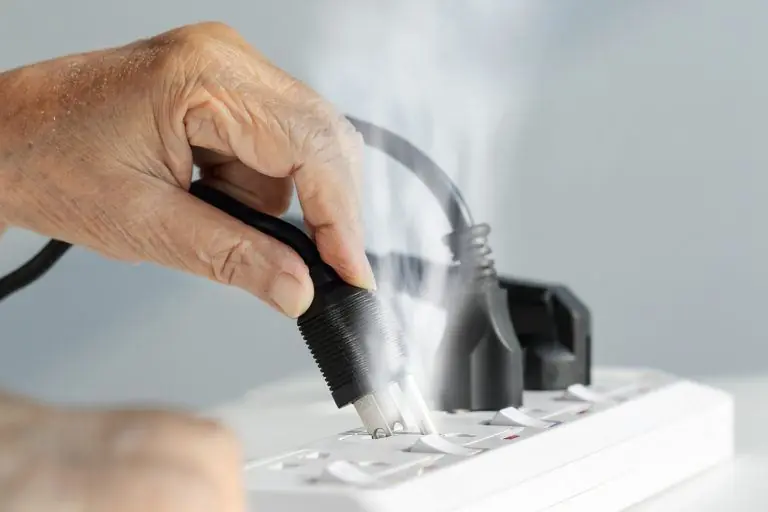
One of the most dangerous electrical habits in homes and offices is connecting one power strip to another.
This practice is commonly known as daisy-chaining.
It usually happens when people run out of available outlets. Instead of installing
additional properly designed outlets, they connect an extension cord or another power strip to the first one.
The arrangement may appear convenient, but it does not increase the capacity of the original electrical circuit.
For example, connecting two power strips together does not double the amount of current that the wall outlet can safely supply. Both strips still depend on the same upstream wiring and circuit protection.
The first strip may also carry the combined load of every device connected to the second strip. If that total exceeds its rating, overheating can occur.
Additional connections also create more potential points of failure. Loose plugs, worn sockets, damaged contacts, and poor-quality adapters can all contribute to electrical problems.
Daisy-chaining may also make it harder to identify which device is responsible when a circuit becomes overloaded.
Safer approach:
- Never connect one power strip to another.
- Do not plug a power strip into
- an extension cord unless the manufacturer and applicable safety requirements explicitly permit the arrangement.
- Use a power strip only within its rated capacity.
- If additional outlets are regularly needed, ask a qualified electrician about installing more permanent outlets.
- Replace damaged or worn power strips instead of attempting to repair them.
Adding more sockets does not automatically create more electrical capacity. That distinction is essential for preventing overloaded connections.
Chapter 9: Why Power Strips Overheat and How Electrical Fires Can Begin
To understand why certain appliances should not be connected to power strips, it helps to understand what happens inside an electrical connection.
Every power strip has a maximum electrical rating. This rating indicates the amount of electrical current or power the device is designed to handle under specified conditions.
When connected appliances demand more current than the strip can safely carry, its internal components may heat up.
Electrical resistance plays
an important role. Even a small amount of resistance in a poor connection can generate heat when current flows through it.
The relationship is described by Joule’s law:
Heat generated = Current² × Resistance × Time
This explains why electrical connections can become dangerous even when the excess load does not appear dramatic.
A loose plug, damaged contact, or worn socket can create additional resistance. When a substantial electrical current passes through that connection, heat can accumulate.
If the temperature becomes high enough, plastic insulation may soften or melt. Internal components can become damaged, and electrical arcing may occur.
Arcing happens when electrical current jumps across a gap between conductive surfaces. It can generate extremely high temperatures and may ignite nearby combustible materials.
Several factors can make this process more likely:
Overloading: Connecting appliances that collectively demand more power than the strip is rated to handle.
Poor-quality equipment: Using power strips without appropriate
safety certification or reliable construction.
Damaged cables: Continuing to use cords with cracked insulation, exposed conductors, or crushed sections.
Loose connections: Plugging equipment into sockets that no longer hold plugs securely.
Poor ventilation: Covering power strips with rugs, furniture, clothing, or other materials that prevent heat from escaping.
Moisture exposure: Using electrical equipment in wet locations or allowing water to reach connections that are not designed for such conditions.
The danger is not limited to high-wattage appliances. Even relatively low-power devices can contribute to a hazardous situation if the power strip is damaged, poorly manufactured, or improperly installed.
Chapter 10: Warning Signs That Your Power Strip May Be Unsafe
Many electrical problems provide warning signs before a serious incident occurs.
Learning to recognize these signs can help people stop using unsafe equipment before a small problem becomes a major emergency.
Here are some symptoms that should never be ignored.
1
The power strip feels unusually hot
A power strip may become slightly warm under certain operating conditions, but it should not become excessively hot during normal use.
If the housing, plug, or socket area feels unusually hot, disconnect the equipment safely if it is possible to do so without touching a damaged or dangerous component.
Do not continue using it until the cause has been identified.
2. A burning smell appears
A smell resembling melting plastic, burning rubber, or overheated electrical insulation may indicate that components are becoming dangerously hot.
Do not dismiss this smell as ordinary dust or a temporary appliance odor.
Stop using the affected equipment and arrange for inspection.
3. The power strip changes color
Brown marks, black spots, melted plastic, or visible deformation around sockets can indicate overheating or electrical damage.
A discolored power strip should be replaced rather than reused.
4. Sparks appear when connecting
an appliance
A tiny brief spark can sometimes occur when plugging in certain electrical devices, particularly those with internal capacitors or switches.
However, repeated, large, or unusual sparks, crackling sounds, or visible damage are warning signs that require attention.
Do not continue using a connection that sparks abnormally.
5. The circuit breaker trips repeatedly
A circuit breaker is designed to interrupt electrical power when a circuit experiences certain unsafe conditions, including overloads or faults.
If the breaker repeatedly trips when appliances are operating, do not keep resetting it without investigating the cause.
The problem may involve an overloaded circuit, damaged equipment, a short circuit, or another electrical fault.
6. Plugs fit loosely
A plug that falls out easily or moves excessively inside a socket may indicate worn contacts.
Loose connections can generate heat and electrical arcing.
The outlet or power strip should be inspected and replaced as appropriate.
7. The
cord is damaged
Cracked insulation, exposed wires, flattened sections, or burn marks mean the cord should no longer be used.
Never cover damaged wiring with tape as a permanent repair.
A damaged power strip should be replaced with a properly rated product.
Chapter 11: How to Choose a Safer Power Strip
Not all power strips are manufactured to the same standards.
A cheap product with poor internal construction may create risks even when used with relatively low-power devices.
When purchasing a power strip, consumers should pay attention to several important details.
Check the maximum current and power rating.
Look for the maximum amperage and voltage printed on the product or its documentation. Some products also display a maximum wattage rating.
The total load of connected devices must remain within the manufacturer’s limits.
For example, a product rated at 10 amperes and 230 volts has a theoretical maximum capacity of 2,
300 watts under those stated conditions. However, the actual permissible load may be affected by the product’s design, temperature conditions, local standards, and manufacturer instructions.
Never assume that every socket can independently support the full rated capacity of the entire strip.
Look for recognized safety certification.
Choose products that meet the applicable electrical safety standards in the country where they are sold.
Depending on the market, this may include certification or conformity markings associated with recognized testing and regulatory systems.
A familiar brand name or attractive packaging does not automatically prove that a product has been independently tested.
Choose a product with overload protection when appropriate.
Some power strips include a built-in circuit breaker or other overload protection.
This feature can help interrupt power when the electrical load exceeds specified limits.
However, overload protection does not make a power strip suitable for every appliance. It cannot compensate for damaged wiring,
poor connections, improper installation, or an unsuitable electrical circuit.
Consider surge protection for sensitive electronics.
Surge protectors are designed to reduce the risk of damage from certain voltage surges.
They can be useful for computers, televisions, networking equipment, and other sensitive electronics.
However, surge protection and overload protection are not the same thing. A surge protector does not automatically make high-wattage heating appliances safe to connect.
Inspect the cord and housing.
Look for sturdy construction, secure sockets, clear labeling, and a cord appropriate for the intended use.
Avoid products with loose switches, cracked plastic, exposed wiring, or unclear electrical ratings.
A properly selected power strip should be used only for the types of equipment and operating conditions permitted by its manufacturer.
Chapter 12: How to Calculate Whether Your Power Strip Is Overloaded
One of the easiest ways to avoid overloading a power strip is to understand the relationship between watts,
volts, and amperes.
The basic electrical formula is:
Power (Watts) = Voltage (Volts) × Current (Amperes)
This means that electrical current can be estimated by dividing power by voltage:
Current (Amperes) = Power (Watts) ÷ Voltage (Volts)
For example, consider a power strip rated at 10 amperes and used on a 230-volt electrical supply.
Its theoretical maximum power capacity is:
10 × 230 = 2,300 watts.
Now imagine connecting the following appliances:
- Electric kettle: 2,000 watts
- Coffee maker: 900 watts
- Phone charger: 15 watts
The combined demand would be:
2,000 + 900 + 15 = 2,915 watts.
That is higher than the theoretical 2,300-watt capacity of the example power strip.
The strip should not be used with that combination.
This example illustrates why checking the wattage of individual appliances is important. A power strip with six sockets is not necessarily capable of supporting six high-demand appliances.
It is also important to understand that this
calculation is only a simplified guide. The actual safe operating limit depends on the product’s labeling, electrical standards, circuit protection, ambient temperature, wiring condition, and manufacturer specifications.
Do not use a mathematical calculation to justify an arrangement that the appliance manufacturer specifically prohibits.
When in doubt, use separate, properly installed wall outlets on suitable circuits and consult a qualified electrician.
Chapter 13: What About Computers, Televisions, and Phone Chargers?
Not every appliance needs to be plugged directly into a wall outlet.
In fact, properly rated power strips and surge protectors are commonly used for many low- and moderate-power electronic devices.
Computers, monitors, televisions, routers, gaming consoles, printers, and phone chargers may be suitable for connection to a power strip, provided the combined electrical load remains within the product’s rating.
For sensitive electronics, a surge protector with appropriate specifications may offer additional protection against certain voltage disturbances.
However, several precautions still
matter.
Computers and monitors: These devices are often suitable for a properly rated surge protector. Make sure the total connected load remains within the manufacturer’s limits.
Televisions: Most modern televisions consume considerably less electricity than high-wattage heating appliances. A suitable surge protector may be appropriate.
Phone chargers: Genuine, undamaged chargers generally consume relatively little power. However, avoid counterfeit products and chargers with damaged cables or loose plugs.
Gaming consoles: These can generally be connected to a suitable power strip or surge protector, provided the strip has adequate capacity and is used according to the manufacturer’s instructions.
Printers: Some printers, particularly laser printers, can draw substantially more power during operation than people expect. Check the manufacturer’s specifications before connecting them to a shared power strip.
The key is to evaluate the actual electrical requirements of each device rather than assuming that all electronics are automatically safe.
A small phone charger and
a powerful laser printer should not be treated as equivalent electrical loads.
Chapter 14: What to Do If a Power Strip Starts Smoking or Catches Fire
An electrical fire requires a different response from an ordinary household fire.
If a power strip begins smoking, producing flames, or making unusual electrical noises, personal safety must come first.
1. Do not touch the burning power strip.
Never grab the device, its plug, or connected cables while it is smoking or burning.
Damaged electrical equipment may remain energized, creating a risk of severe electric shock.
2. Disconnect power only if it is safe.
If you can safely reach the relevant circuit breaker or main electrical switch without approaching flames, smoke, or exposed wiring, turn off the electricity.
Do not attempt to unplug a burning power strip directly.
3. Never pour water onto an energized electrical fire.
Water can conduct electricity and may expose
people to electric shock.
Do not throw water onto a power strip, electrical outlet, or connected appliance that may still be energized.
4. Use an appropriate fire extinguisher only if trained and safe to do so.
An extinguisher rated for electrical equipment, such as an appropriately labeled Class C extinguisher in systems using that classification, may be suitable for certain electrical fires.
Extinguisher classifications differ by country. Follow the extinguisher’s label and local fire-safety guidance.
Do not attempt to fight a fire that is spreading, producing heavy smoke, or blocking your escape route.
5. Evacuate and call emergency services.
If the fire cannot be controlled immediately and safely, leave the building.
Warn other occupants, close doors behind you if possible, and contact the local fire service.
Do not return inside until emergency responders confirm that it is safe.
6. Have the electrical system inspected.
Even after a small electrical fire
has been extinguished, the outlet, wiring, and connected appliances may have hidden damage.
A qualified electrician should inspect the affected area before power is restored.
Replacing only the visibly damaged power strip may not address the underlying problem.
Chapter 15: Simple Daily Habits That Can Help Prevent Electrical Fires
Electrical safety does not always require expensive equipment or complicated changes.
Many preventable incidents can be avoided through consistent habits.
Avoid overloading outlets.
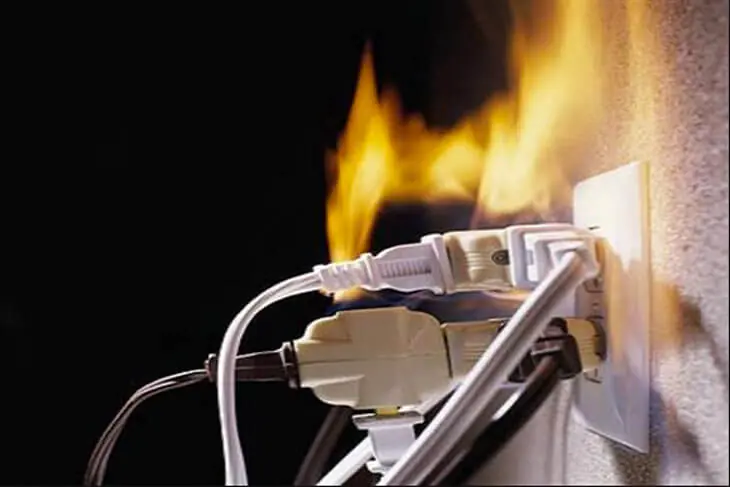
Do not connect several high-demand appliances to one power strip or circuit without confirming that the electrical system can safely support the load.
Keep power strips uncovered.
Do not place them under carpets, behind tightly packed furniture, or beneath piles of clothing.
Heat must be able to dissipate properly.
Keep electrical equipment away from water.
Do not use ordinary power strips in wet areas or where splashes, leaks, or condensation may reach them.
Replace damaged products immediately.
A
power strip with a cracked housing, loose sockets, damaged cord, or burn marks should not remain in service.
Do not ignore unusual smells or sounds.
Buzzing, crackling, repeated sparks, or burning odors may indicate a developing electrical fault.
Avoid counterfeit electrical products.
Products with unclear ratings, unreliable construction, or misleading safety claims may not provide adequate protection.
Use the right outlet for the right appliance.
High-demand heating appliances and equipment with specific electrical requirements should be connected according to their manufacturers’ instructions.
Schedule electrical inspections when necessary.
Older homes, frequently tripping breakers, loose outlets, and repeated overheating problems deserve professional attention.
A qualified electrician can determine whether the wiring, circuit protection, and outlets are suitable for modern household electrical demands.
Conclusion: A Few Extra Seconds Can Help Protect Your Home
Power strips are useful household accessories, but they are not designed to replace properly installed electrical outlets or support every
appliance.
Space heaters, air conditioners, refrigerators, microwaves, toasters, electric kettles, coffee makers, and hair dryers can place substantial demands on electrical connections. These appliances should generally be plugged directly into suitable wall outlets whenever their manufacturers recommend it.
Connecting multiple power strips together, ignoring damaged cords, covering electrical equipment, or exceeding a product’s rated capacity can create unnecessary fire and shock hazards.
The most important thing to remember is that the number of available sockets does not determine how much electricity a power strip can safely handle.
A device may have six, eight, or even twelve outlets, but its total electrical capacity remains limited by its design and rating.
Take a moment to inspect the power strips in your home. Check their labels, examine the cords, remove unnecessary connections, and identify appliances that should be plugged directly into wall outlets.
If you notice melting plastic, unusual heat, a burning smell,
damaged insulation, or repeated breaker trips, stop using the affected equipment and seek professional help.
Electrical fires can develop from problems that initially seem minor. A loose plug, an overloaded connection, or an underrated power strip may not appear dangerous until it is too late.
A few simple precautions can make a meaningful difference. When it comes to electricity, choosing the correct connection is not just about convenience. It is an important part of keeping your home, your belongings, and the people around you safe.
