
Throughout history, humans have turned to botanical infusions and herbal teas to soothe the mind, comfort the body, and restore daily balance. Unlike traditional black or green teas derived from the Camellia sinensis plant, herbal teas—or tisanes—are crafted from a rich variety of dried flowers, leaves, seeds, roots, and fruits.
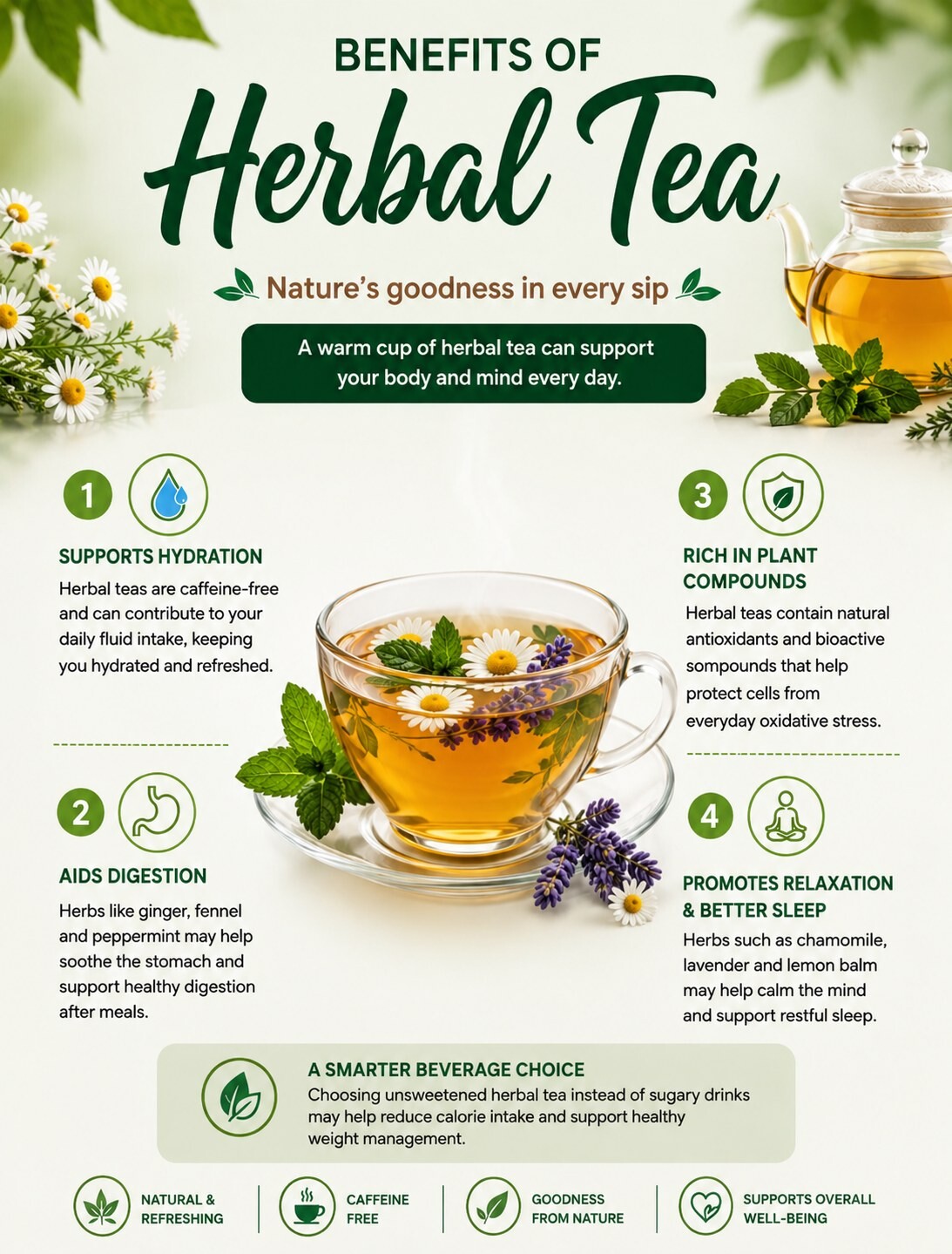
When beautiful infographics circulate highlighting the natural benefits of herbal tea, they remind us of simple, wholesome ways to enhance our daily health routines. In this comprehensive guide, we will explore the everyday advantages of drinking herbal tea, from supporting hydration and digestion to promoting relaxation and restorative sleep.
1. Supports Natural Hydration
Maintaining proper fluid intake throughout the day is essential for overall physiological function.
-
Caffeine-Free Hydration: Because herbal teas are naturally caffeine-free, they contribute seamlessly to your daily fluid intake without the diuretic effects associated with high-caffeine beverages.
-
Refreshing Routine: Enjoying a warm or iced herbal infusion keeps you hydrated and refreshed while adding comforting flavors to your day.
2. Aids Healthy Digestion
After enjoying a satisfying meal, a warm cup of herbal tea can work wonders for your digestive system.
-
Soothing Botanicals: Herbs such as ginger, fennel, and peppermint are traditionally celebrated for their ability to soothe the stomach and support healthy digestion after meals.
-
Relieving Discomfort: A gentle cup of herbal tea can help ease feelings of fullness and promote comfortable digestive processing.
3. Rich in Beneficial Plant Compounds
Nature provides an abundance of protective antioxidants within botanical ingredients.
-
Cellular Protection: Herbal teas contain natural antioxidants and bioactive compounds that help protect cells from everyday oxidative stress.
-
Holistic Wellness: Incorporating antioxidant-rich plant compounds into your routine supports long-term vitality and overall cellular health.
4. Promotes Relaxation and Better Sleep
Unwinding at the end of a busy day is crucial for mental well-being and physical recovery.
-
Calming the Mind: Herbs such as chamomile, lavender, and lemon balm possess natural calming properties that help quiet the mind after a stressful day.
-
Restorative Sleep: Incorporating a soothing evening tea into your bedtime ritual supports restful, high-quality sleep.
A Smarter Beverage Choice
Making mindful swaps in your daily diet can have a profound impact on your long-term health goals. Choosing unsweetened herbal tea instead of sugary drinks helps reduce calorie intake and supports healthy weight management.
Step-by-Step Guide: Building an Herbal Tea Routine
Integrating herbal tea into your daily schedule is simple and deeply rewarding.
┌─────────────────────────────────────────────────────────┐
│               DAILY HERBAL TEA ROUTINE                  │
└────────────────────────────┬────────────────────────────┘
                             │
                             ▼
┌─────────────────────────────────────────────────────────┐
│ STEP 1: MORNING HYDRATION                               │
│ • Start your day with a refreshing, caffeine-free cup   │
└────────────────────────────┬────────────────────────────┘
                             │
                             ▼
┌─────────────────────────────────────────────────────────┐
│ STEP 2: POST-MEAL DIGESTION                             │
│ • Enjoy peppermint or ginger tea after lunch or dinner  │
└────────────────────────────┬────────────────────────────┘
                             │
                             ▼
┌─────────────────────────────────────────────────────────┐
│ STEP 3: EVENING UNWIND                                  │
│ • Sip chamomile or lavender before bed for relaxation   │
└────────────────────────────┬────────────────────────────┘
1. Morning and Afternoon Refreshment
Swap out sugary afternoon sodas or excess caffeine for a fragrant cup of herbal tea to maintain steady hydration without jittery side effects.
2. Evening Relaxation Ritual
Brew a comforting cup of chamomile or lavender 30 minutes before sleep to signal to your body that it is time to unwind and rest.
Fascinating Facts About Herbal Teas
-
Ancient Traditions: Herbal infusions have been utilized in traditional wellness practices across ancient Egypt, China, and Greece for thousands of years.
-
Botanical Diversity: Tisanes can be created from virtually any edible plant part, offering an endless variety of flavors and aromas.
-
Zero Calories: Pure, unsweetened herbal teas contain virtually zero calories, making them an ideal beverage for conscious weight management.
Practical Checklist for Daily Well-Being
-
Stock Variety: Keep a selection of different herbal teas (like chamomile, peppermint, and rooibos) in your pantry to suit every mood.
-
Skip the Sugar: Enjoy your herbal tea unsweetened to maximize its health benefits.
-
Listen to Your Body: Notice how different herbs affect your digestion, energy, and sleep patterns.
-
Prioritize Rest: Combine your evening tea ritual with a relaxing environment for optimal sleep hygiene.
Conclusion
The everyday benefits of herbal tea make it a wonderful, natural addition to any lifestyle. From supporting hydration and soothing digestion to delivering protective plant compounds and encouraging restful sleep, a simple cup of herbal tea offers nature’s goodness in every sip.
Frequently Asked Questions (FAQ)
Does herbal tea contain caffeine?
No. True herbal teas (tisanes) are naturally caffeine-free, making them an excellent choice for hydration at any time of day or night.
Can herbal tea help with digestion?
Yes. Certain herbs like peppermint, ginger, and fennel are well-known for helping soothe the stomach and supporting healthy digestion after meals.
Which herbal teas are best for sleep?
Herbs such as chamomile, lavender, and lemon balm are widely recognized for their calming properties that promote relaxation and better sleep.
How does herbal tea assist with weight management?
Choosing unsweetened herbal tea instead of sugary beverages helps reduce overall calorie intake, supporting healthy weight management goals.
