
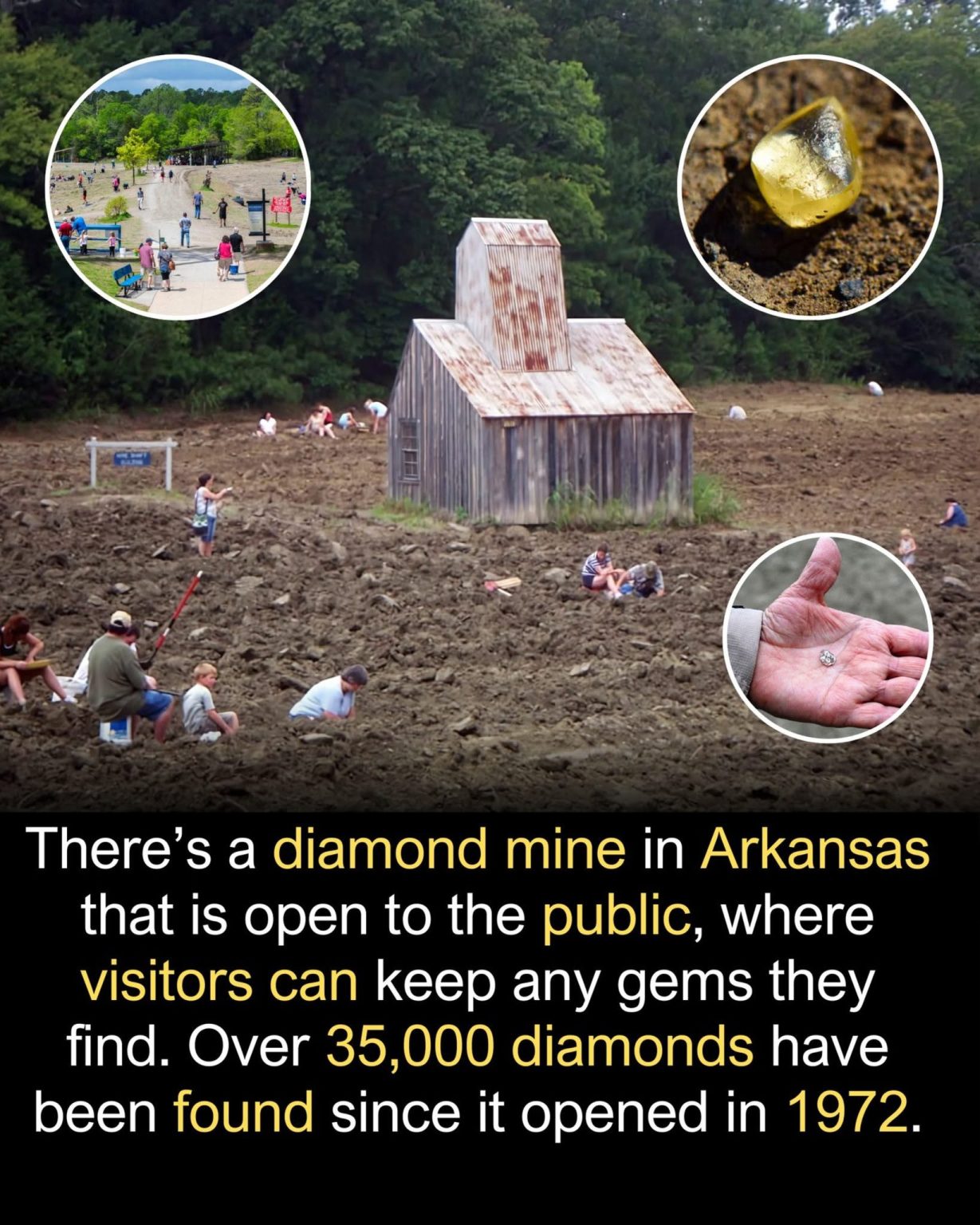
Imagine walking across a plowed field, looking down at the dirt, and spotting a sparkling, multi-carat diamond sitting right on the surface. While it sounds like a legend or a treasure hunt movie plot, this exact scenario plays out regularly in Murfreesboro, Arkansas, at Crater of Diamonds State Park.
As the only active diamond-bearing site in the world that is open to the general public, Crater of Diamonds State Park offers visitors a unique policy: “Finders, Keepers.” Whatever gemstone, mineral, or diamond you dig up or spot on the ground belongs entirely to you!
Since becoming an official Arkansas state park in 1972, visitors have unearthed over 35,000 diamonds from the park’s 37.5-acre search field, ranging from tiny clear points to famous multi-carat gemstones worth tens of thousands of dollars.
In this comprehensive travel, geology, and lifestyle guide, we will explore the volcanic history behind Arkansas’s public diamond field, examine effective searching techniques, review famous diamond discoveries, and discuss the broader financial, insurance, and legal considerations involved in gemstone valuation and estate planning.
1. The Volcanic Geology Behind the Diamonds
To understand why genuine diamonds are scattered across an Arkansas field, it is necessary to look back over 100 million years into Earth’s geological history:
The Ancient Volcanic Pipe
Diamonds form deep within the Earth’s mantle—roughly 60 to 100 miles below the surface—under conditions of extreme heat and immense pressure.
-
The Lamproite Eruption: Approximately 100 million years ago, a massive subterranean volcanic eruption blasted upward through the Earth’s crust, creating a wide volcanic crater known as a lamproite pipe.
-
Bringing Diamonds to the Surface: This explosive event brought mantle rocks, magma, and deep-seated diamonds rapidly to the surface without burning them.
-
Natural Weathering: Over millions of years, rain and wind eroded the soft volcanic rock, leaving dense diamonds and minerals settled near the surface soil layer.
2. Famous Diamond Discoveries at the Park
Over the decades, casual visitors, vacationing families, and local amateur prospectors have made astonishing discoveries at Crater of Diamonds State Park:
-
The Uncle Sam Diamond (1924): Discovered prior to state park status, this magnificent $40.23$-carat white diamond remains the largest diamond ever discovered in North America!
-
The Strawn-Wagner Diamond (1990): A $3.03$-carat diamond discovered by a park visitor that was cut into a $1.09$-carat gem. The American Gem Society graded it a perfect “Ideal 0/0/0” in color, clarity, and cut—a rarity achieved by fewer than one in a million diamonds worldwide!
-
The Esperanza Diamond (2015): A visitor spotted an $8.52$-carat icicle-shaped clear diamond sitting right on top of the plowed soil after a heavy rainstorm.
-
The Esperanza & Recent Finds: Visitors uncover an average of 1 to 2 diamonds every single day at the park, making casual walks through the field genuinely exciting!
3. Effective Diamond Hunting Methods for Visitors
If you are planning a trip to search for your own gemstones, park rangers recommend utilizing three main searching methods:
1. Surface Searching (Walking the Field)
The simplest approach requires no equipment—just keen eyesight! Walk slowly through the rows of plowed dirt, especially after a heavy rainstorm when rain washes away surface dust and leaves shiny diamond facets exposed to bright sunlight.
2. Dry Sifting
Utilizing a set of wooden sifting screens with wire mesh, dig up surface dirt, shake away the loose sand, and inspect the remaining gravel for smooth, rounded diamond crystals with a characteristic metallic sheen.
3. Wet Sifting (The Deep Dig)
The most thorough method involves digging near water sluicing tubs, washing clay away through dual-screen sifting sets, and flipping the screens onto a table. Because diamonds are unusually dense, they settle in the exact center of the screen tray!
Financial, Insurance, and Legal Aspects of Finding Valuable Gemstones
Finding a valuable diamond or managing precious jewelry assets connects directly to personal property appraisals, insurance coverage, tax reporting, and estate planning.
Professional Gemstone Appraisal and Insurance Coverage
If you discover a diamond or inherit valuable heirloom jewelry, securing proper financial protection is essential:
-
Certified Gemological Appraisals: Have gemstones evaluated by a certified Gemological Institute of America (GIA) lab or independent appraiser to establish official carat weight, color grade, clarity, and market value.
-
Scheduled Personal Property Riders: Standard homeowners or renters insurance policies cap payouts for lost or stolen jewelry at small limits. Adding a scheduled personal property endorsement ensures full replacement value coverage without deductibles.
Tax Considerations for Treasure Finds
Under standard tax codes, high-value physical property or gemstones discovered on public lands are considered taxable income at their fair market value at the time of discovery or sale. Consulting with a certified public accountant (CPA) guarantees compliance.
Legal Directives and Estate Planning Readiness
Pairing lifestyle adventures with essential legal directives guarantees total peace of mind for families:
-
Personal Property Memorandums: Legally binding documents attached to a Will specifying which family member inherits physical jewelry, raw gemstone collections, and heirlooms.
-
Financial Power of Attorney: Authorizes a trusted representative to manage household banking, insurance claims, and property assets during health recoveries.
-
Living Wills and Revocable Living Trusts: Guarantees that family estate assets and land titles transfer smoothly to loved ones without probate delays.
Practical Tips for Visiting Crater of Diamonds State Park
-
Visit After Heavy Rain: Rain cleans the surface soil and causes smooth diamond surfaces to reflect sunlight, making surface searching exceptionally productive.
-
Dress for the Dirt: Wear sturdy boots or mud shoes, bring knee pads, and wear clothes you don’t mind getting muddy.
-
Rent Equipment On-Site: The park offers affordable rentals for shovels, buckets, and sifting screen sets at the visitor center.
Fascinating Facts About Diamonds
-
Unmatched Hardness: Diamond ranks as a 10 on the Mohs hardness scale, making it the hardest known natural substance on Earth! Only another diamond can scratch a diamond.
-
Colors of the Rainbow: While most diamonds found in Arkansas are white or clear, approximately 20% are brown and 10% are yellow, caused by trace amounts of nitrogen trapped in the crystal lattice during formation.
-
Non-Stick to Water: Diamonds have a unique chemical property—they are hydrophobic (repel water) and lipophilic (attract grease). In industrial mining, grease tables are used to catch diamonds as water washes other gravel away!
Conclusion
Crater of Diamonds State Park in Arkansas is a unique national treasure where anyone can step onto a volcanic field and search for real diamonds. With over 35,000 diamonds discovered since 1972, the thrill of discovery keeps drawing hopeful prospectors from across the globe.
By combining outdoor adventure, gemstone appreciation, adequate personal property insurance coverage, and proactive legal estate directives, you can enjoy memorable journeys and safeguard your valuable assets for generations to come.
Frequently Asked Questions (FAQ)
Where is the public diamond mine located?
The mine is located at Crater of Diamonds State Park in Murfreesboro, Arkansas, USA.
Do you really get to keep whatever diamonds you find?
Yes! The park operates under a strict “finders, keepers” policy, allowing visitors to retain full ownership of any diamonds or minerals they discover.
How many diamonds are found at the park each year?
Visitors discover an average of 1 to 2 diamonds every day, totaling several hundred diamonds found annually.
What colors are the diamonds found in Arkansas?
The three primary colors found at the park are clear/white, brown, and yellow.
Do I need to bring my own digging equipment?
You can bring your own tools (such as shovels and buckets) or conveniently rent sifting screens, buckets, and tools directly at the park’s visitor center
