
Dining out is one of the world’s most popular social activities. Whether grabbing a casual breakfast of chicken and waffles with coffee or sitting down for a fine dining experience, sharing a meal is an integral part of modern culture. However, whenever restaurant tipping practices, wages, or customer etiquette make headlines, they trigger fierce, passionate debates across social media.
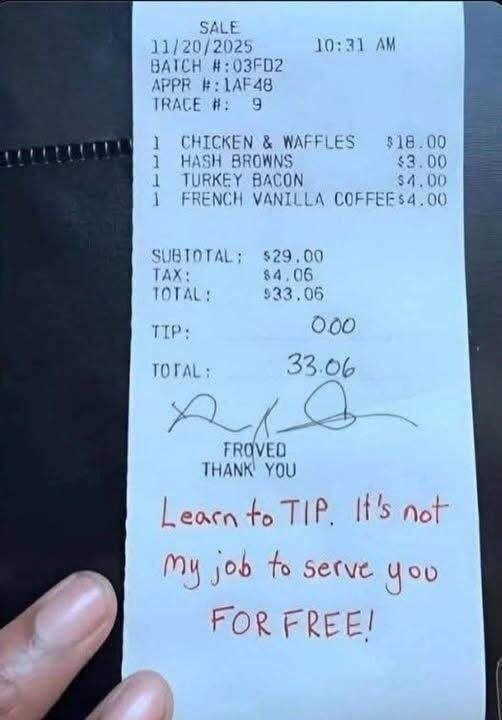
A viral restaurant receipt recently captured the internet’s attention when a customer shared an image of a breakfast bill totaling $33.06 (including items like chicken and waffles, hash browns, turkey bacon, and French vanilla coffee) where no tip was left. At the bottom of the receipt, a handwritten note scrawled in red ink declared: “Learn to TIP. It’s not my job to serve you FOR FREE!”
This fiery exchange immediately sparked a massive online debate about tipping culture, service industry compensation, and the responsibilities of both patrons and employers. In this comprehensive guide, we examine the complexities of modern tipping culture, the economics of service wages, and the ongoing debate surrounding gratuity.
The Economics of Tipping Culture: Employer vs. Employee Responsibility
To understand why receipt notes like this ignite such intense controversy, it is essential to look at how the service industry compensates hospitality workers.
                  [ THE TIPPING DEBATE SPECTRUM ]
                                │
        ┌───────────────────────┴───────────────────────┐
        ▼                                               ▼
[ Pro-Tip Perspective ]                         [ Anti-Tipping / Wage Reform ]
  • Tipping directly supplements low base wages   • Employers should pay guaranteed living wages
  • Customers reward attentive, quality service   • Tipping culture has become overly aggressive & expected
1. The Reality of Server Wages
In many regions, hospitality workers—particularly front-of-house servers and bartenders—are paid a specialized “tipped minimum wage,” which assumes that gratuities will make up the bulk of their earnings. For these workers, tips are not just extra bonuses; they form a crucial part of their daily livelihood. When a customer leaves zero tip on a bill, the server may actually lose money on that table after factoring in tip-out pools shared with bussers and kitchen staff.
2. Customer Fatigue and the “Tip-Creep” Phenomenon
On the other side of the debate, many diners express growing frustration with modern “tip-creep.” With digital payment screens prompting for tips in fast-food restaurants, coffee shops, and retail counters where traditional table service doesn’t exist, consumers increasingly experience tip fatigue. This frustration occasionally spills over into full-service restaurants, leading some customers to withhold tips as a form of protest against broken compensation models.
Step-by-Step Guide: Navigating Restaurant Etiquette and Tipping Standards
If you want to dine out respectfully while understanding standard service customs, following a few practical guidelines helps ensure a pleasant experience for everyone involved.
┌─────────────────────────────────────────────────────────┐
│              RESTAURANT TIPPING GUIDELINES              │
└────────────────────────────┬────────────────────────────┘
                             │
                             ▼
┌─────────────────────────────────────────────────────────┐
│ STEP 1: UNDERSTAND LOCAL CUSTOMS                        │
│ • Research standard tipping percentages in your region  │
│ • Typically 15% to 20% for standard sit-down service    │
└────────────────────────────┬────────────────────────────┘
                             │
                             ▼
┌─────────────────────────────────────────────────────────┐
│ STEP 2: ASSESS SERVICE QUALITY FAIRLY                   │
│ • Adjust gratuities based on hospitality and attentiveness│
│ • Speak directly to management for severe service issues│
└────────────────────────────┬────────────────────────────┘
                             │
                             ▼
┌─────────────────────────────────────────────────────────┐
│ STEP 3: COMMUNICATE RESPECTFULLY                        │
│ • Avoid passive-aggressive notes on receipts            │
│ • Remember that hospitality workers are human beings    │
└────────────────────────────┬────────────────────────────┘
1. Adhering to Standard Gratuity Norms
In full-service dining establishments where servers take your order and bring food to your table, leaving a tip between 15% and 20% of the pre-tax bill is widely recognized as standard etiquette. If service is exceptional, many diners choose to tip even higher.
2. Handling Poor Service Constructively
If you receive genuinely poor service, leaving no tip is often interpreted by the server as a personal insult rather than constructive feedback. A more effective approach is speaking politely with a manager or leaving constructive comments if the establishment requests feedback. Conversely, writing aggressive notes on receipts creates unnecessary hostility.
Fascinating Facts About Global Tipping Customs
-
Cultural Differences: Tipping customs vary wildly across the globe. While customary in the United States and Canada, tipping is often viewed as unnecessary or even offensive in countries like Japan, where exceptional service is considered a standard baseline expectation.
-
Historical Roots: Modern tipping in America gained widespread traction following the Civil War as newly emancipated workers were hired into service roles relying primarily on tips rather than fixed wages.
-
The Rise of Service-Included Models: A growing number of progressive restaurants across the globe are eliminating tips entirely, opting instead to raise menu prices slightly and pay all staff a guaranteed living wage.
Practical Checklist for Dining Out
-
Budget for Gratuity: Factor expected tipping costs into your dining-out budget before heading to a sit-down restaurant.
-
Be Kind and Courteous: Treat hospitality workers with respect, patience, and kindness.
-
Address Issues Calmly: If something is wrong with your meal or service, notify the staff politely so they have a chance to make it right.
-
Participate in Conversations Constructively: Engage in discussions about fair wages and labor reform thoughtfully without directing hostility at frontline workers.
Conclusion
The viral receipt note featuring a frustrated server’s message highlights the deep-seated tensions surrounding tipping culture, fair wages, and customer responsibilities. While the debate over whether employers or consumers should shoulder the burden of worker compensation continues, one thing remains clear: mutual respect, fair compensation models, and courteous dining etiquette are essential for a healthy hospitality industry.
Frequently Asked Questions (FAQ)
What inspired the viral receipt note debate?
The debate started when an image of a restaurant receipt circulated online showing a $33.06 breakfast bill with a zero tip, accompanied by a handwritten red note from the server stating: “Learn to TIP. It’s not my job to serve you FOR FREE!”
What is the standard tipping percentage for sit-down dining?
In the United States and regions with similar tipping customs, a standard tip for sit-down restaurant service generally ranges between 15% and 20% of the subtotal.
Why do servers rely so heavily on tips?
In many regions, hospitality workers are paid a reduced “tipped minimum wage,” making tips a vital component of their overall income rather than an optional bonus.
Are restaurants moving away from tipping culture?
Some progressive restaurants are experimenting with “service-included” pricing models, where menu prices are adjusted upward to eliminate tips and ensure all employees receive a stable, guaranteed living wage.
