
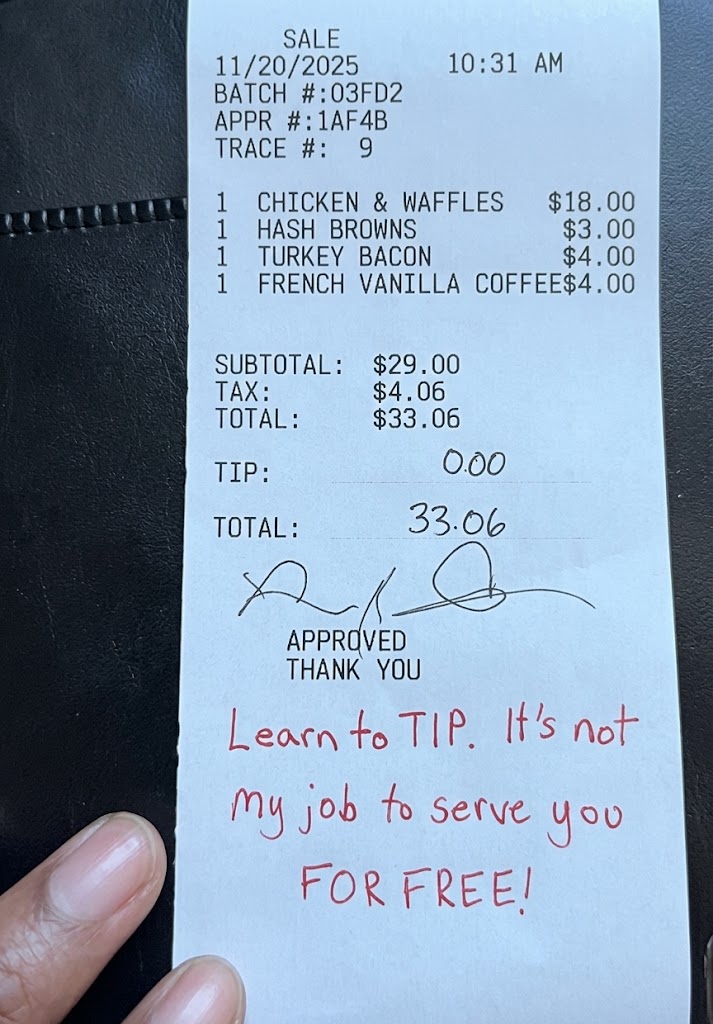
The hospitality and service industry operates on a delicate financial and social contract between customers, business owners, and front-of-house staff. Across the United States and various parts of the global dining scene, tipping has long served as a foundational component of a server’s weekly income. However, rising dining costs, economic inflation, and shifting service standards have ignited fierce online debates regarding tipping etiquette, fair wages, and customer expectations.
When a customer leaves a zero-dollar tip and a server writes a passionate message on the receipt—such as “Learn to TIP. It’s not my job to serve you FOR FREE!”—it sparks immediate viral outrage across social media platforms. Incidents like this highlight the deep-seated tensions surrounding restaurant compensation models, the financial pressures faced by hospitality workers, and the etiquette of dining out.
This comprehensive guide explores the economics of restaurant tipping, the debate over service worker compensation, legal regulations, financial strategies for diners, and etiquette best practices for both customers and servers.
The Economics of Tipping and Server Compensation
To understand why a zero-dollar tip generates such strong emotional and professional reactions, it is essential to examine how restaurant front-of-house compensation works.
The Sub-Minimum Wage Structure
In many U.S. states, federal and state labor laws allow restaurant employers to pay tipped employees a specialized “tipped minimum wage”—often as low as $2.13 per hour—under the legal assumption that tips will make up the difference to reach standard minimum wage requirements.
-
Dependence on Gratuity: Because base wages are exceptionally low, servers rely heavily on customer tips to pay their living expenses, housing costs, and utility bills.
-
Tip-Out Realities: Most servers are required to “tip out” a percentage of their total sales at the end of the shift to bussers, food runners, and bartenders. When a customer leaves a zero tip, the server actually loses money out of pocket to serve that table.
The Modern Tipping Debate: Customer Frustration vs. Worker Realities
The cultural landscape of tipping has undergone significant changes in recent years, leading to widespread debate among diners and industry professionals.
Why Customers Feel “Tip Fatigue”
-
Suggested Gratuity Inflation: Point-of-sale payment screens at coffee shops, fast-casual counters, and bakeries routinely prompt customers for 20% to 30% tips even for counter service where minimal table service is provided.
-
Rising Menu Prices: With inflation driving up the cost of food, taxes, and service fees, diners often feel financially squeezed, leading some to push back against traditional tipping expectations.
The Server’s Perspective
From the viewpoint of waitstaff, providing attentive, high-energy service requires physical labor, emotional patience, and professional dedication. When patrons leave no tip without an explicit complaint about poor service, workers view it as a disregard for their livelihood and time.
Step-by-Step Guide: Navigating Restaurant Tipping Etiquette
Understanding standard dining etiquette helps ensure a pleasant experience for both guests and hospitality workers.
1. Standard Tipping Benchmarks for Sit-Down Dining
-
Average Service: A standard gratuity for polite, efficient service at a full-service sit-down restaurant ranges from 15% to 20% of the pre-tax bill.
-
Exceptional Service: For outstanding, attentive service that enhances your dining experience, tipping 22% to 25% or more is customary.
-
Poor Service Protocol: If you experience genuinely poor service, rather than leaving a harsh zero tip without explanation, speaking discreetly with a manager allows the establishment to address the issue professionally.
Financial Savings and Budgeting for Dining Out
Dining at restaurants is a discretionary luxury that requires proper financial planning.
Factoring Gratuity Into Your Dining Budget
When budgeting for a meal out—whether ordering chicken and waffles, coffee, or gourmet entrees—smart diners always calculate the expected 15% to 20% tip into their total expected cost before choosing a restaurant. If a dining bill totals $33.06 (including tax), factoring in an appropriate tip ensures you are financially prepared to compensate your server fairly.
Important Safety and Professional Guidelines
When addressing disputes over service or gratuity, maintaining composure is vital:
-
Professional Resolution: If a customer is dissatisfied with service, leaving a rude note or zero tip rarely resolves the underlying issue constructively. Similarly, hospitality staff must maintain professional decorum rather than confronting customers aggressively on receipts.
-
Reviewing Restaurant Policies: Some modern establishments automatically add an 18% to 20% service charge for large parties or specific seating areas; always check your itemized receipt carefully before calculating additional gratuity.
Interesting Facts About the History of Tipping
-
Historical Origins: Tipping originated in Tudor England as a custom where wealthy patrons gave extra money (“to insure promptitude”) to servants and hosts, later spreading into European coffeehouses and American hospitality culture.
-
Global Differences: Tipping cultures vary drastically around the world. While North America relies heavily on tipping as part of a server’s core income, countries like Japan and parts of Europe view tipping as unnecessary or even insulting, as hospitality workers receive robust living wages built directly into menu prices.
Conclusion: Balancing Fair Wages and Dining Etiquette
The viral receipt incident featuring a frustrated server and a zero-tip customer underscores a much larger systemic conversation about how society compensates service labor. Whether advocating for restaurant industry wage reforms or practicing courteous tipping habits during night-out dinners, mutual respect between patrons and hospitality staff remains essential.
Frequently Asked Questions (FAQ)
Is it ever acceptable to leave no tip at a sit-down restaurant?
Leaving no tip is generally reserved for extreme cases of blatantly rude, hostile, or neglectful service. In standard situations, even minimal service warrants a reduced tip rather than zero, as servers depend on gratuities to cover shift expenses.
Do servers really have to pay out of pocket for zero-tip tables?
Yes. In many restaurants, servers participate in a “tip pool” or tip-out system where they must give a percentage of their total daily sales (often 3% to 5%) to support staff. If a customer tips zero, the server still owes that percentage based on the food sales, meaning they lose money serving that table.
How are restaurants moving away from the traditional tipping model?
Some modern restaurants have adopted a “no-tip” model by raising menu prices slightly across the board to pay all front-of-house and back-of-house staff stable, living hourly wages with benefits.
