
In the digital age, health and wellness advice spreads across social media at lightning speed. While some wellness tips promote wholesome nutrition, active lifestyles, and balanced eating habits, others rely on sensationalized warnings, fear-mongering, and exaggerated claims designed to capture attention and drive clicks.
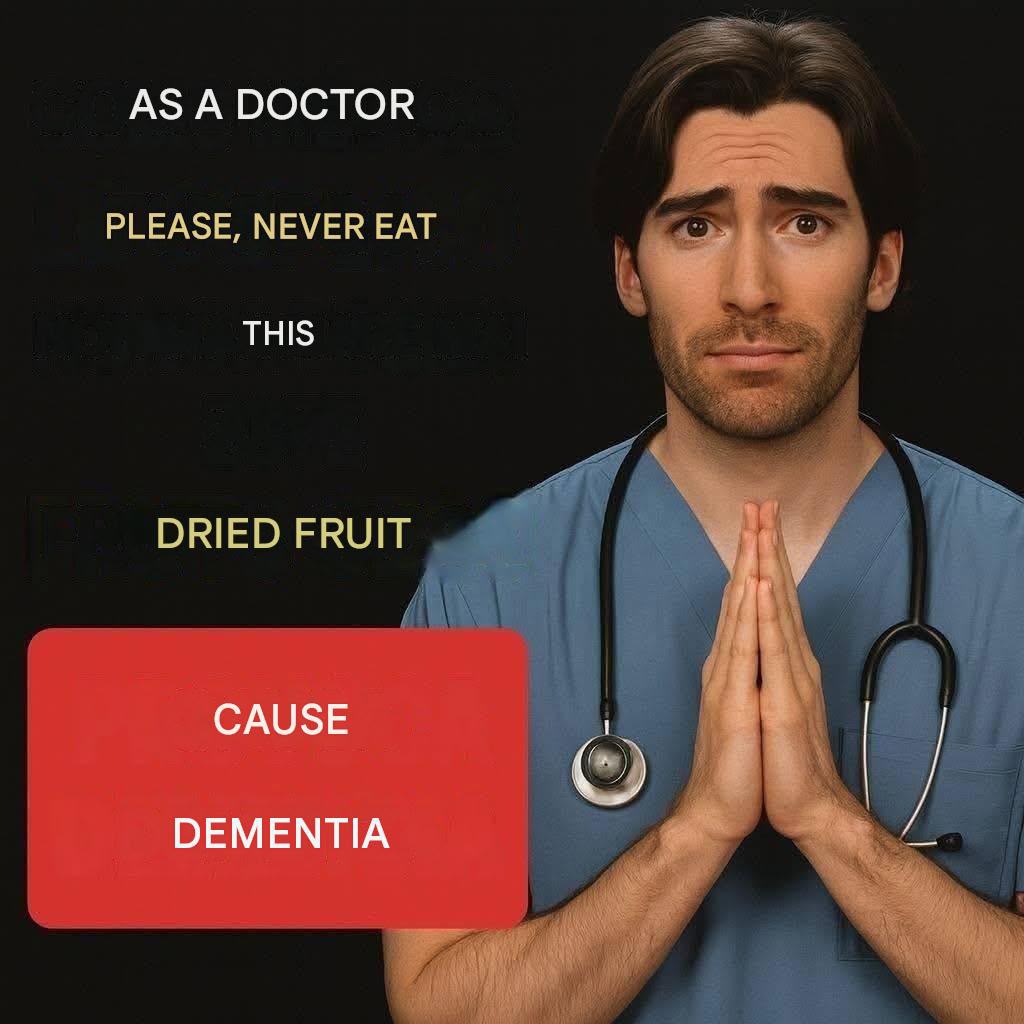
A popular viral graphic currently circulating features a man dressed in medical scrubs with a stethoscope, pleading with viewers under bold text warning: “As a doctor, please, never eat this dried fruit cause dementia”. Dramatic health claims of this nature instantly trigger anxiety and widespread curiosity across online communities. In this comprehensive guide, we examine the actual nutritional science of dried fruit, the realities of cognitive health, and how to evaluate medical claims found on social media.
The Nutritional Reality of Dried Fruit
To understand how everyday foods impact long-term health, it helps to look at the balanced nutritional science rather than viral rumors.
                  [ DRIED FRUIT NUTRITIONAL SPECTRUM ]
                                │
        ┌───────────────────────┴───────────────────────┐
        ▼                                               ▼
[ Nutritional Benefits ]                        [ Dietary Considerations ]
  • Rich in dietary fiber, vitamins, & minerals   • High natural sugar concentration
  • Provides sustained plant-based energy         • Requires mindful portion control
1. Fiber and Essential Nutrients
Dried fruits—such as raisins, apricots, prunes, and dates—are concentrated sources of essential dietary fiber, potassium, iron, and powerful antioxidants. In moderation, they provide a nutrient-dense snack that supports digestive health and sustained energy.
2. Sugar Concentration and Moderation
Because the natural water content has been removed, dried fruits have a higher concentration of natural sugars and calories by weight compared to fresh fruit. While excessive sugar intake can contribute to metabolic health concerns over time, eating dried fruit in moderation does not cause neurological conditions like dementia.
Step-by-Step Guide: Evaluating Health Claims Online
When encountering dramatic medical warnings or alarming health graphics on social media, adopting an analytical mindset helps protect you from misleading clickbait.
┌─────────────────────────────────────────────────────────┐
│              HEALTH INFORMATION VERIFICATION            │
└────────────────────────────┬────────────────────────────┘
                             │
                             ▼
┌─────────────────────────────────────────────────────────┐
│ STEP 1: CHECK FOR SENSATIONALISM                        │
│ • Be skeptical of extreme claims or "forbidden foods"   │
│ • Watch out for stock photos disguised as medical experts │
└────────────────────────────┬────────────────────────────┘
                             │
                             ▼
┌─────────────────────────────────────────────────────────┐
│ STEP 2: CONSULT MEDICAL PROFESSIONALS                   │
│ • Rely on board-certified physicians and dietitians     │
│ • Verify health advice through peer-reviewed journals   │
└────────────────────────────┬────────────────────────────┘
1. Spotting Sensationalized Clickbait
Viral health graphics often use alarming language, fear-based warnings, and fabricated medical personas (such as generic stock photos in scrubs) to grab your attention. Legitimate medical warnings are grounded in clinical research, not social media memes.
2. Consulting Qualified Experts
When seeking guidance on cognitive health, brain longevity, and nutrition, always rely on advice from licensed physicians, registered dietitians, and reputable medical institutions like the Mayo Clinic or peer-reviewed scientific literature.
Fascinating Facts About Cognitive Health and Nutrition
-
The Mind-Diet Connection: Medical research shows that cognitive longevity is best supported by a balanced, whole-food diet rich in leafy greens, berries, healthy fats, and lean proteins (such as the Mediterranean diet).
-
The Danger of Misinformation: Studies in digital health communication show that fear-based health warnings spread significantly faster online than nuanced nutritional corrections.
-
The Power of Moderation: Almost any whole food can be enjoyed safely as part of a balanced diet when consumed in mindful portions.
Practical Checklist for Digital Media Literacy
-
Be Skeptical of Miracles and Dangers: Treat extreme claims—whether promising a magical cure or warning of a sudden catastrophic disease from a normal food—with heavy caution.
-
Look for Evidence: Check if major health organizations or medical journals support the claim before believing it.
-
Prioritize Balanced Diets: Focus on whole foods, diverse nutrients, and sustainable lifestyle habits rather than restricting random ingredients based on viral posts.
-
Consult Your Doctor: Always speak directly with your primary care physician for personalized medical and nutritional advice.
Conclusion
Viral health graphics warning that eating popular dried fruits can cause dementia are classic examples of sensationalized online misinformation. While mindful sugar consumption is part of a healthy lifestyle, enjoying dried fruit in moderation is entirely safe. By cultivating digital literacy and relying on evidence-based medicine, we can navigate health trends with confidence and peace of mind.
Frequently Asked Questions (FAQ)
Can eating dried fruit cause dementia?
No. There is zero scientific evidence linking the moderate consumption of dried fruit to the development of dementia or neurological disorders.
Are viral health warnings on social media reliable?
Social media graphics often use dramatic phrasing, fear tactics, and unverified sources to drive engagement. Health claims should always be verified through medical professionals and scientific research.
What are the actual health benefits of dried fruit?
Dried fruits provide valuable dietary fiber, antioxidants, vitamins, and minerals, making them a nutritious snack when consumed in moderation.
How can I protect my cognitive health as I age?
Cognitive health is best supported by eating a balanced diet rich in whole foods, staying physically active, getting quality sleep, maintaining social connections, and consulting physicians regularly.
